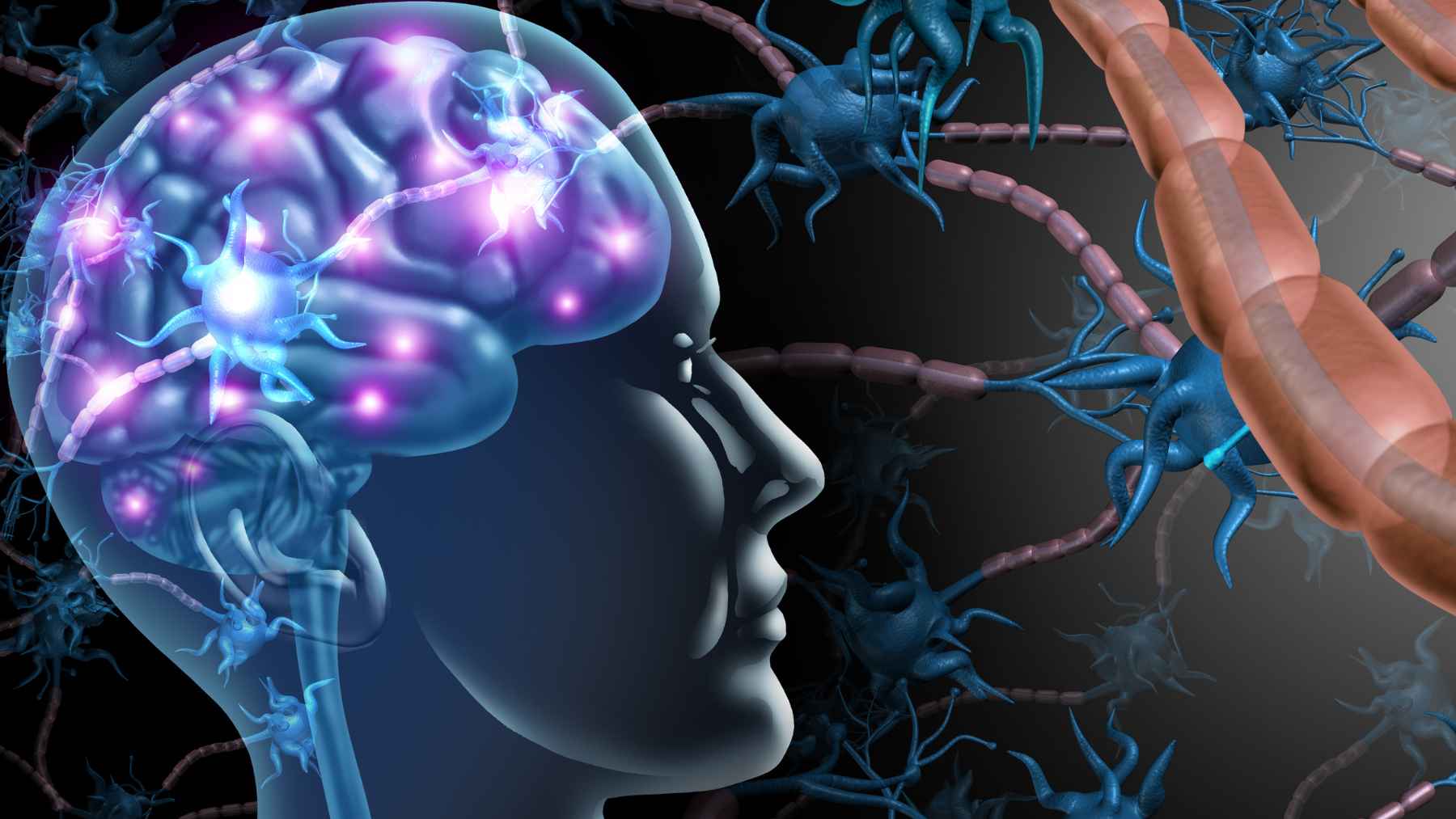
Most people think of brain aging as something vague that shows up when you forget a name or walk into a room and lose your train of thought. Behind those everyday slips, though, are real physical changes slowly unfolding inside your neurons.
Now a team of scientists says they have found a molecular “master switch” that appears to control a big part of that process in human brain cells. By dialing down a protein called OTULIN, they were able to shut off production of tau, a sticky protein that builds up in Alzheimer’s disease and other dementias, and even erase it from lab-grown neurons.
Tau and the slow aging of the brain
Tau is a protein that normally acts like scaffolding inside nerve cells, helping stabilize tiny tubes that keep the cell’s structure in shape and transport nutrients around. When tau becomes abnormal, it clumps together into tangles that choke off this internal transport system.
These tangles are one of the classic hallmarks seen in Alzheimer’s disease under the microscope, along with more than twenty related brain disorders grouped under the name tauopathies. In many of these conditions, the spread of toxic tau across brain regions tracks closely with worsening memory loss and confusion.
For years, much of the drug development work has tried to clean up tau after it has already formed clumps. What this new research suggests is a different strategy that goes closer to the source and tampers with the machinery that makes tau in the first place.
OTULIN steps in as a master switch
The new study was led by molecular geneticist Karthikeyan Tangavelou at the University of New Mexico Health Sciences Center, working with colleagues including Kiran Bhaskar and partners at the University of Tennessee. Their focus was OTULIN, an enzyme best known for removing specific molecular tags involved in immune signaling and inflammation.
Scientists grew human neurons in the lab from two main sources. Some came from stem cells derived from a person who had late onset sporadic Alzheimer’s, while others came from a widely-used human neuroblastoma cell line. In both systems, they used gene editing tools and a custom designed small molecule to switch off OTULIN.
When the team looked at the genetic messages inside those cells, they saw much more than a single pathway being tweaked. Tangavelou explains that OTULIN appears to govern RNA metabolism, the way cells write, edit, and destroy the messages that tell them which proteins to make.
He has described OTULIN as a “master regulator of brain aging” because changing it shifts the activity of many genes, especially those linked to inflammation.
Deleting OTULIN wiped out tau in human neurons
One of the most striking results came from experiments that completely deleted the OTULIN gene using CRISPR gene editing. When OTULIN disappeared, tau levels in these neurons rapidly dropped and, in some models, both normal and toxic forms of tau nearly vanished.
The team found that this happened because the messenger RNA for tau, made from a gene called MAPT, was effectively erased rather than because tau protein was being broken down faster.
In a more drug-like approach, the researchers tested a small molecule inhibitor known as UC495 that partially blocked OTULIN activity. That gentler strategy lowered harmful tau species while leaving some normal tau behind and did not show obvious toxicity in the neurons, hinting at a possible safe “sweet spot” where OTULIN could be nudged rather than fully silenced.
Perhaps the biggest surprise was what did not happen. Despite losing a protein long thought to be important for neuron structure, the lab grown brain cells stayed alive and appeared healthy. “Neurons can survive without tau” Tangavelou said, adding that they looked healthy even after tau was removed.
Reversing brain aging will not be simple
Blocking OTULIN did much more than clear tau. Large scale RNA sequencing showed that tens of thousands of genetic messages changed inside the cells, with many genes linked to inflammation and protein quality control shifting up or down.
In other words, flipping this switch rearranged much of the neuron’s internal control panel, which is exciting but also potentially risky.
OTULIN also plays roles in other brain cell types, such as microglia that act as immune sentries and astrocytes that support neurons. The researchers warn that removing OTULIN entirely in those cells could trigger harmful auto inflammation, so any future treatment would need to carefully tune its activity rather than simply turning it off.
For people hoping this will quickly lead to a pill that keeps their memory sharp into old age, experts advise patience. So far, the work has been done in cultured human neurons, not in live animals or patients, and OTULIN’s many jobs in the brain mean safety studies will have to move slowly.
Still, by pointing to a single protein that links inflammation, RNA control, and tau production, the study offers a fresh blueprint for how we might one day slow or even partly reverse brain aging at its molecular roots.
The main study has been published in the journal Genomic Psychiatry.