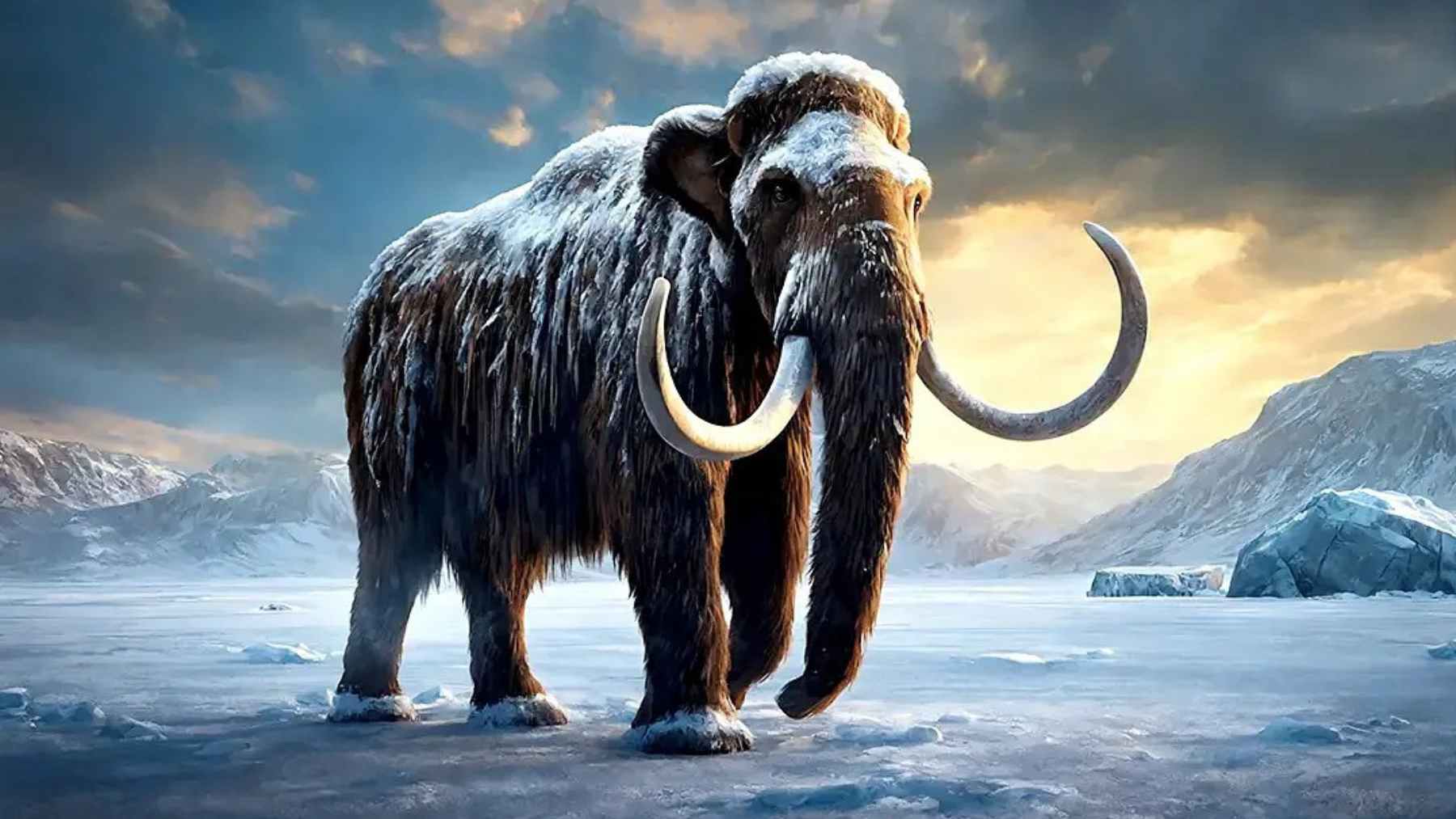
For years, museum visitors and researchers alike thought they were looking at the youngest woolly mammoth bones ever found. Radiocarbon dates suggested that two vertebrae from interior Alaska were only about two to three thousand years old. If that were true, mammoths would have survived in mainland Alaska about ten thousand years longer than scientists thought.
Now the mystery has flipped. After a fresh round of testing, those supposed mammoth bones have turned out to be whales. And that quiet correction is reshaping how scientists read the fossil record in a rapidly changing Arctic.
A record-breaking mammoth that never existed
The story began with two fossil “growth plates” stored at the University of Alaska Museum of the North. They were cataloged in the early 1950s as mammoth vertebrae discovered near Dome Creek, about sixteen kilometers north of Fairbanks.
When the Adopt a Mammoth project started systematically dating museum specimens, these two bones stood out. Their radiocarbon ages fell between roughly 1,900 and 2,700 years before present, far younger than any other mammoth fossils from mainland Beringia, where mammoths appear to vanish around thirteen thousand years ago.
As project lead Matthew Wooller put it, “Those would be the youngest mammoth fossils on the planet.” It was a result big enough to challenge the timeline of mammoth extinction and to reopen debates about how long these giant grazers shared the landscape with early people and changing climates.
Isotopes and DNA point back to the ocean
The surprise began when researchers checked whether the chemistry of the bones matched a grass eating land animal. Stable isotope tests showed unusually high nitrogen values that looked much more like a marine diet.
That odd signal raised a simple question. If this really was a mammoth, why did it eat like a whale?
Ancient DNA provided the final answer. Using highly-sensitive sequencing methods designed for very old, degraded material, the team extracted genetic fragments from the bones and compared them against reference genomes. The sequences matched two whale species, a North Pacific right whale and a minke whale, not any kind of elephant.
“The DNA evidence told us they were whales, but not even the same species of whale,” Wooller explained. “What the heck.”
In one stroke, the supposed record-breaking mammoth vanished, and the fossil record of late surviving mammoths in mainland Alaska snapped back into place.
How do whale bones end up hundreds of kilometers inland?
Of course, solving one puzzle created another. Fairbanks sits more than four hundred kilometers from the modern coast. So how did whale bones wind up in gold-bearing sediments near a small interior creek
The research team walked through several possibilities. Some whales are known to swim far up large rivers, yet no one has ever documented a North Pacific right whale that far inland, and the Dome Creek setting is far too small for such large animals.
Scavengers can drag bones, but hauling heavy vertebrae hundreds of kilometers through rugged country seems unlikely. Another option is human transport. Archaeological evidence from coastal Alaska shows that Indigenous communities used whale bones as tools and building material, which could in theory send selected pieces inland as trade items or valued objects.
In the end, the most down-to-earth explanation may be simple record keeping. The same collector, Otto Geist, gathered fossils at coastal and inland sites in the early twentieth century. The new study notes that the whale bones might have been mixed with a coastal batch, then later labeled as interior finds when they entered the museum collection.
It is not as romantic as mammoths roaming Alaska in Roman times, but it fits the evidence.
What this Arctic plot twist means for climate science
This correction matters for more than just tidying up a museum catalog. Scientists are trying to reconcile two different pictures of mammoth extinction. Radiocarbon-dated bones say mammoths disappeared from mainland Beringia about thirteen thousand years ago, while environmental DNA preserved in permafrost hints that small “ghost” populations may have persisted several thousand years longer in some regions.
If the Alaska fossils really had been young mammoths, they would have backed up the idea of late surviving herds on the mainland. Now that they are confirmed whales, the burden shifts back to carefully checking both bones and sediment DNA, and to asking how climate shifts and human activity each contributed to these extinctions.
There is also a wider environmental lesson. The Arctic holds extraordinary archives of bones, artifacts, and frozen DNA, yet those archives are under growing pressure from thawing permafrost and coastal erosion linked to climate change. Studies show that many Arctic archaeological sites are already being damaged or washed away as warming accelerates.
In that context, the Alaska whale bones are a reminder of two things at once. First, new technologies like ancient DNA and isotope analysis can rescue precise stories from fragmentary remains. Second, researchers need to revisit old collections with fresh eyes before the next heat wave, storm, or landslide erases crucial evidence in the field.
At the end of the day, turning a famous “young mammoth” into a pair of whales might feel like a downgrade. For scientists, it is the opposite. It sharpens the timeline of extinction, clears away a tempting but misleading outlier, and highlights how much more there is to learn from the Arctic’s fading fossil record.
The study was published in the Journal of Quaternary Science.