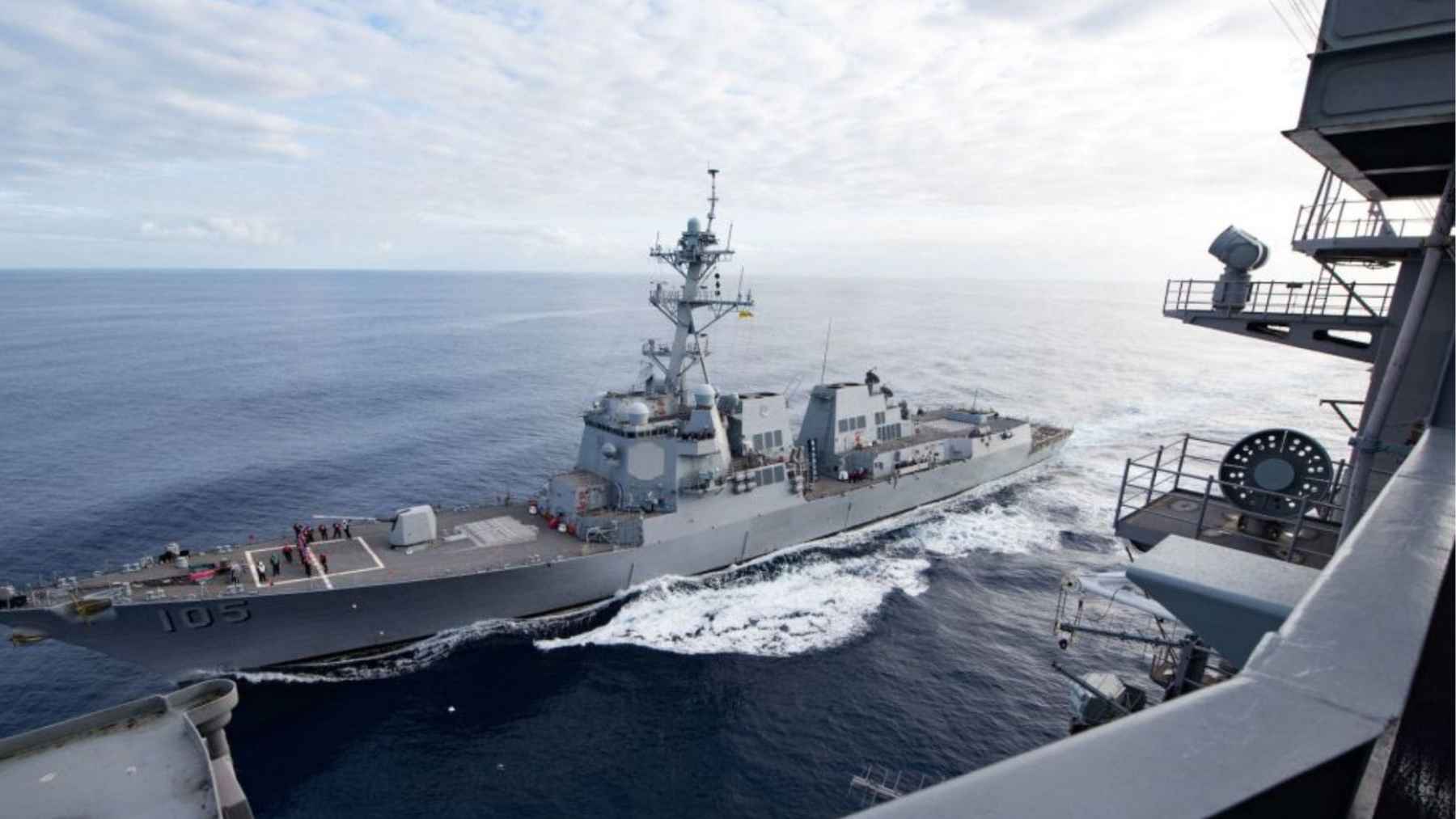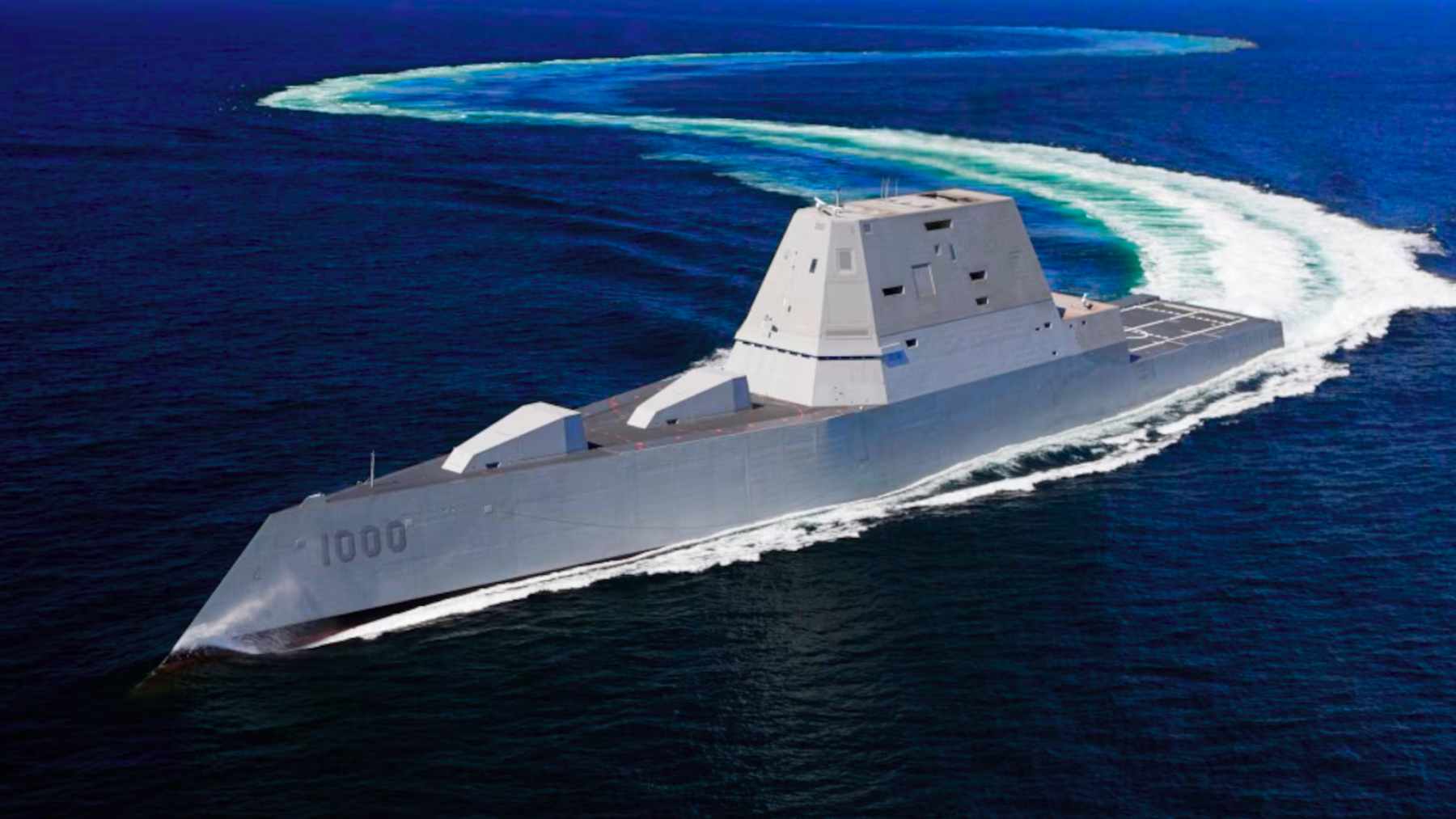
When a viral headline shouts that the US Navy has “launched its futuristic 8 billion dollar stealth ship out of port,” it sounds like pure military spectacle. But behind that dramatic wording lies a very real vessel (the Zumwalt class destroyer) and a story that touches not only security and budgets, but also energy use and emissions.
According to the Navy’s own fact file, the DDG 1000 Zumwalt class is the largest and most technologically advanced surface combatant in the fleet. It stretches 610 feet, displaces nearly 16,000 tons, and carries a small crew for its size thanks to heavy automation. The design combines a tumblehome stealth hull, composite superstructure, and an integrated electric power system.
USS Zumwalt leaving port and the official Navy timeline
The official press release that matches the “launches out of port” wording dates back to September 2016, when the future USS Zumwalt left the Bath Iron Works shipyard in Maine for a three month transit to its new homeport in San Diego.
The Navy highlighted its state of the art electric propulsion, 78 megawatts of onboard power, and a flight deck almost twice the size of an Arleigh Burke destroyer.
How the “$8 billion per ship” number is calculated
What about that “8 billion” price tag. Here the picture gets more nuanced. Congressional Research Service data show that the combined procurement cost for the three Zumwalt class ships is about 13.8 billion dollars in recent budget estimates, or roughly 4.6 billion per hull if you look only at construction.
A later Government Accountability Office assessment put total program costs, including around 9.3 billion in research and development, at roughly 24.5 billion dollars. That works out to about 8 billion per ship when you spread the development bill across just three vessels, which is where the viral number likely comes from.
The military carbon footprint and why fuel use matters
For an environmental newsroom, the money matters, but the fuel matters too. Research from Brown University’s Costs of War project estimates that the US Department of Defense is the largest institutional consumer of fossil fuels on the planet and emitted about 1.2 billion metric tons of greenhouse gases between 2001 and 2017.
International shipping as a whole is responsible for roughly three percent of global greenhouse gas emissions, making it comparable to a top tier emitting country. Warships are only a slice of that total, yet they operate intensively and often far from public scrutiny.
At the same time, the Pentagon’s own greenhouse gas plan notes that Department of Defense scope 1 and 2 emissions in 2021 made up about 76 percent of all US federal government emissions and roughly one percent of total national emissions.
The report shows a long term downward trend, with total emissions down about one third since 2008, largely due to less combat activity plus efficiency and renewable projects. So the institution knows its carbon footprint is not a side issue.
Integrated electric power system and energy efficiency at sea
This is where the Zumwalt’s integrated power system becomes more than a techno buzzword. The Navy describes DDG 1000 as its first surface combatant to use a fully integrated power system that feeds propulsion, ship services, and combat systems from the same gas turbine generators.
Officials say the architecture offers flexible power allocation and “potentially significant energy savings,” while leaving room for future high energy weapons and sensors.
In plain terms, older ships typically have separate mechanical drive trains for the propellers and smaller generators for onboard electricity. Zumwalt runs all of its turbines as power plants feeding electric motors and a shipwide grid.
It is closer to a floating microgrid than a traditional engine room. If you have ever seen the difference between an old boiler and a modern building with smart meters, you have a rough analogy.
Can an all electric warship be “green”
None of this makes Zumwalt a “green ship.” The turbines still burn conventional fuel and public documents do not publish specific fuel consumption or lifecycle emissions for the class. Department of Defense data underline that operational energy is still overwhelmingly fossil based, even if overall emissions are trending down.
So the destroyer is better described as a testbed for electrified naval power rather than a climate solution in uniform.
Maritime decarbonization and the IMO climate targets
In the wider maritime world, however, this kind of all electric architecture is exactly what regulators want to pair with cleaner fuels. The International Maritime Organization’s (IMO) 2023 greenhouse gas strategy calls for at least a 40 percent cut in carbon intensity across international shipping by 2030 and net zero emissions by mid century, with a growing share of zero or near zero emission fuels.
Civilian shipbuilders and suppliers, including companies involved in Zumwalt’s propulsion, are already marketing electric and hybrid systems as stepping stones toward that future.
What this means for climate policy and future naval technology
For people following climate policy, the lesson is less about one dramatic departure from a Maine shipyard and more about direction of travel. High power electric ships like Zumwalt show how quickly naval engineering can move when there is political backing and budget.
The lingering question is when that same urgency will be fully aligned with cutting emissions, not just projecting force.
The official statement was published on Navy.mil.