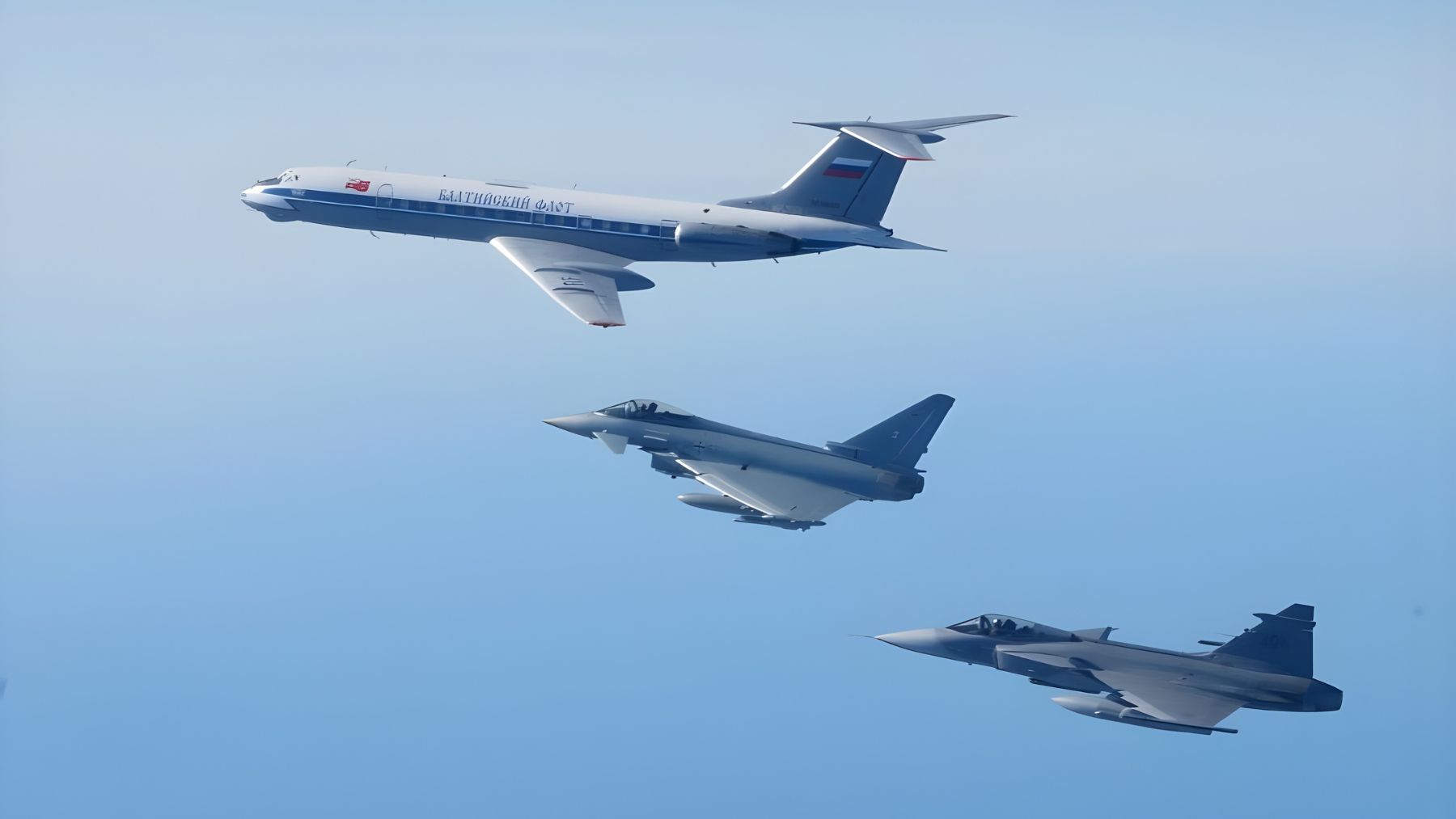
German and Swedish fighter jets were scrambled early Sunday, September 21, 2025, after a Russian reconnaissance aircraft flew through neutral airspace over the Baltic Sea without a flight plan or radio contact, according to officials in both countries.
The encounter ended without shots fired, but it landed in the middle of a month already packed with close calls along NATO’s eastern edge.
Why does a single plane matter so much? Because in a crowded sky, missing paperwork and silence on the radio can turn a routine patrol into a fast-moving safety risk, the kind that forces pilots and air traffic controllers to make decisions in minutes, not hours. And lately, those minutes have been stacking up.
What happened over the Baltic Sea
Germany said NATO tasked its quick reaction alert fighters to check an unidentified aircraft that was flying without a flight plan or radio contact. German Eurofighter Typhoons then visually identified the aircraft as a Russian IL-20M reconnaissance plane and escorted it before handing off the monitoring to Sweden.
Germany’s delegation to NATO described the handoff and return to base in an official post on X. Sweden’s air force also confirmed its jets were “identifying and monitoring” the aircraft in international airspace in its own post on X.
Why a reconnaissance plane raises alarms
A reconnaissance plane is essentially a flying sensor platform. Instead of carrying passengers or cargo, it collects information, which can include radar scans and electronic signals, the invisible “noise” that modern militaries use to communicate and track targets.
Flying without a filed route or radio contact is what makes the situation especially tense. In practical terms, it is like merging onto a busy highway at night with your headlights off, even if you stay in your lane, you still force everyone else to react.
A tense month of near misses for NATO’s eastern flank
The Baltic intercept came just two days after Estonia said three Russian MiG-31 fighter jets entered its airspace without permission on September 19, 2025, and stayed for about 12 minutes. Estonia said it requested consultations under NATO’s Article 4 after the incident.
Russia denied violating Estonian airspace, and the dispute quickly became political as well as military. Asked about the Estonia episode, President Trump told reporters, “Well, I don’t love it. I don’t love it when that happens. Could be big trouble.”
Earlier in the month, Poland also triggered Article 4 after Russian drones entered Polish airspace on September 10, 2025, and Polish forces reported shooting down some of the intruding drones. NATO’s secretary general addressed that incident in an official NATO statement, while Polish leaders warned it was “the closest we have been to open conflict since World War II.”
What Article 4 does and what it does not do
Article 4 is not the mutual-defense clause people often hear about in movies. It is a formal mechanism for allies to consult when a member believes its security is threatened, basically a way to get everyone in the room quickly and align on next steps. NATO explains the process in its own Article 4 overview.
After Estonia’s request, the North Atlantic Council met on September 23, 2025, and issued an official council statement condemning Russia’s airspace violation as dangerous. Separately, Romania reported a Russian drone incursion in mid-September and published details through its Ministry of National Defence press release, underscoring how quickly these incidents can spread across the region.
The main official statement has been published by Germany’s delegation to NATO on X.
Image credit: NATO Allied Air Command