For much of the 20th century, the world witnessed numerous bloody conflicts. We’re talking about invaded territories, overthrown regimes, and empires built on the strength of barrels. The signs of the 21st century are shaping another type of war: a silent one, invisible at first glance, but one that already moves billions, changes the fate of nations, and pushes entire populations toward collapse. We’re not talking about a distant theory; the alarm has already been sounded by world leaders, scientists, and institutions like the UN and the World Bank.
Forget oil: the next global wars may flow from a faucet
“The next war in the Middle East will be fought over water, not politics,” said Boutros Boutros-Ghali back in 1985. And Kofi Annan reinforced in 2001 that competition for freshwater could be the spark for future conflicts. Ban Ki-moon, in 2007, got straight to the point: “Water scarcity threatens social and economic progress—and is a potent fuel for war.”
These statements may seem exaggerated at first glance, but the current scenario confirms the opposite, as these predictions are coming true. Studies by the European Commission have already mapped around 300 areas at risk of water conflicts around the world. The most vulnerable regions include large basins shared between countries, such as:
- The Nile (Egypt and Ethiopia).
- The Indus (India and Pakistan).
- The Ganges-Brahmaputra (India and Bangladesh).
- And the Tigris-Euphrates (Türkiye, Syria, and Iraq).
The U.S. is drying up: no one is ready for what comes next
We’re talking about freshwater, simply the vital resource that sustains everything: health, energy, agriculture, industry, and life itself. The problem is that only 2.5% of the planet’s water is drinkable, and much of that is frozen in glaciers. The population has grown, demand has exploded, and water systems have not kept up. The result is a progressive collapse that is already affecting millions.
And in the US, the situation is critical. This is because almost half of the country’s watersheds may not be able to meet demand by 2071. We’re talking about regions like the Great Plateaus, the American Southwest, and parts of the Midwest, traditionally productive and populous places. And there’s no need to wait until 2071: 83 watersheds have already faced shortages since 2021.
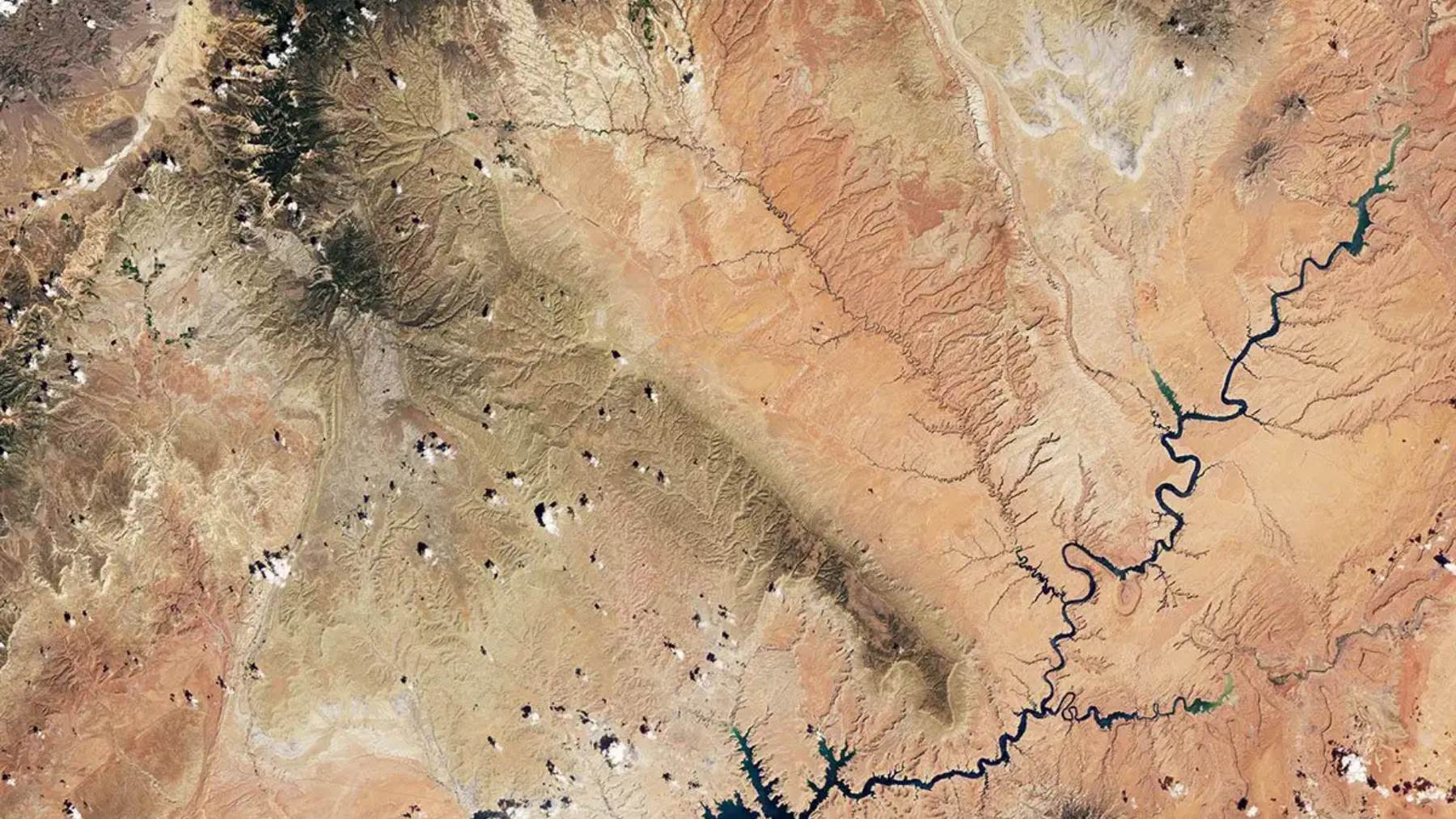
Well, water, that once-abundant resource, is no longer sufficient to supply all homes, crops, and cities. We can even cite some examples: the Colorado River, which for millennia flowed to the sea, now dies midstream. The Rio Grande River has recorded its lowest levels in history. And underground aquifers, like California’s Central Valley, are being drained at an unsustainable rate (which is why World War III may be just around the corner).
America’s water crisis is boiling and global tensions are rising with it
And yet: the problem is multifactorial. On the one hand, rainfall is shifting: humid regions are wetter, while dry regions are facing historic droughts. On the other hand, temperatures are rising: by 2050, the US could be nearly 6°F hotter. And with more heat comes more evaporation, meaning less water in reservoirs, less snow to melt, and a reduced summer supply.
And along with all this, we add an inescapable fact: the population is growing. By 2100, the US could have over 500 million inhabitants, which means: more people, more consumption. And we’re not talking about small amounts: each American consumes on average 80-100 gallons of water per day. The country uses over 345 billion gallons of water per day, enough to sink Rhode Island under a foot of water. And as if all these factors weren’t enough to trigger a new war, China, with its “self-destruct” button, could trigger another world war.