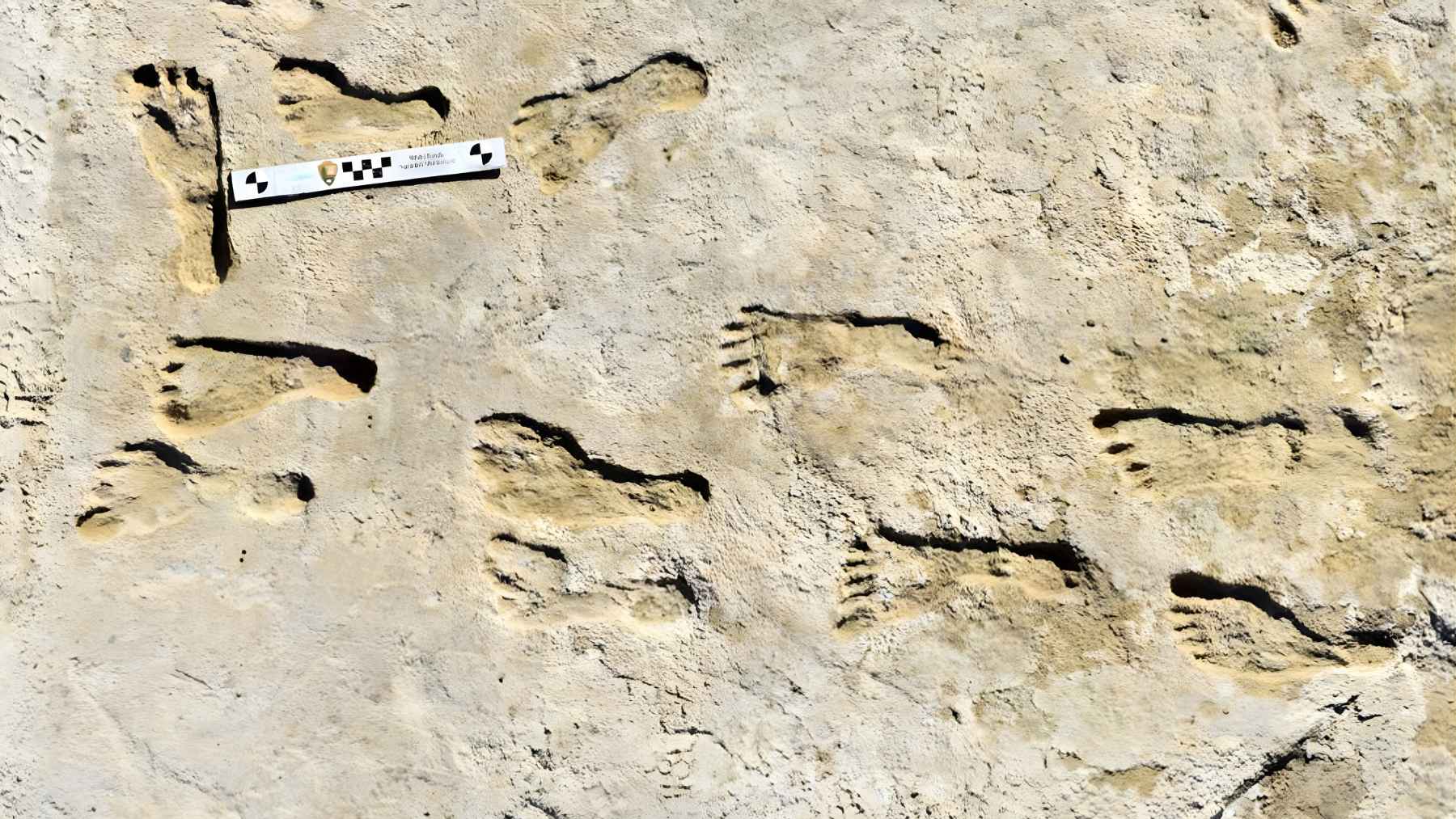
At White Sands National Park in southern New Mexico, a trail off ossil human footprints has quietly rewritten the story of when people first set foot in the Americas. A new study confirms that these tracks are between about 21,000 and 23,000 years old, meaning humans were walking here in the middle of the last ice age, thousands of years earlier than many textbooks still suggest.
Scientific debate over the age of the footprints
For years, the prints were at the center of a scientific tug of war. When researchers first published dates in 2021, based on the radiocarbon age of tiny seeds from an aquatic plant, some archaeologists argued that the numbers might be too old.
Aquatic plants can sometimes draw on “old” carbon dissolved in lake water, which can make samples look older than they really are. If that effect was large, the footprints might not have belonged to ice age people at all, but to much later communities.
Radiocarbon dating and pollen analysis confirm the timeline
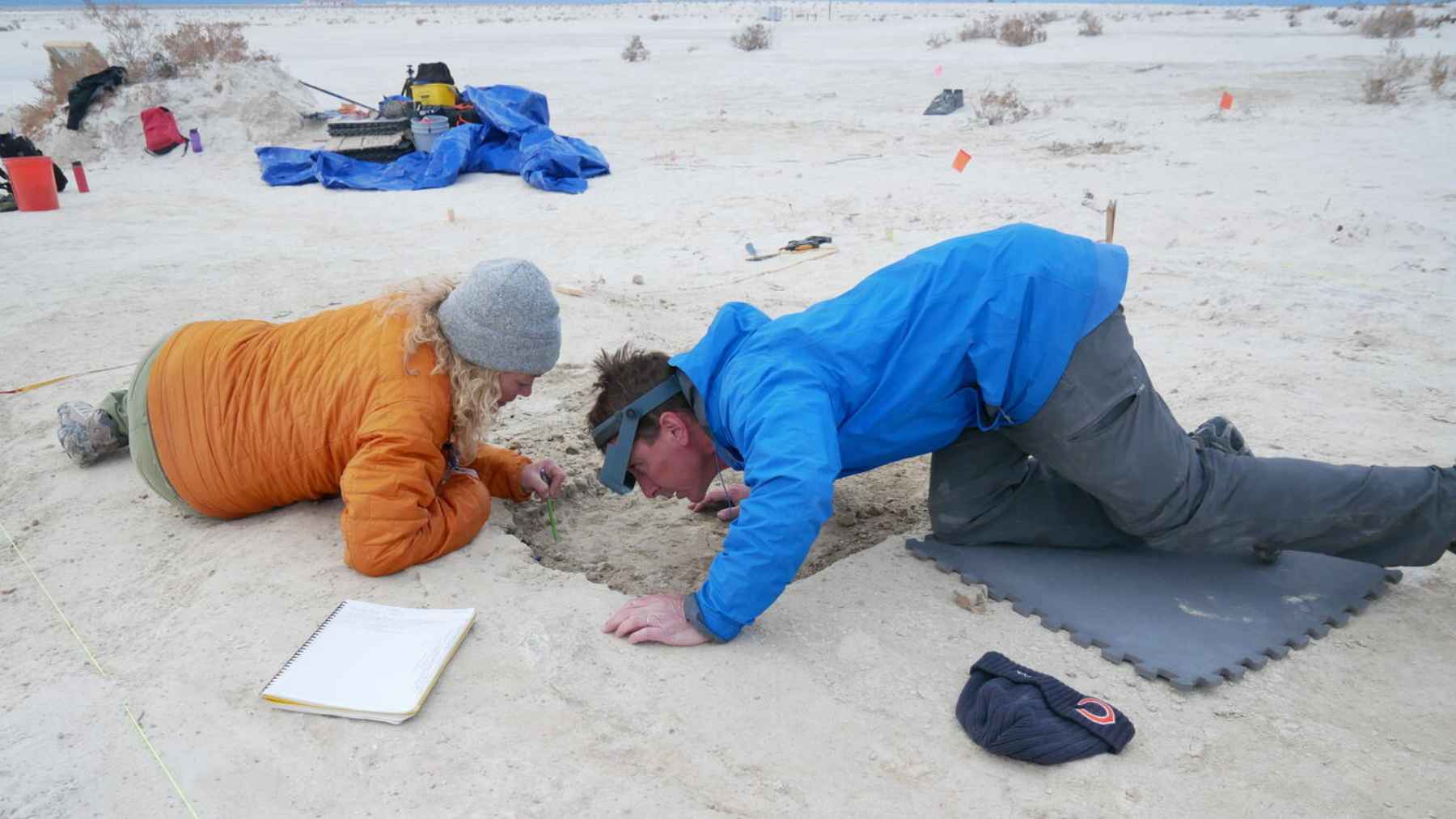
So the team went back to the gypsum flats. This time, researchers from the U.S. Geological Survey and their colleagues sampled something no one could accuse of living underwater. They painstakingly isolated around seventy five thousand grains of conifer pollen from each sediment sample, all taken from the same layers that hold the footprints and the original seeds.
Because these pollen grains come from pine and other land-based trees, they record the carbon of the air, not of a lake. Radiocarbon measurements on the pollen again pointed to ages between roughly 23,000 and 22,000 years, statistically indistinguishable from the seed dates. It is a bit like checking the time on two different clocks and finding they match down to the minute.
The team then added a completely different type of clock. Using a technique called optically stimulated luminescence, they measured when quartz grains in the footprint bearing layers were last exposed to sunlight. Those results showed minimum ages around 21,500 years for the sediments that cradle the tracks, neatly lining up with the radiocarbon story.
When three independent methods tell the same tale, scientists start to relax. In this case, the combined evidence makes it highly unlikely that all of the dates are biased in the same way. The conclusion that people were present in North America during the height of the Last Glacial Maximum now rests on a much firmer footing.
Life during the Last Glacial Maximum in New Mexico
What kind of world were those early walkers moving through. The landscape looked very different from the bright white dunes that visitors see today. The prints sit along the ancient shoreline of Lake Otero, a large ice age lake that once filled much of the Tularosa Basin.
Pollen at the site reveals a cool, wet environment with nearby conifer forests and sagebrush steppe, rather than the desert vegetation that dominates the park now.
Those human footprints are mixed with the tracks of Columbian mammoths, giant ground sloths, ancient camels and other megafauna that came to the lake margins to feed. For a couple of thousand years, humans and these large animals shared the same wetlands, leaving a crowded palimpsest of trail after trail in the mud.
Scientists say this overlap suggests a long period when people, climate and megafauna all interacted, well before many of those big animals disappeared near the end of the Pleistocene.
What the footprints reveal about early human communities
The footprints themselves add a human touch that stone tools never quite manage. Many of the tracks belong to teenagers and children, with fewer large adult feet represented. One idea is that adults were busy with more complex tasks while younger members of the group fetched water, gathered plants or simply played at the water’s edge.
Anyone who has watched kids race along a beach while adults watch the bags will recognize the pattern.
Climate change, migration routes, and early settlement of the Americas
From an environmental perspective, the site is also a lesson in how climate shapes opportunity. These people arrived while massive ice sheets still blocked the classic migration routes to the north, a time when many models said movement into the continent would have been impossible.
Yet here they are, walking a lakeshore opened up by regional drying linked to a rapid warming event in the Northern Hemisphere. Their tracks show how quickly humans can move into new habitats when conditions allow.
For modern readers used to thinking about climate change in terms of power plants and carbon dioxide targets, it can be striking to see how much information is tucked into a handful of pollen grains and a few centimeters of buried sand.
These natural archives let scientists reconstruct past ecosystems, test ideas about how people responded to abrupt shifts and better understand the long relationship between humans and the environments they depend on.
As the debate over the peopling of the Americas continues, those quiet footprints at White Sands have become a key reference point. At the end of the day, they anchor at least one clear moment in time when humans were living in North America during the last ice age, beside a vanished lake in what is now a national park.
The study was published in Science.