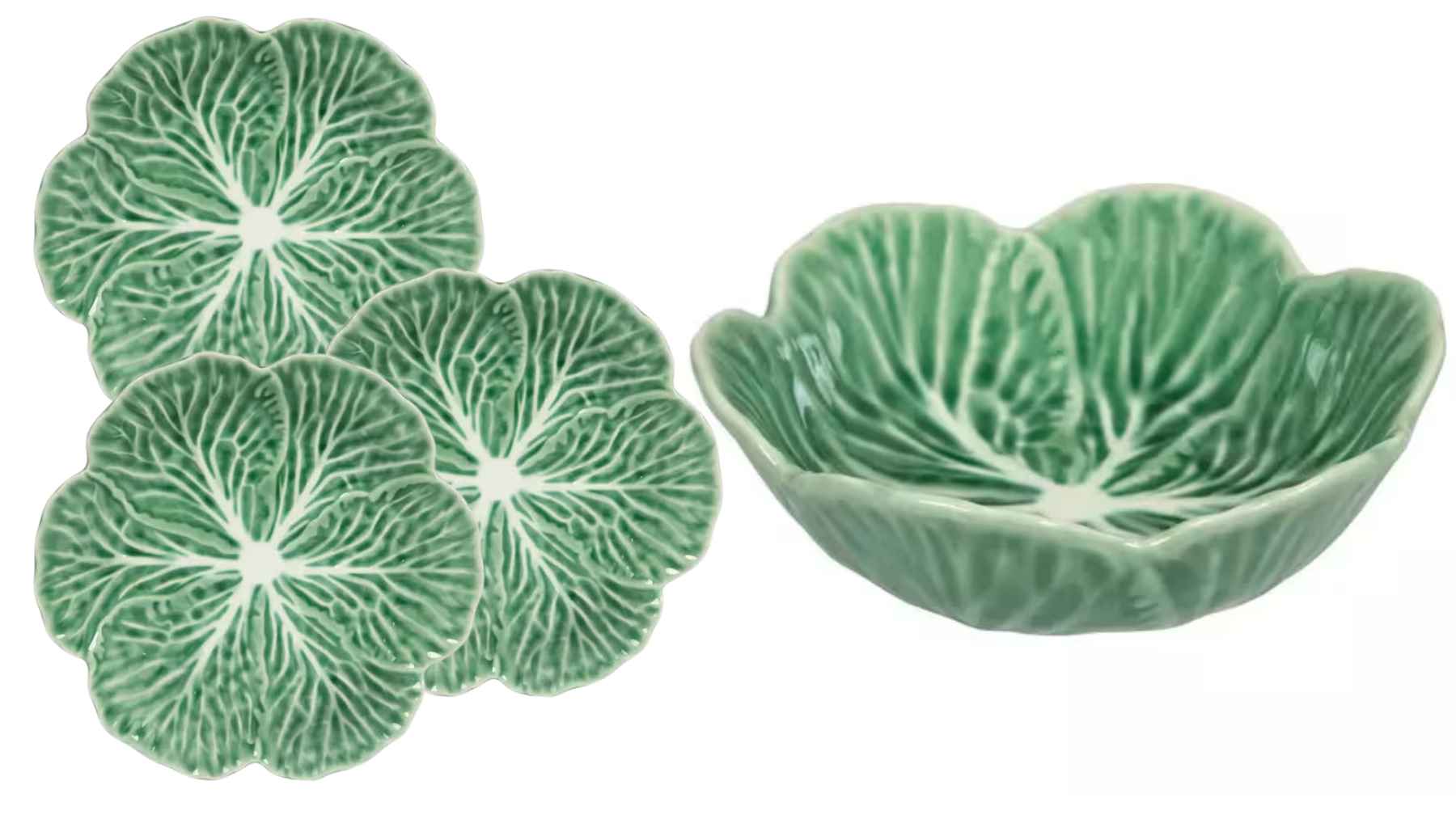
A twelve-dollar cabbage plate is suddenly the star of spring entertainment. A TikTok video by home decor creator Ciara Lupo showing sculpted cabbage leaf dishes from Hobby Lobby has shoppers racing to stores, with pieces already sold out online in some cases.
The plates and bowls promise a fresh, garden-inspired table for Easter brunch or any weeknight dinner. But behind that glossy green glaze sits a quieter question. How sustainable is this kind of fast-moving home trend?
From TikTok favorite to grandmillennial table star
Lifestyle site DenGarden reports that the ceramic cabbage plates and bowls are priced at around twelve dollars for salad plates and slightly more for dinner plates, with matching bowls under ten dollars.
The pieces come in green and white or pink and white and have been compared to the iconic cabbageware made by Portuguese brand Bordallo Pinheiro, which is usually sold in higher-end shops.
The aesthetic lands squarely in the so-called grandmillennial look, where younger buyers recreate the cozy feel of a grandmother’s dining room with vintage inspired china and floral linens. Commenters on Lupo’s video joke that they “cannot resist cabbageware” and admit to clearing out the shelves when they find the plates in stock.
On the surface, this seems harmless. A reusable ceramic plate instead of disposable plastic sounds like a win. The story is a little more complicated.
The hidden footprint of cute ceramic tableware
Ceramic production is surprisingly energy hungry. Studies of the global ceramic industry estimate that it releases more than four hundred million tons of carbon dioxide each year, with most of that linked to tiles, sanitary ware and tableware.
Within a single plate or bowl, firing is the big hotspot. One life cycle analysis from Tufts University found that the firing stage accounts for about eighty percent of the total environmental impact of a ceramic plate.
Another case study of tableware production in Thailand calculated greenhouse gas emissions of roughly one third of a kilogram of CO2 equivalent for each kilogram of ceramic bowl produced, again driven largely by kiln energy.
None of this means ceramic is a bad choice. It means the climate cost is front loaded. Most of the impact happens before the plate ever reaches your cupboard.
When reusable really beats disposable
Life cycle assessments of cups and tableware point to a simple rule of thumb. Reusable items only become clearly better than single-use options when they are used many times. Research from Quebec’s recycling agency found that a ceramic mug needs roughly two to three hundred uses before it outperforms paper cups with lids on overall environmental impact.
Other studies comparing reusable plates to plastic disposables reach similar conclusions for events and catering settings.
At the same time, Italy alone uses about 115,000 tons of plastic plates and cups each year, and European studies estimate that around eighty percent of marine litter is plastic. So choosing durable ceramic instead of single-use plates still helps, especially if it replaces stacks of disposables at parties and barbecues.
The catch is simple. If trendy dishes are bought on impulse and then rarely used, that built in manufacturing footprint never really gets paid back.
How to enjoy the trend without feeding overconsumption
So what can an eco-minded host do when those cabbage plates look very tempting on the shelf? One practical step is to treat them as long-term basics rather than seasonal novelties. Ask yourself whether you will still reach for them in five or ten years, not just for one Easter photo.
If the answer is yes, the pieces are more likely to clock hundreds of meals and justify their energy-intensive production.
Another option is to mix a few salad plates or bowls into tableware you already own instead of buying a full set. That keeps the playful spring vibe while limiting the number of new items that had to pass through a high temperature kiln.
For those who love the cabbage look, secondhand markets and thrift shops often carry vintage vegetable themed ceramics, including classic Portuguese pieces, which extend the life of items already made rather than driving new production.
A small plate, a bigger habit
At the end of the day, the sustainability of a twelve-dollar cabbage plate depends less on the glaze and more on how you use it. If it becomes part of your everyday table, helping you serve more home-cooked, plant-rich meals, its environmental cost starts to look more reasonable. If it lives at the back of a cabinet after one brunch, it quietly adds to the tally of stuff our homes did not really need.
The original lifestyle article that drew attention to the cabbage plates was published on DenGarden.