Sustainable mobility doesn’t just involve using new fuels, as we’ve seen before — in fact, we’re still astonished to learn why there aren’t electric space rockets yet. However, they’ve now taken a giant leap by introducing the new ultralight 340 hp engine. What have they achieved? To put it bluntly, they’ve pushed the boundaries of range to new limits.
The Magna engine that changes everything: zero internal combustion
The 340 hp ultralight engine developed by the British startup Magna represents a significant advancement in electric propulsion technology. Weighing just 35 kg, this innovative engine offers power similar to traditional combustion engines but with the efficiency and sustainability of electricity.
This engine marks a milestone in the transition to electric mobility, demonstrating that it’s possible to achieve high performance with much lighter batteries and motors. Although its range is limited, the multiple advantages of this technology promise a promising future for its application in urban and delivery vehicles.
An electric motor that eliminates gasoline and threatens hydrogen
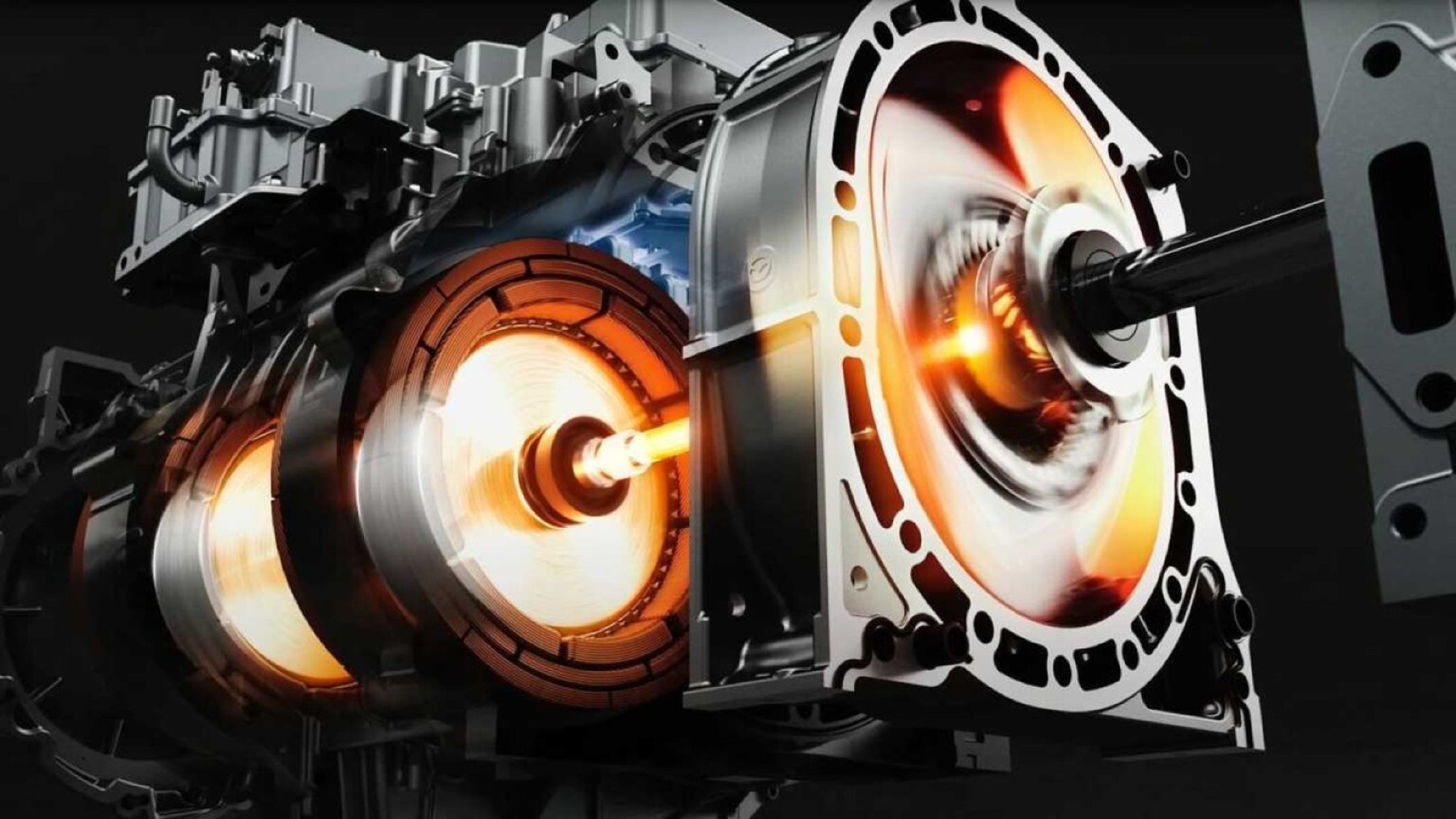
The Magna engine uses a unique and innovative technology to achieve its high power and efficiency. Instead of a traditional combustion engine, it uses permanent magnets and coils to generate motion. This is the same motion used by hydrogen engine catalysts — albeit with some differences.
The neodymium magnets inside the engine create a very strong magnetic field that interacts with the copper coils around the shaft. By sequentially activating the coils, the magnets rotate, which in turn rotates the shaft, a motion that reduces wear.
Compared to an equivalent combustion engine, the Magna engine has 10 times more magnets, allowing it to generate much more torque. It also has thinner coils wrapped around the shaft, maximizing magnetic interaction, with all the benefits that come with it.
This advanced construction is what enables the Magna engine to achieve 340 horsepower while being much more compact and lighter than a traditional engine. It definitely represents a significant technological advancement for the automotive industry.
Impressive voltage for a motor that weighs only 75 kilograms
The Magna engine operates at a voltage of 800 volts, much higher than the usual voltage of current electric cars, which typically hover around 400 volts. This allows for higher power density and higher performance, resulting in extended range in all cases, even in cold environments.
According to the manufacturer, the high 800 V voltage is key to achieving the lightness and compactness of the engine, as it reduces the current needed for a given power. By requiring less current, smaller and lighter cables and connections are needed.
Additionally, the 800 V architecture facilitates fast charging, allowing the battery to be recharged much faster than with lower voltages. For example, the battery could be recharged for a range of 250 km in just 15 minutes.
In summary, the choice of such a high voltage is one of the technical keys that explain the unique performance and characteristics of this innovative electric motor. The 800 V is essential for understanding its lightness, power density, and ultra-fast charging capability.
At this point, we can only emphasize how the Magna engine has been a game-changer. The mobility sector now has a new proposal to eliminate traditional and polluting combustion. In fact, it’s not the only one, as we’ve recently learned about the prototype that operates at -253°C, which aims to revolutionize our roads like no other before.