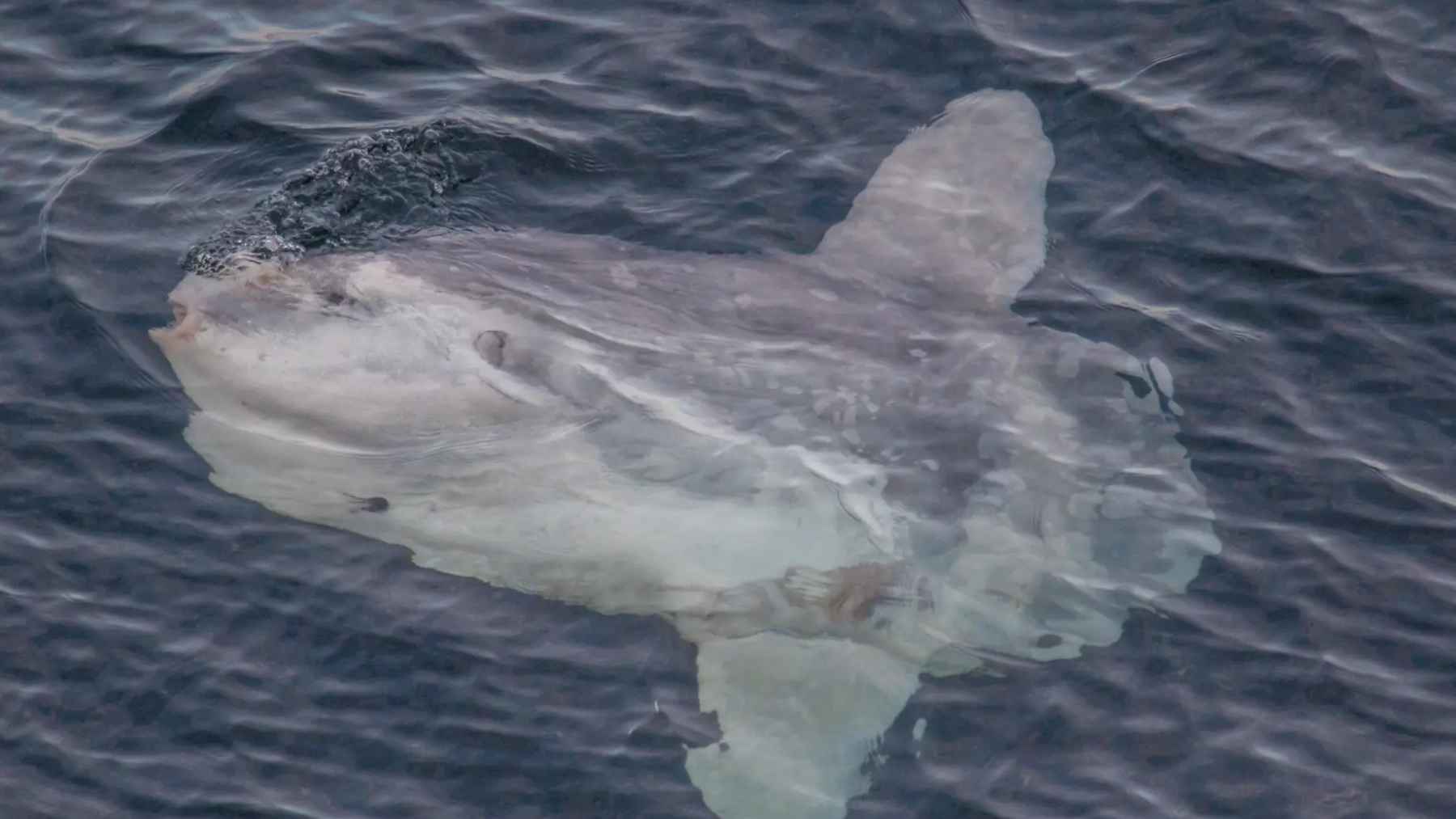
A routine walk along the shoreline in Marina di Ravenna, Italy, turned into an unusual wildlife discovery when beachgoers found a giant ocean sunfish washed up near the jetty. The fish measured about 8.2 feet (2.5 meters) and weighed roughly 880 pounds (400 kilograms), and it was recovered by local researchers and maritime authorities for closer examination.
Right now, no one is claiming to know exactly what killed it. But strandings like this can work like a forensic snapshot of the sea, offering rare clues about disease, injuries, and pollution in a part of the Mediterranean where changes can show up fast.
What happened on the beach
According to local reporting, the sunfish had likely been spotted near the coast days earlier, and responders tried to guide it back into deeper water. Then it reappeared as a carcass on the shoreline, leaving scientists with the toughest kind of question, which is what went wrong offshore where nobody was watching.
Cestha’s president, Simone D’Acunto, told Corriere di Bologna that there were no obvious signs of a propeller strike on the body, which can sometimes be visible right away. The carcass was slated for study with university partners, because the real answers usually come from internal exams and lab tests, not beachside guesses.
This matters because large pelagic fish are hard to monitor in real time. When one ends up on the sand, it is sad, yes, but it is also a rare chance to collect evidence that normally stays out at sea.
Meet the ocean sunfish
The ocean sunfish, often called “mola,” looks almost unreal at first glance, like a giant, flattened disk with fins. FishBase describes a scaleless body with “extremely thick, elastic skin,” and a tiny mouth where the teeth are fused into a parrot-like beak.
One of its strangest features is what it does not have. Instead of a true tail fin, the back end forms a rudder-like structure called a “clavus,” and the fish moves by flapping its tall dorsal and anal fins in sync.
It is also part of a surprisingly small group. A 2023 paper in Frontiers in Marine Science notes that the Molidae family “comprises five species,” including the world’s heaviest bony fish, the giant sunfish.
Why a stranding is so hard to explain
So what pushes an open-ocean animal into shallow water in the first place? Even when there are no obvious wounds, strandings can be linked to illness, parasites, disorientation, exhaustion, or complications from human activity that do not leave a clear external mark.
That is why the necropsy matters. Researchers can look for internal trauma, infection, and signs of long-term stress, including contaminants that build up over time and do not announce themselves on the skin.
Plastic is one concern scientists increasingly track in large marine animals. A 2022 Marine Pollution Bulletin paper reported the “first” evidence of a plastic fragment found in the digestive system of an ocean sunfish from the western Mediterranean, and a 2023 study found microplastics in 79 percent of 53 sunfish examined in the Northeast Atlantic.
Jellyfish on the menu, and a sea that is shifting
Ocean sunfish are often associated with gelatinous prey, and reports on the Ravenna animal described a diet that can include plankton and jellyfish. That is one reason some scientists watch sunfish sightings as part of a bigger story about what is happening in the food web.
In the northern Adriatic, jellyfish blooms have a long history, and recent work has put hard numbers on just how intense they can get. A 2022 study in Ocean Science documented an “exceptional bloom” of the barrel jellyfish Rhizostoma pulmo in the Gulf of Trieste in 2021, with densities above 10 jellyfish per square meter, which is roughly one per square foot.
Then there are the invasive “comb jellies” mentioned by experts in the region, which are not true jellyfish but can still reshape ecosystems. In a January 2026 press release, Italy’s National Institute of Oceanography and Applied Geophysics said Mnemiopsis leidyi is “one of the 100 most harmful invasive species worldwide,” has been present in the Adriatic for almost a decade, and may benefit from climate-driven conditions that favor big seasonal blooms.
What this could mean for conservation
Even when a stranded sunfish is enormous, it may not be exceptional for its species. Guinness World Records notes that sunfish in the genus Mola average around 6 feet in length and about 2,200 pounds, and the heaviest recorded specimen, a bump-head sunfish, weighed 6,049 pounds and was found in 2021 off Portugal’s Azores.
But “common” is not the same as “safe.” FishBase lists the ocean sunfish (Mola mola) as Vulnerable on the IUCN Red List, and it also flags high to very high fishing vulnerability in its model-based indicators, which fits what many marine biologists warn about regarding bycatch and pressure in busy seas.
There is another twist that makes protection tricky, which is how fast these fish can grow. A genome study on Mola mola noted that a captive sunfish “gained approximately 400 kg in just 15 months,” about 880 pounds in a little over a year, which means populations can look resilient while still being vulnerable to repeated losses.
What to do if you see a stranded marine animal
If you ever come across a large marine animal on a beach, the safest move is usually to keep your distance and call local wildlife responders or maritime authorities, rather than trying to push it back into the water. A stressed animal can injure itself further, and well-meaning people can get hurt too.
Clear photos from a respectful distance and a precise location can help responders move faster, especially in places with long stretches of shoreline.
The press release was published on OGS.