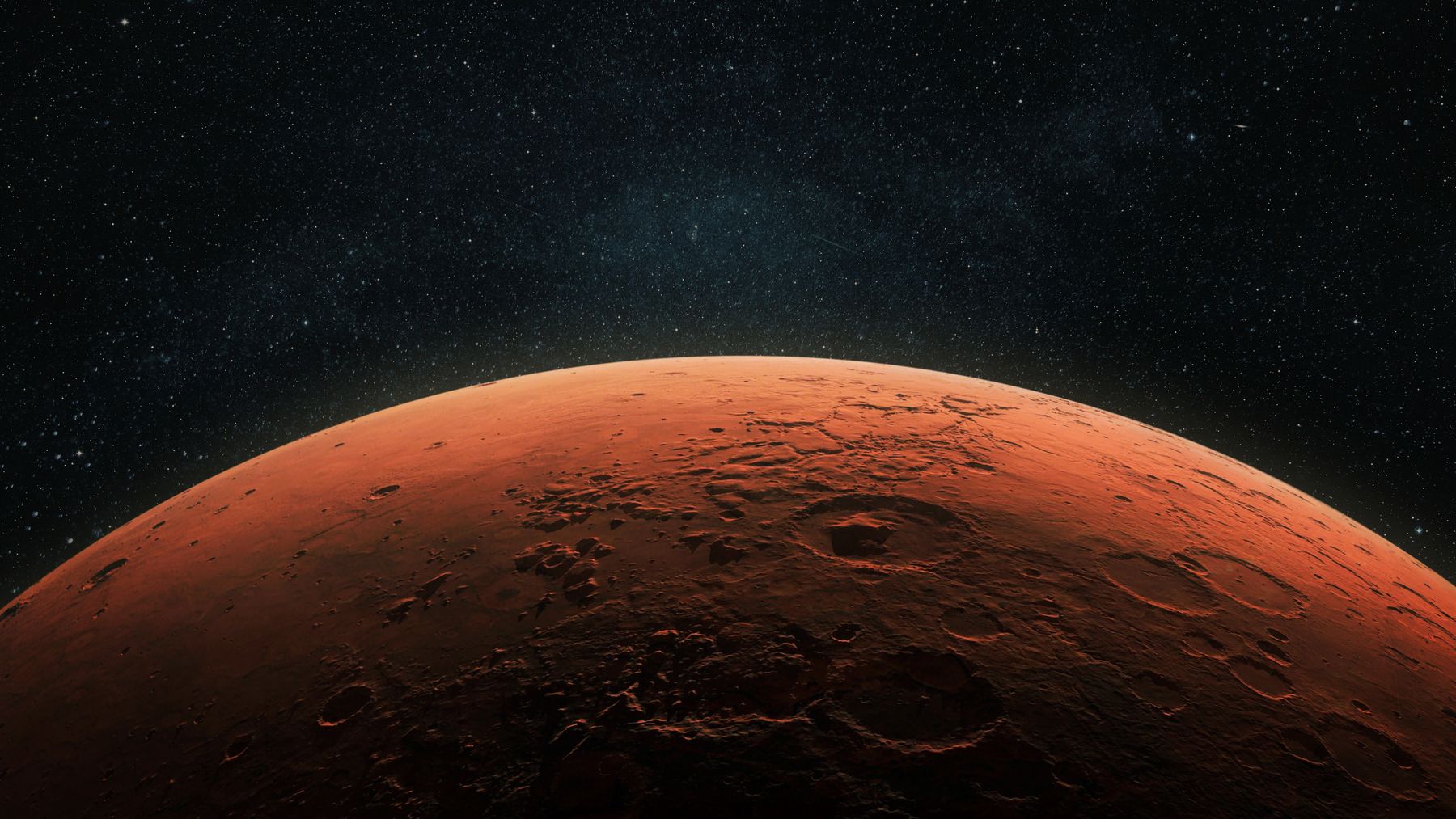
It seems that our expeditions to Mars are about to become even easier to carry out. For many decades, a manned trip to Mars was seen as a huge challenge, as it would require unattainable technologies. The trajectories we are used to taking took between six and nine months to complete, not to mention the health risks to astronauts that have always called into question the viability of these missions. But it seems that this is about to change… soon we will be able to travel to Mars in just 90 days.
Finally, the highway to Mars
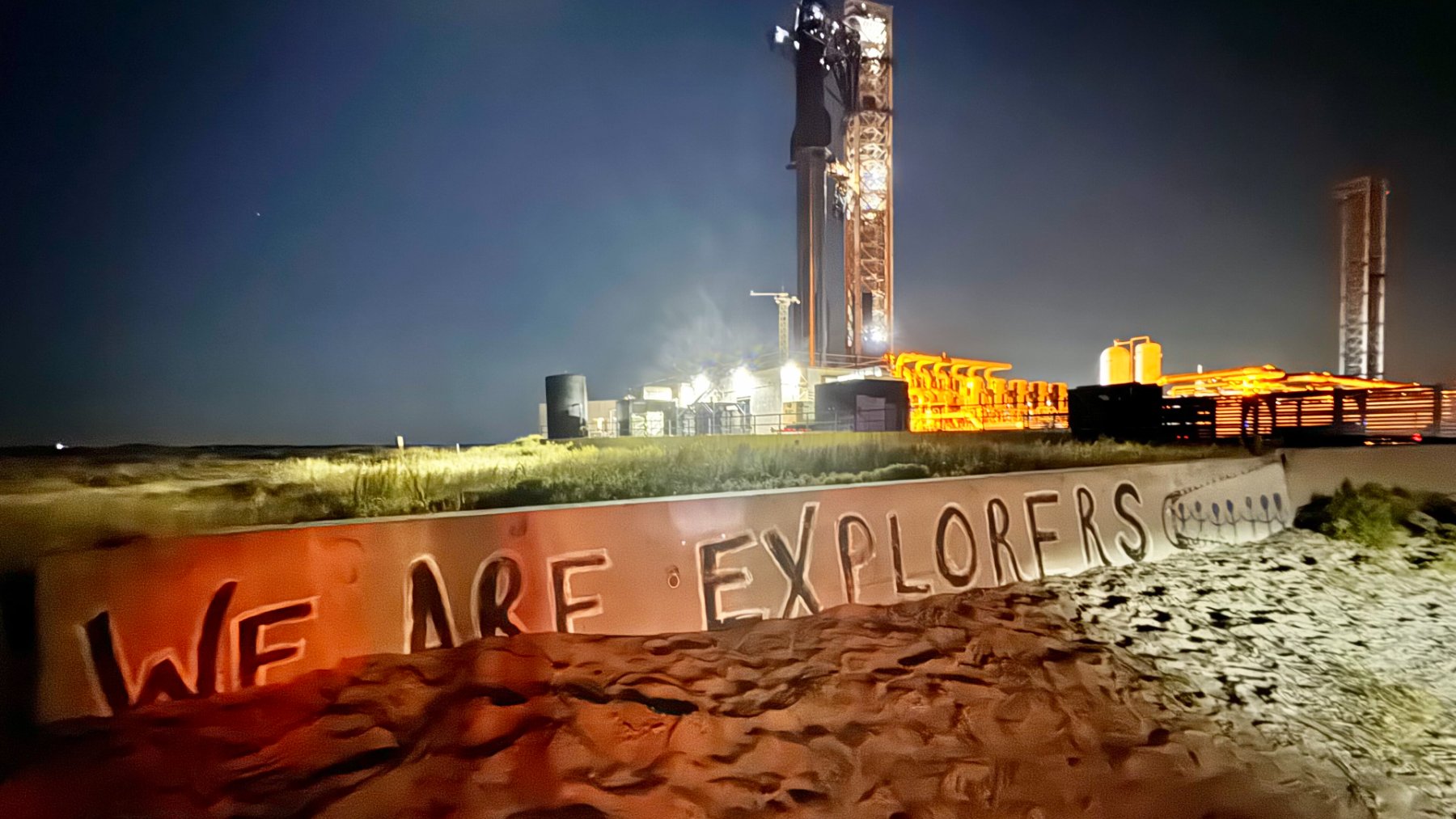
This idea, or rather, this new alternative for travel, came from a new study conducted by Jack Kingdon, a physicist at the University of California, Santa Barbara. He proposes a rather surprising alternative: he wants to use SpaceX’s own Starship to make this journey in just 90 days.
Kingdon discovered this alternative by analyzing interplanetary trajectories using tools already available, such as the Lambert Solver, which is nothing more than an algorithm used to calculate minimum elliptical arcs in two-body problems. From there, he found two ideal times for the departure from Earth to Mars:
- In April 2033: It would be possible for a mission to leave Earth and reach Mars in 90 days, returning in another 90 days of travel.
- In July 2035: This is a more conservative option, where we could go in 90 days and return in 104 days.
Even though they would be on different dates and travel periods, both trajectories would be possible using Starship’s current chemical propulsion, refueling in Earth orbit, and then refueling on Mars using ISRU, which is the use of local resources to generate fuel. With this process, we would end this dependence on technologies with a low level of maturity, such as nuclear propulsion. And better yet, it would still put the mission within SpaceX’s operational horizon in the next decade.
What will we gain by traveling to Mars in 90 days?
This discovery has only positive points for our search for new things on Mars. After all, the desire to reduce travel time is not just a matter of convenience. If we have shorter missions, we could reduce by half the exposure to cosmic radiation, which is one of the greatest risks for astronauts in deep space.
Not stopping there, another benefit is the preservation of physical health. How so? Well, in microgravity, astronauts lose about 1% of bone mass per month, and that’s even while maintaining exercise, you know? By having a faster route, the crew members arrive on Mars with more strength and physical structure to perform demanding tasks, such as building habitats, assembling ISRU reactors, or conducting scientific explorations (maybe this could be the moment Musk was waiting for to colonize Mars).
Is it really possible to travel to Mars in just 90 days?
Even though there are only positive points for this highway to Mars, there are still some challenges before it actually comes to fruition. This is because some simulations based on public data show that the Starship would have to withstand intense atmospheric reentries, both on Mars and Earth. And what’s the problem? Well, even if the thermal models show that the shields can withstand the heat generated, there is not enough public data on the actual thermal performance of the spacecraft in these extreme conditions.
In addition, this new plan will require a very high launch rate: up to 45 Starship flights per mission. But, regardless of all these points, just having the possibility of a 90-day mission without futuristic inventions is already a game-changer. Perhaps that is why ot only Musk, but also Trump are already behind the “Mars revolution” and are already thinking about invading the planet in two years.