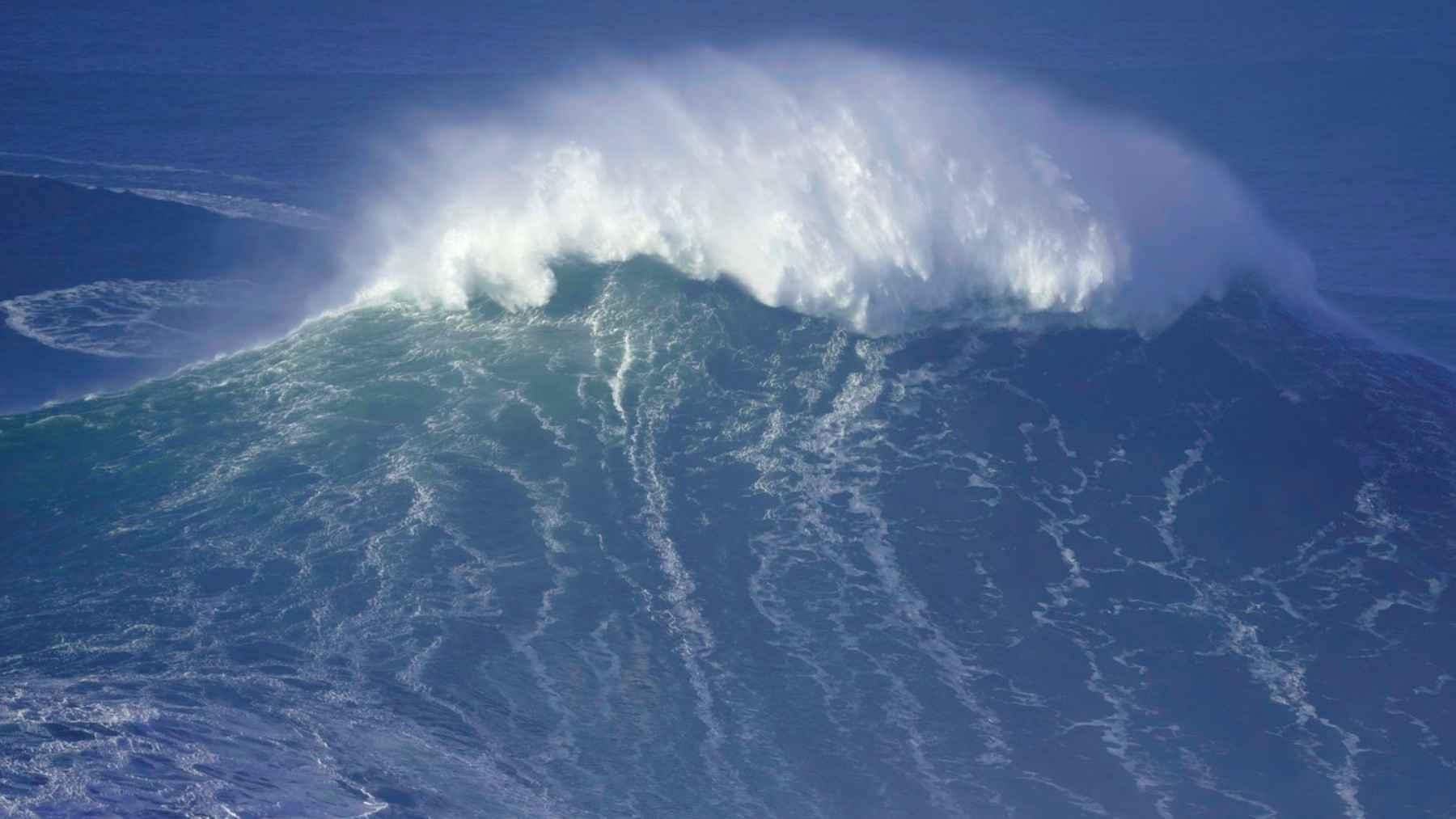
Far out in the North Pacific, with no ship in sight, satellites have confirmed waves towering to about 35 meters high, roughly 115 feet. The event, linked to a powerful storm in December 2024 and analyzed this year, now ranks among the largest ocean waves ever measured from space.
Those waves were born in a megastorm known as Eddie. Using the SWOT satellite, researchers calculated a significant wave height of 19.7 meters, which is already enough to batter a large vessel. Inside that field, individual crests were estimated to climb beyond 35 meters (115 feet high) while the swell traveled almost 15,000 miles from the North Pacific, through the Drake Passage, into the tropical Atlantic.
For years, stories of “rogue waves” sounded like something from a ship’s log that no one could verify. Now satellites such as SWOT, Jason‑3 and Sentinel‑3 routinely send radar pulses toward the sea surface, measure the return time and reconstruct sea height and significant wave height along their orbits. Even a few centimeters of change show up in the data. A crest tens of meters above the surrounding sea stands out like a skyscraper on an empty plain.
Oceanographers define a rogue wave as one that rises to roughly twice the surrounding significant wave height. In an extreme sea where typical large waves reach about 14 meters, that means a crest around 28 meters. Eddie’s storm field went further. With a significant wave height near 20 meters and some crests near 35 meters, satellites have now documented rogue seas at a scale that older models only hinted at.
The bigger picture is just as important as the headline numbers. Long-term analyses of global wave records show that about one third of the world ocean has experienced clear upward trends in mean and extreme wave heights since the 1980s, especially across the Southern Ocean, where winter waves have been rising by roughly one to two centimeters per year. In that belt, average wave heights increased by about 30 centimeters between 1985 and 2018, and overall wave power has climbed around eight percent since the 1980s.
At the same time, the water beneath those waves is heating up. A World Meteorological Organization report found that in 2024, a vast marine heatwave covered about 40 million square kilometers of the western Pacific and surrounding seas, an area five times the size of Australia.
Another study reported that extreme marine heatwaves affected about 96 percent of the global ocean surface in 2023, lasted far longer than usual and may signal a shift in ocean dynamics. Warmer oceans store more energy, feed stronger storms and help create the wind fields that build massive waves in the first place.
Scientists are careful not to blame every giant crest on climate change alone. Fabrice Ardhuin, who leads part of the SWOT analysis of Storm Eddie, put it simply when he said that “our next step is to link the findings to climate change” and that “climate change may be a driver, but it is not the only one.” Seabed shape, storm tracks and natural climate swings still matter a lot. Yet the background trend is clear enough that researchers are watching the statistics of extreme waves with growing attention.
What does any of this mean for everyday life, beyond dramatic numbers on a graph? For shipping companies, satellite altimeters have become a kind of truth meter for the sea. Forecast centers already blend satellite-derived significant wave heights into models that warn of seas above 14 meters and identify routes most exposed to extremes.
Shifting a container ship a few hundred miles off the direct track can cut the odds of meeting a 20 meter crest. That adjustment might add fuel costs to someone’s freight bill and change which day certain goods reach a supermarket shelf, but it also lowers the chance of a catastrophic hit in the middle of the night.
Closer to shore, the same swells that delight big-wave surfers quietly change risk for coastal communities. The Eddie Aikau Invitational at Waimea Bay and record days at Mavericks in California were powered by those December 2024 storm waves, which had crossed an ocean before breaking on the beach.
Long-period swells run farther inland, chew at dunes and coastal cliffs, and, when combined with rising sea level, raise flood levels in storms. Research suggests that by the end of this century, without deep emission cuts, around 60 percent of the world’s coastline could see larger and more frequent extreme waves, with extreme sea level events increasing many times over.
There is another side to this story. The same studies show that wave power is an energy resource several times larger than some national electricity needs, at least in places like Australia. Wave energy technology is still young and faces tough engineering tests, but combining offshore wind and wave devices could one day turn those restless swells into steadier renewable power that helps keep lights on and electric bills manageable.
In the end, the new satellite records do two things at once. They confirm that the planet is capable of building moving walls of water higher than many city buildings, even when no one is there to see them. They also turn what used to be rumor into data that planners, ship designers, port authorities and coastal residents can actually use.
The ocean is not suddenly becoming a different world, yet it is quietly shifting under the combined weight of heat, wind and time, and the view from space is helping us keep up.The study was published on the PNAS website.