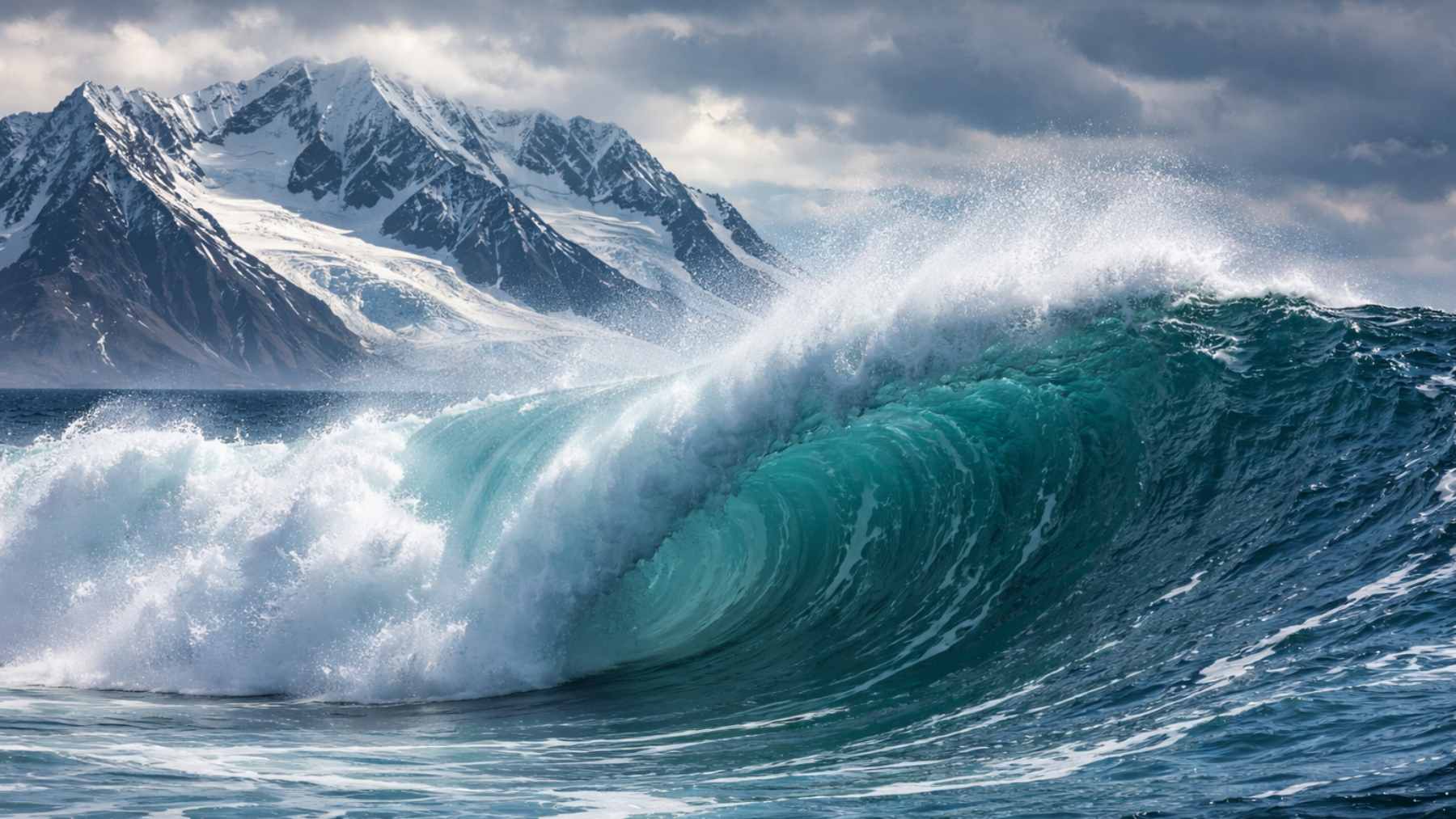
When most people picture a tsunami, they imagine a powerful earthquake far offshore and a wall of water racing across the open ocean. Yet a new global review of 317 events shows that some of the tallest and deadliest tsunami waves on record were not born on a fault line, but on unstable slopes that suddenly collapsed into water.
These are landslide-triggered tsunamis, often called LTT. They account for about 10% of all tsunamis recorded worldwide and are the second most frequent source after earthquakes themselves. In some cases they have produced waves higher than thirty meters and, in extreme examples, hundreds of meters high. The result is a hazard that is highly local, very fast and still poorly understood.
What the new global catalog reveals
The study, led by Katrin Dohmen and colleagues, compiles 317 landslides that together generated 297 tsunamis around the world. Each case is described in terms of where it happened, what triggered the slope failure, how big the waves became, and how many people were killed or how much damage followed.
The researchers grouped events into six main causes. Earthquakes are responsible for 44% of documented LTT. Volcanic activity and paraglacial conditions each account for roughly one-tenth. Anthropogenic activity and precipitation also contribute, while nearly one-fifth of cases have an unknown cause because the original landslide has never been studied in detail.
The catalog also shows where these waves grow most dangerous. About one-third occurred along open coasts, but 41% took place in enclosed marine environments such as bays and fjords, and one-quarter in inland waters like lakes, rivers and reservoirs. Those confined settings matter because they trap wave energy instead of letting it radiate away into the open sea.
That is one reason the highest known tsunami run ups are linked to landslides in narrow basins. In 1958, a rockslide into Lituya Bay in Alaska produced a wave that stripped vegetation up to 524 meters above the water. In 1963, the Vajont reservoir disaster in northern Italy sent water about 260 meters up surrounding slopes and killed more than 2,000 people.
Climate change and concrete add fuel to the risk
The new review connects many of the most worrying cases to changing climate in cold regions. Paraglacial conditions, which describe landscapes adjusting after glaciers retreat, already explain about 11% of LTT in the database.
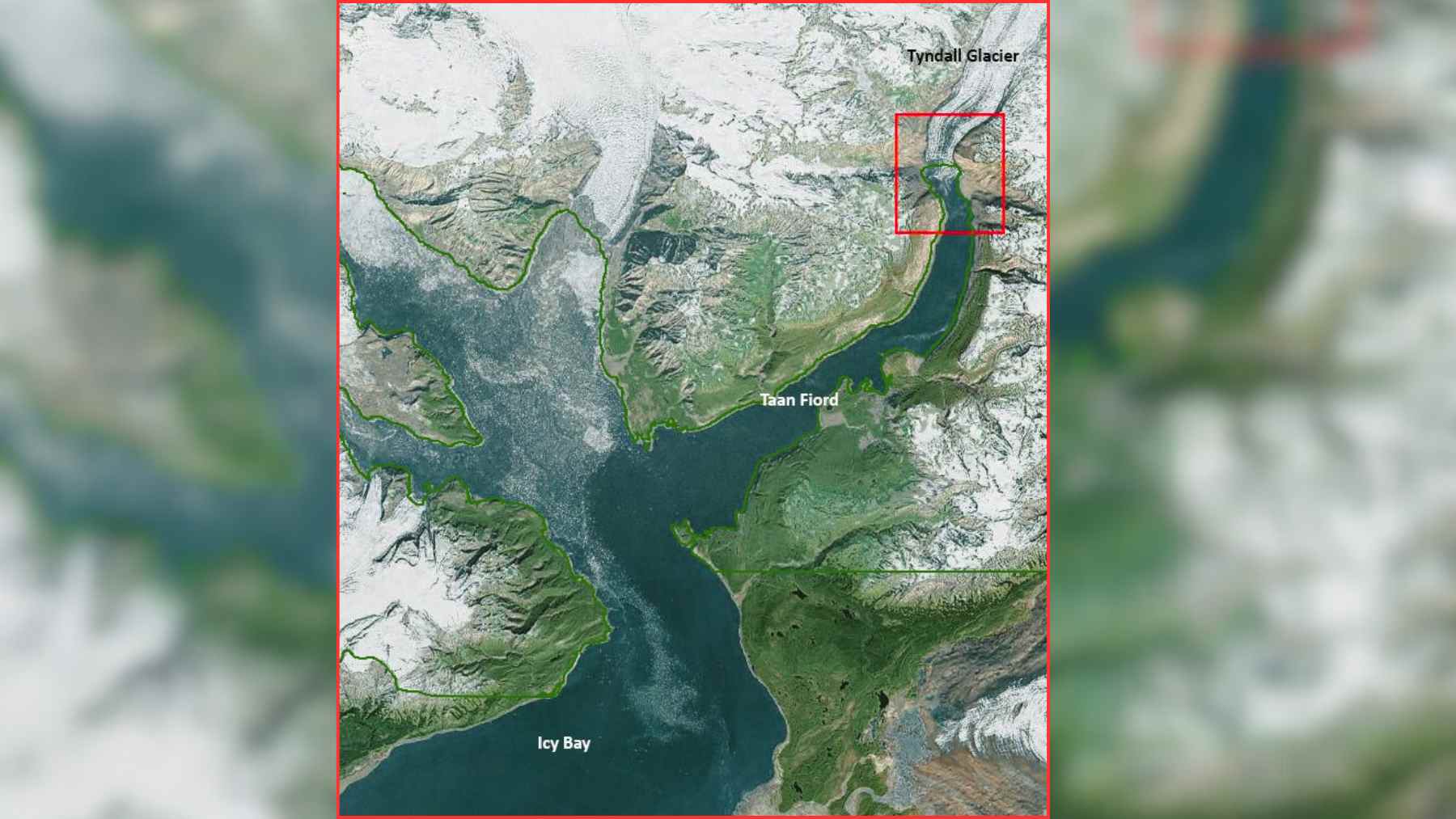
As ice thins and pulls back in places like Greenland and Alaska, steep rock walls lose their frozen support, permafrost degrades and deltas built from loose sediments become more unstable.
In June 2017, for example, about 45 million cubic meters of rock plunged into Karrat Fjord in Greenland. The resulting tsunami swept through nearby villages, washed away homes and left four people missing. In 2023, another Greenland rockslide sent a wave estimated at two hundred meters high down Dickson Fjord and set up a standing wave . Events like these hint at what a warming climate can trigger in high-latitude fjord coasts.
At the same time, humans are creating their own tsunami sources. Around one in nine documented LTT is linked to human activity. Reservoirs behind large dams are a key hotspot. Fluctuating water levels change pore pressure in slopes along the shore. Heavy rain can tip them over the edge. The Three Gorges region in China has already seen thousands of landslides after impoundment, although only a small share have actually reached the reservoir and generated waves.
Open-pit mines, quarries and artificial embankments also appear in the catalog. When failures occur in narrow lakes or flooded pits, even modest slide volumes can create waves big enough to threaten workers, nearby communities and infrastructure. For engineers and regulators, this is not an abstract problem. It is tied to dam safety, shipping routes and, ultimately, to local economies.
Why warnings are so hard
Unlike classic ocean-wide tsunamis, most landslide waves arrive in minutes. Many tsunamigenic landslides occur right on the shoreline or very close to it. In Palu Bay, Indonesia, in 2018, earthquake-triggered landslides sent water to the city shoreline in roughly 100 seconds. In those conditions, sirens and official alerts have almost no time to work.
The second problem is uncertainty. Key parameters such as landslide volume, material and even location are missing for a large share of events in the catalog, especially for submarine slides. Publicly available seafloor maps are often too coarse to reveal the smaller features that can still generate dangerous waves. That makes it difficult to predict how high a landslide tsunami might get, or which coastal towns should worry most.
Existing early warning systems are tuned mainly to earthquake sources. They perform well for classic tectonic tsunamis in places like Indonesia and Japan. But when a quake also triggers underwater landslides, the resulting waves can arrive earlier or stand higher than models predict. The new review suggests that coastal regions near large strike-slip faults, such as Palu Bay or parts of the Sea of Marmara, deserve special attention because of this combined threat.
What scientists say needs to change
Researchers argue that the first priority is to know where unstable slopes actually are. That means more high-resolution bathymetry along coasts, especially in active tectonic margins and around major reservoirs. It also means applying landslide susceptibility mapping to offshore areas, not only to hillsides above sea level.
In a few places, authorities already monitor known unstable slopes with sensors, cameras and ground based instruments. One example is the Tafjord area in Norway, where an unstable rock mass of tens of millions of cubic meters is under continuous watch and residents can receive alerts by phone and siren if failure seems imminent. Similar systems exist around some Chinese reservoirs.
For most coastlines, however, protection will depend on something simpler. People who live or holiday near steep fjords, volcanic islands or big reservoirs need to understand that strong shaking, an obvious rockfall or a sudden loud roar near the shore can all be cues to run uphill without waiting for an official message.
Landslide tsunamis are not the most common waves on the planet. Yet they show how tightly connected mountains, dams, volcanoes and the sea really are. When a slope fails at the wrong time in the wrong place, coastal life can change in a matter of seconds.
The study was published in the journal “Natural Hazards” on the publisher’s site.