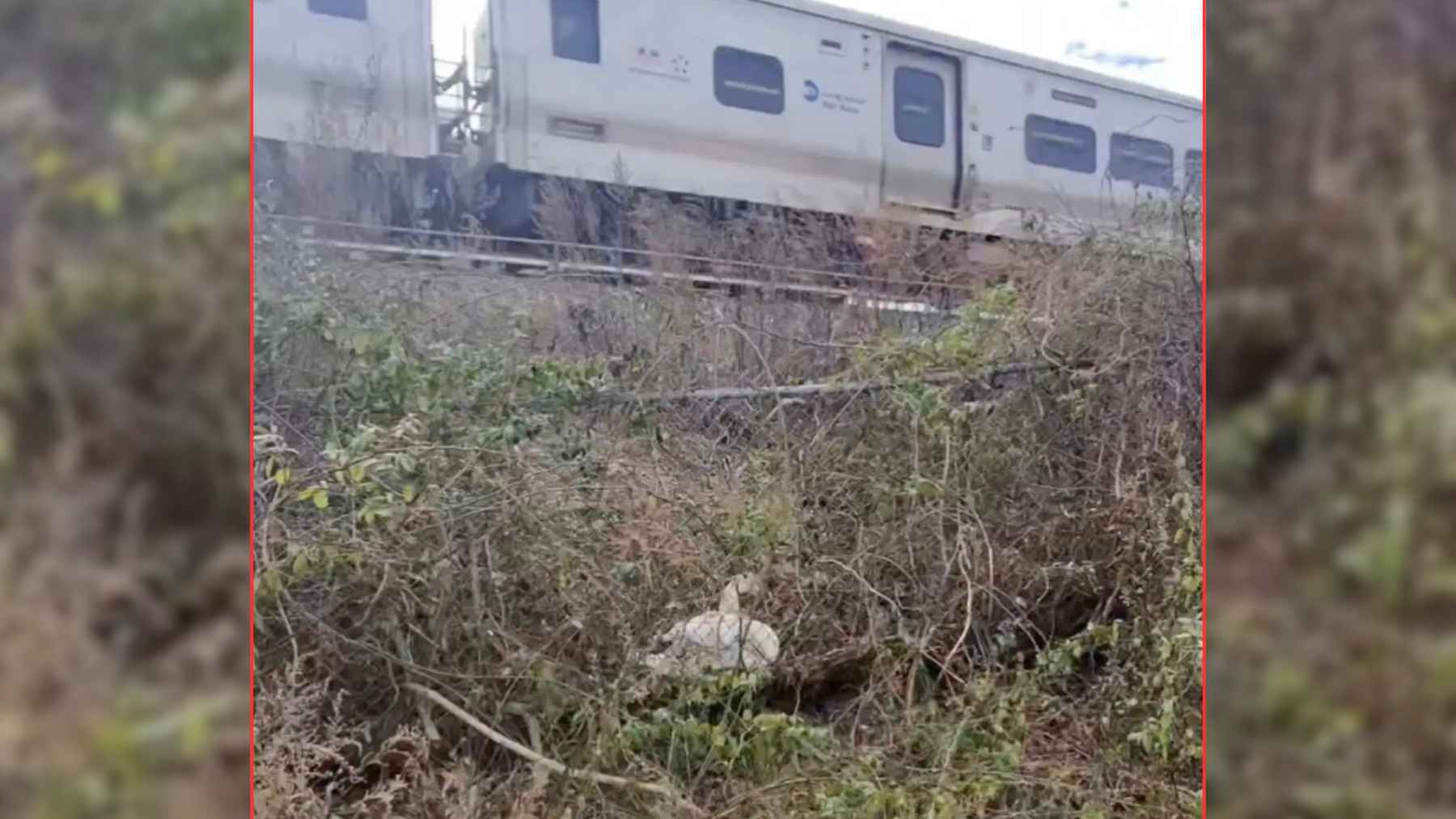
In Massapequa, New York, a couple walking a local trail recently spotted what looked like a crumpled white lump squeezed between a fence and the train tracks.
It turned out to be a swan tangled in brambles and stranded away from the nearby reservoir, until local rescuer John Debacker and a passing jogger carefully netted, checked and carried the bird back to the water, where he quietly rejoined his mate. “He tried to pull away at first, then settled down once he knew I was helping,” Debacker told The Dodo.
For that swan, the danger lasted only a few minutes. For many birds that live along busy transport corridors, the mix of rails, overhead wires and fast trains can be a constant threat where wild habitat meets concrete, as studies on railway impacts show for bird communities near the tracks.
Research also finds that railways and associated wires can act as lethal obstacles for large waterbirds. Work on swan populations has documented a significant share of deaths linked to collisions with overhead lines, highlighting how linear infrastructure can quietly shape survival for species that rely on open skies and long flight paths.
At the same time, swans and other waterfowl depend on wetlands that often sit right next to this infrastructure. Wetlands rank among the most biodiverse ecosystems on Earth and play an important role in keeping water clean and reducing flood risk for nearby communities, yet human development is fragmenting many of these watery refuges.
So what can an ordinary walker do when a quiet jog meets a wild animal in trouble near the tracks? Experts recommend staying off the rails, keeping a safe distance, and calling local wildlife rescuers or animal authorities rather than attempting a solo rescue, especially with large birds.
In Massapequa, a few people looked twice at an odd shape on the ground and chose to act with care, turning a potential tragedy into a simple family reunion on the water.
The article was published by The Dodo.