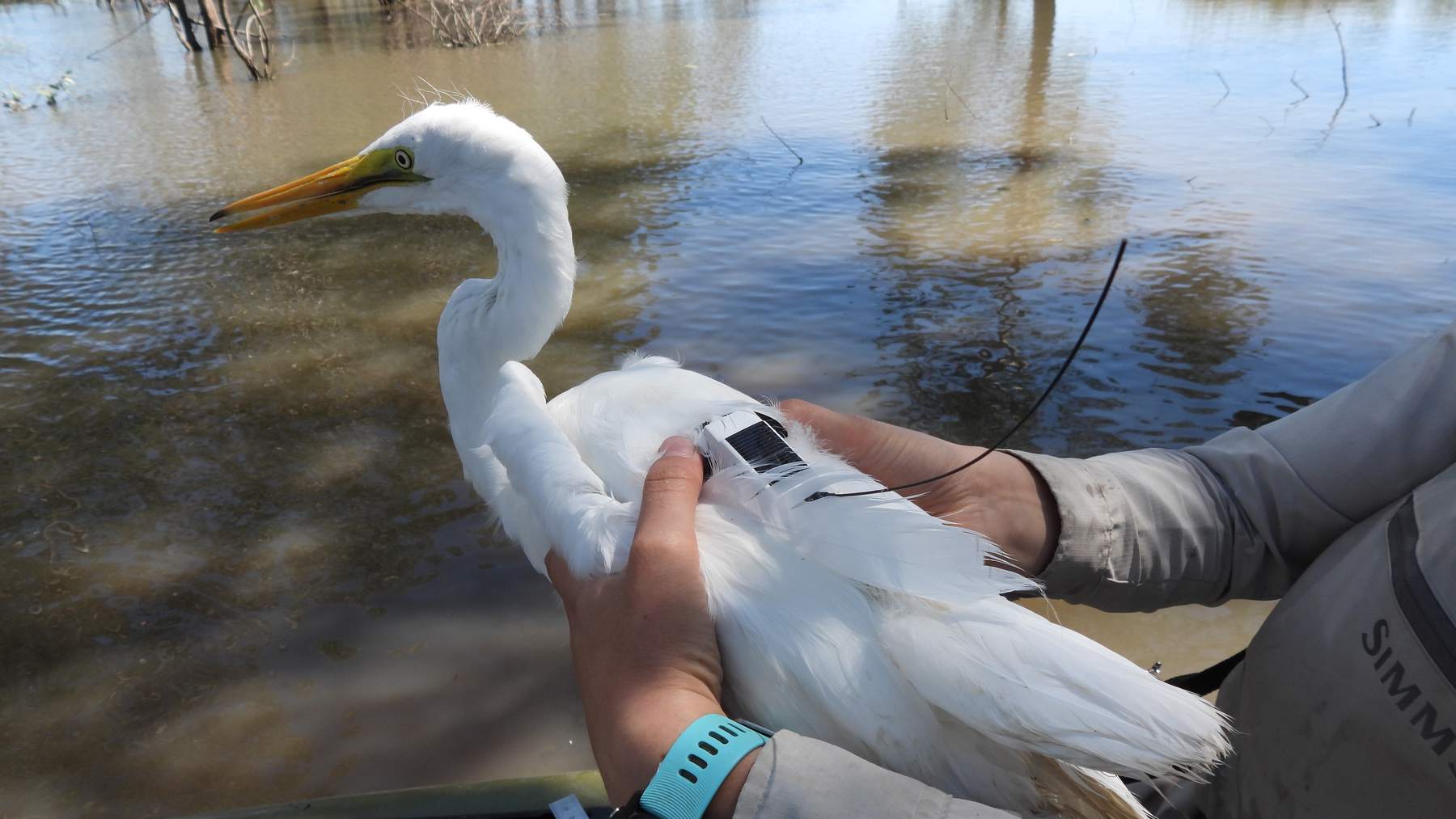
A young plumed egret named Yurru once flew for 38 hours straight, carrying a lightweight GPS tracker on its back. The same kind of tracking is now being used to prepare for H5 bird flu in Australia’s largest river system.
H5 high pathogenicity avian influenza has now been detected in wildlife across Australia, CSIRO, Australia’s national science agency, said on November 19. Heather McGinness, a principal research scientist at CSIRO, is worried about what could happen if it takes hold among the huge waterbird colonies of the Murray–Darling Basin.
Thousands of birds in one place
Throughout spring and summer, waterbirds flock to the basin’s vast wetlands to nest and raise their young. Ibis, herons, egrets, pelicans, bitterns and swamphens all gather there in large numbers.
“If there are really large-scale breeding events – which happen every few years – we might get thousands of birds in the same place at the same time, putting them all at risk of catching it,” McGinness said.
“We still don’t know what the impacts of H5 bird flu might be on many of our native species,” McGinness added. If the virus takes hold in the basin, significant losses of susceptible wildlife will be unavoidable, the agency says.
Most confirmed H5 bird flu events in Australia have been along the coast, according to CSIRO. So far, only isolated cases have been detected inland, including in the Murray–Darling Basin.
Bird flu fears have disrupted other Australian field science too. Australia temporarily shut its Macquarie Island research station over bird flu fears.
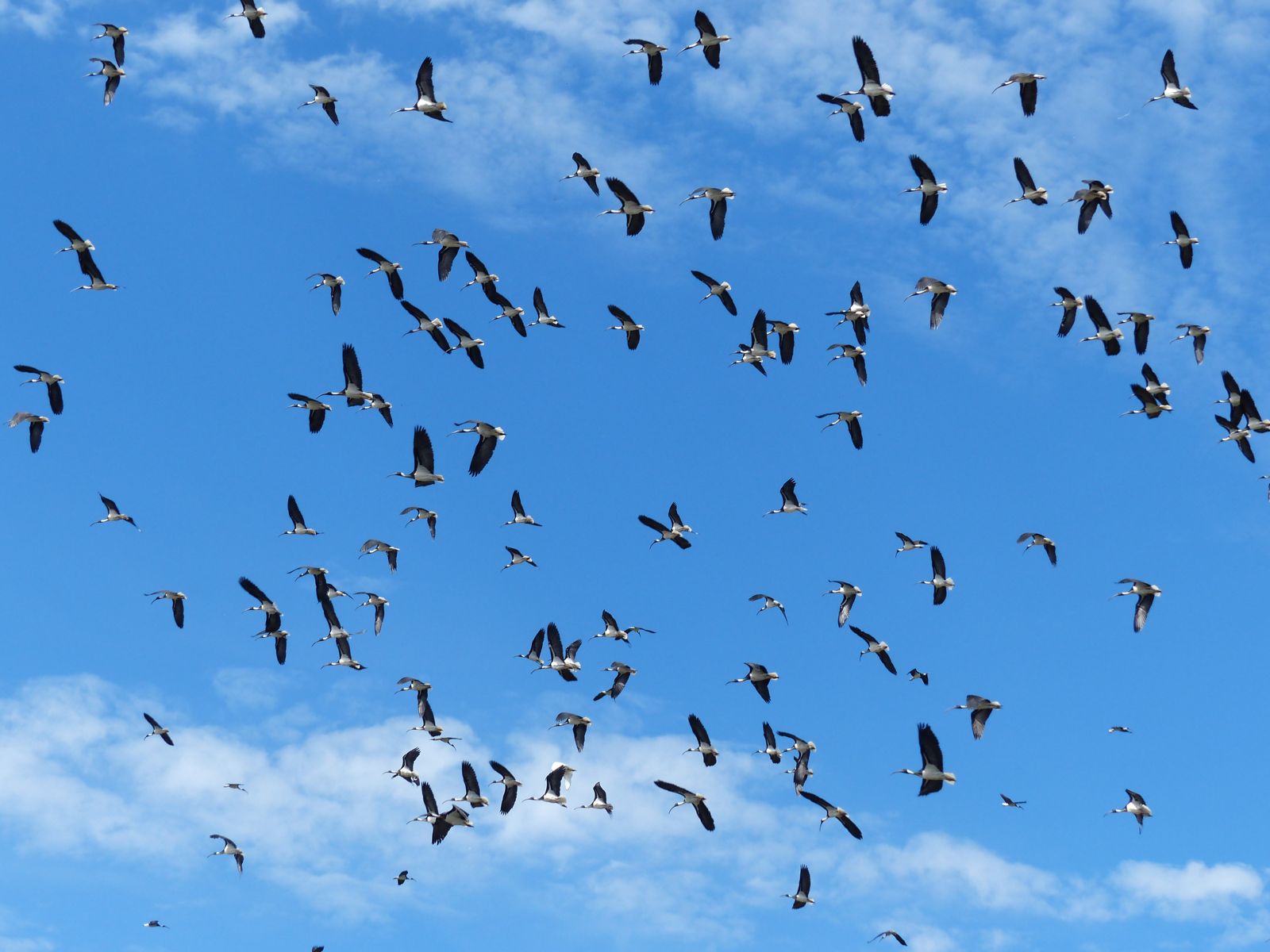
Backpacks for birds
McGinness and the team have tracked waterbirds from the basin for nearly 10 years. They use lightweight GPS satellite trackers fitted with special hand-sewn harnesses, which the agency calls bird backpacks.
They have mapped the movements of hundreds of birds this way. In earlier work, the team followed Yurru through a 38-hour flight without a break.
Yurru was tracked for five months, and the signal was lost only because Australia shut down the 3G network the tracker used. The team’s longest track so far is nearly nine years, for a straw-necked ibis named Benji, tagged as a juvenile.
Mapping the inland routes
Research cited by CSIRO shows that waterbirds fall broadly into three groups. Some are sedentary and stay in one area, some are nomadic and move irregularly, and some migrate predictably between the same places.
McGinness said much research has looked at how migratory birds might carry H5 bird flu into Australia from overseas. Little is known about how it might travel from the coast inland, or affect nomadic and sedentary birds.
“Our research has uncovered a key inland flyway from South-Eastern Australia to Queensland – which multiple bird species use,” McGinness said. The study behind that finding also shows common routes from the coasts to the basin.
Disease is only one of many threats to birds. A separate ECONEWS explainer looked at how many birds wind turbines kill compared with cats and windows.
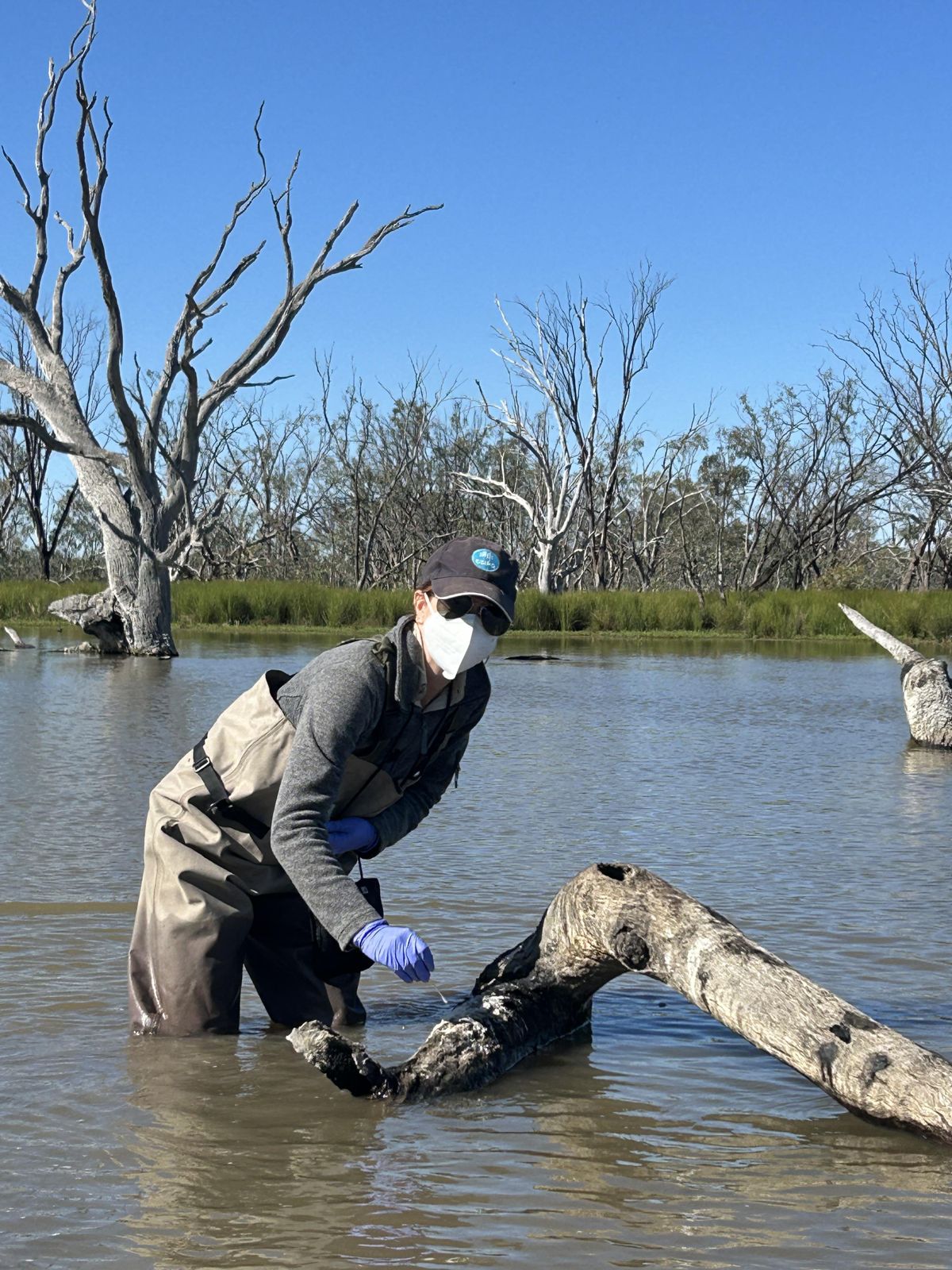
Scat science at sunrise
A second project, coordinated by senior research technician Micha Jackson, collects bird droppings from remote wetlands across the basin. The samples go to state laboratories to be tested for bird flu.
So far, the team has detected only low pathogenicity strains in samples from the basin, according to CSIRO. Those strains generally do not cause illness in wild birds.
The next step is working with virus experts to sequence the genome of the virus found in samples. That genetic blueprint helps show how it relates to other bird flu strains, where it came from and which bird populations carry similar strains.
Genomes can also overturn what seemed settled about birds. Elsewhere, genomes have split gentoo penguins into four species, including one that had never been formally named.
“We need to gather fresh samples as close to sunrise as possible, otherwise the virus degrades under the sun’s UV rays,” Jackson said. Jackson added that most national surveillance focuses on coastal areas, so there is a knowledge gap for inland wetlands.
If you find a sick bird
The research was supported by the Australian Government’s H5 bird flu investment and the Commonwealth Environmental Water Holder. It aims to inform decisions about water management should outbreaks occur in the basin.
“We know that the transmission and spread of H5 bird flu are inherently unpredictable, but this research contributes to a broad evidence base, which supports decision-makers in their response planning,” said Rebecca Doble, the CSIRO principal research scientist who leads the H5 bird flu project.
CSIRO advises anyone who sees sick or dead birds or other animals not to touch them. In Australia, multiple sick or dead animals can be reported to the Emergency Animal Disease Hotline on 1800 675 888.
Photo: Heather McGinness / CSIRO