Conversion of night skies into power supplies by means of radiative cooling
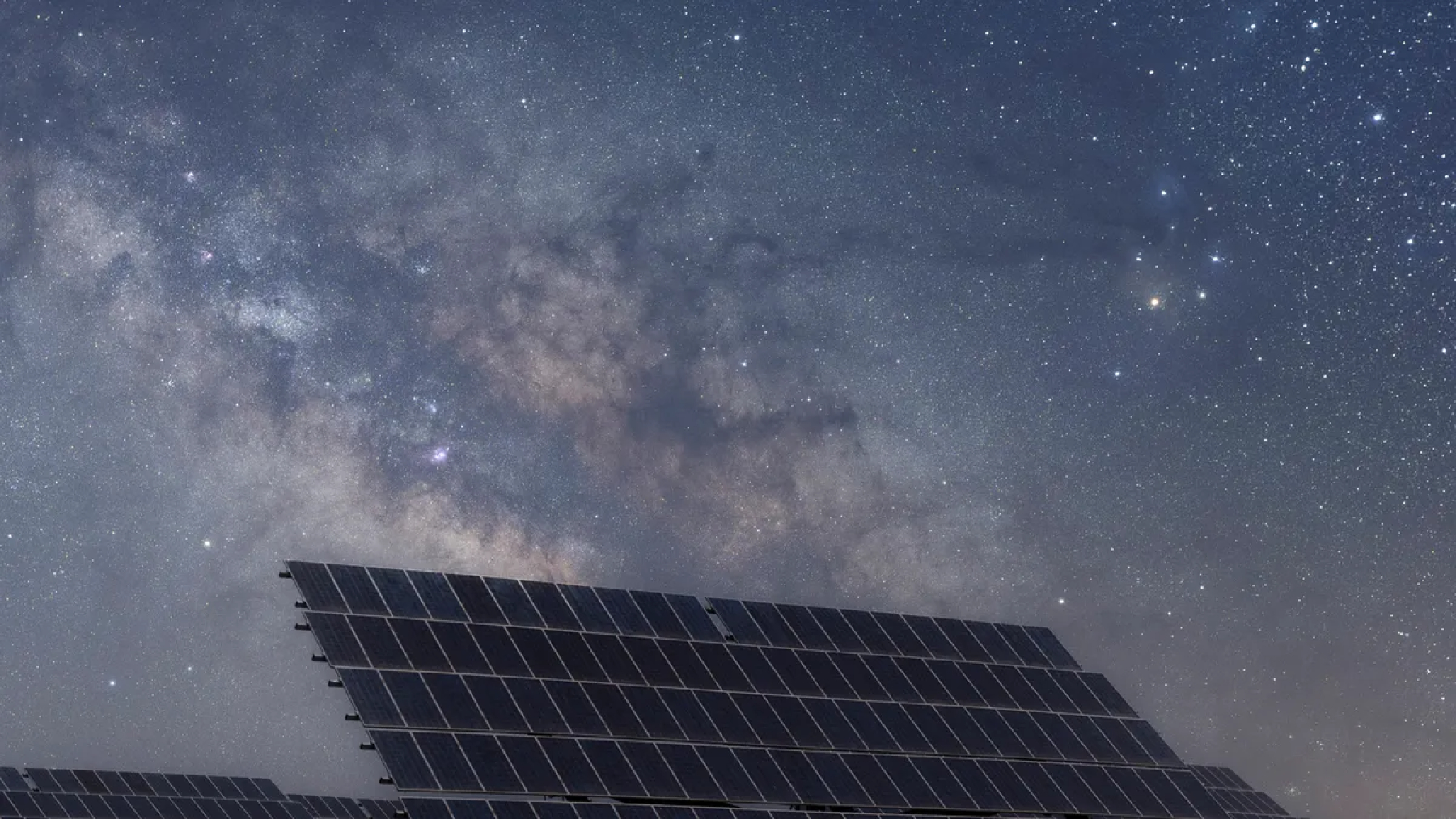
Radiative cooling occurs naturally when heat moves away from a surface, particularly on a clear night, during which Earth radiates infrared energy away to space. This temperature difference – that which can be established between an object and the air surrounding it – can also be used to produce electricity from it. Researchers attached a thermoelectric generator to a commercial solar cell to collect this dissipating heat for quite small amounts of usable power. In rooftop tests at Stanford in October 2021, the prototype, built around a 153-square-centimeter cell, yielded up to 0.7 milliwatts at night, equivalent to 50 milliwatts per square meter. While this is much less than the 200 watts per square meter that typical solar panels can generate in daytime, the researchers say it is still enough for tiny devices such as LEDs and environmental sensors. Shanhui Fan, who led the Stanford team, said that none of the components was specifically engineered for this purpose, so there is room for improvement. With further work on the design and efficiency of such devices, they could supply some power at night as a complement to regular solar energy, mainly for low-power uses. In fact, the process is fulfilled by a rather clear night sky because cloud covers reflect infrared light back to the Earth, thus reducing its cooling. On clear nights, solar panel units can achieve temperatures several degrees below those of ambient air, thereby creating the conditions for electricity generation. This principle, based on ancient refrigeration technologies, shows how traditional physics can inform modern energy solutions.Night solar panels: Bridging the gap for access to energy
Nighttime solar panels are not limited merely to generating electricity. About 655 million people in the world still had no electricity in 2024, according to the 2026 Tracking SDG 7 report. For some of them in hard-to-reach areas, this approach could offer basic lighting and power. Moreover, because the setup is inexpensive and could in principle be added to existing solar cells, it could be an affordable way to improve the reliability of renewable energy. Further, it will perhaps minimize the much dependence on batteries, which tend to be mostly expensive and polluting, because of mineral extraction. These could power LEDs, environmental sensors and other low-power equipment without batteries, reducing the footprint of battery manufacture and disposal. Radiative cooling also opens itself up to a range of applications during the day. SkyCool Systems, a company founded by Fan and two former research associates, has used the concept in panels that cool water to cut the electricity used by air conditioning and refrigeration, while researchers at ETH Zurich have adapted that principle to build a pilot device that collects drinking water from humid air, aimed at regions where water is scarce. The range of applications demonstrates the extensive sustainability applicability of radiative cooling technologies. At night, the power in this prototype comes from heat flowing out to the sky, not from sunlight. Nighttime solar panels could thus help bridge part of the gap during night hours when sunshine is otherwise unavailable. Because the effect needs a clear sky, they would work best in places with many clear nights.Weighing innovation against challenges: The promise of nighttime solar potential
The numbers show how far the prototype still is from wider use: lighting at night needs a few watts, and at 50 milliwatts per square meter that would take about 20 square meters of photovoltaic area, according to the researchers. The team aims to optimize the thermal insulation and the thermoelectric components, and to improve the solar cell itself for radiative cooling. A key obstacle is power output: it would have to rise considerably before the technology could serve more than low-power uses. This, however, could make inexpensive, sustainable energy for those using it in societies where infrastructure is very limited, while for radiative cooling there may be even wider applications-from cooling buildings to food preservation-that can advance global sustainability efforts. Night solar panels are an early-stage advance in sustainable energy. Researchers have harnessed the ability to radiate off the night sky as a renewable resource. However, there are hurdles and the output is still tiny, but the approach could add a small source of power in places without a grid. More efficiency and broader applications could be achieved with further studies. Night solar panels could complement existing renewable supply systems and show that the cold of the night sky can be used as an energy resource.First published on December 26, 2024; corrected on October 28, 2026 to remove inaccurate statements.