High above the forest floor, one man has turned raw timber, steel supports and a spiral staircase into a full treehouse that feels closer to a compact luxury cabin than a childhood play fort. He did it alone, piece by piece, without cranes or a large crew. At first it sounds like a viral DIY stunt. In reality, it shows what careful, low-impact building in living trees can look like when patience and planning come first.
Engineering a home in the branches
Before lifting a single board, the builder studied the tree that would carry the structure. He noted the tilt of the trunk, the diameter, the safe height above the ground and which branches would help or hinder the build. Only then did the quiet work begin.
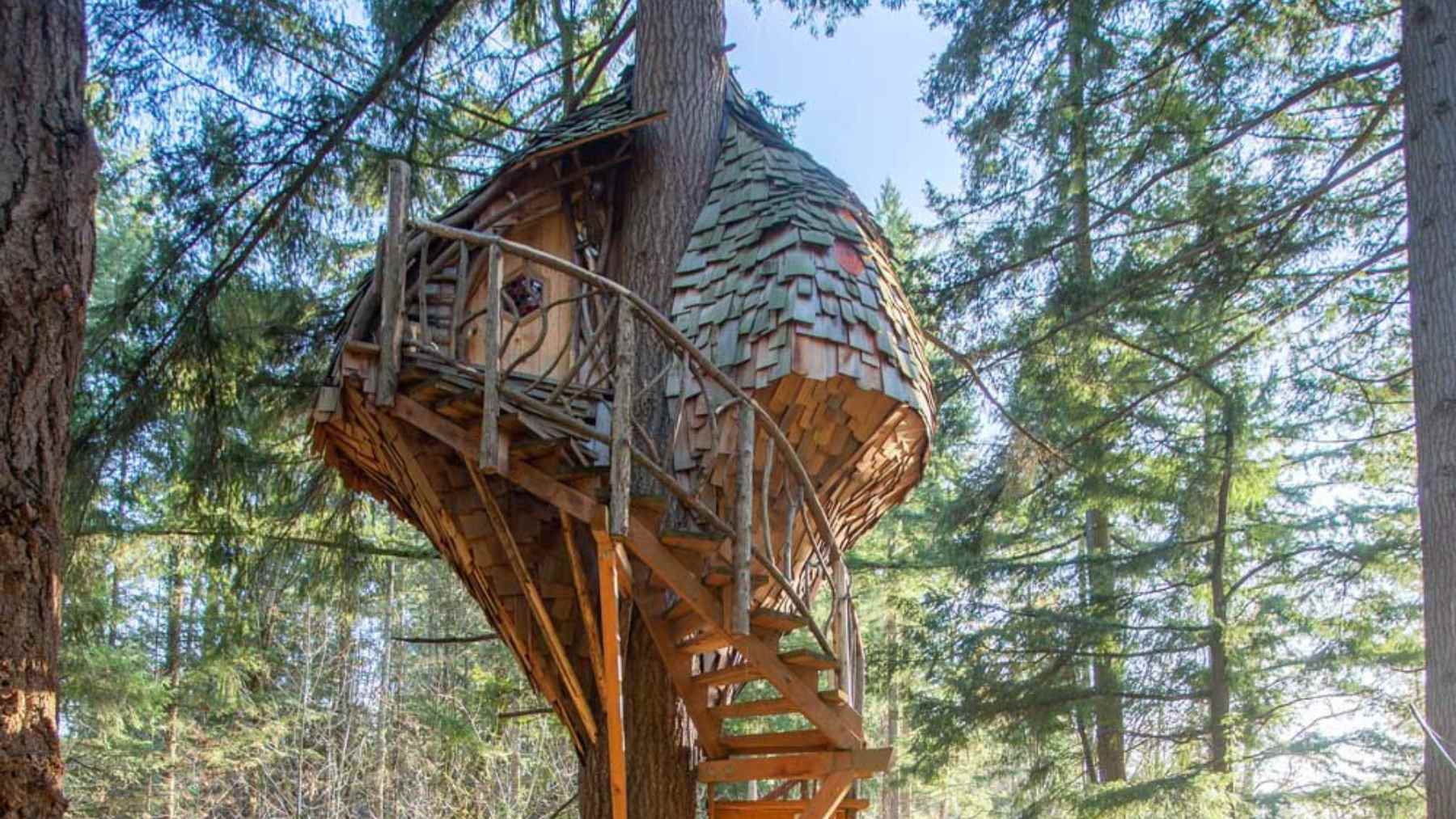
Large diameter screws went into carefully chosen points in the trunk, with steel plates and brackets spreading the load. The first beams formed a rigid platform that does not rely only on the central tree but shares weight with extra wooden supports. Every joint was pre measured, cut and checked, because a mistake at height can compromise the whole cabin.
From there, the skeleton rose. Thick logs became posts, smaller beams tied them together, and the outline of a small house emerged above the undergrowth. A metal spiral staircase linked the forest floor and cabin, giving a safe and compact entrance instead of a wobbly ladder. Inside and out, untreated wood and just enough metal replaced heavy concrete slabs or bulky foundations.
That is where the environmental story starts.
Treehouses and a smaller footprint
Treehouses built like this can reduce ground disturbance because they sit above roots instead of on a wide concrete pad. Eco focused treehouse designers point out that using sustainably sourced or reclaimed wood, limiting heavy machinery and keeping structures small helps shrink the ecological footprint of a stay in the forest.
Size matters for energy too. Anyone who has watched their winter electric bill climb knows how much power a big, leaky house can swallow. Analyses of household energy use in Europe and North America suggest that smaller and newer homes tend to use less energy overall than large, older ones, which translates into lower emissions as well as lower bills. A compact treehouse will not solve the climate crisis on its own, yet it points toward a pattern of living with less built volume and more careful design.
When a living tree becomes part of the structure
Attaching a building to a living tree is not a romantic detail. It is a biological and engineering decision. Arborists and specialist builders note that individual screws and bolts rarely kill a healthy tree, since many trees gradually grow around the metal and compartmentalize the wound. They also warn that ropes or straps wrapped tightly around trunks can rub bark away or girdle the tree as it thickens.
The treehouse in this forest respects those limits. Load bearing bolts sit at a few strong points instead of a web of small fasteners. Extra wooden posts share the weight so the trunk is not forced to carry everything. Even so, experts advise regular checks of bark, branches and anchoring hardware, especially as wind storms become more frequent in many regions.
At the end of the day, any treehouse that treats the host tree as a disposable prop misses the point.
Living among leaves and feeling better
There is another layer hidden in this floating cabin. It is not only about carbon and construction. It is also about how people feel when they trade traffic noise for rustling leaves.
A growing body of research on forest bathing finds that even short visits to wooded areas can lower blood pressure, reduce stress hormones and improve mood when compared with time in dense city streets. Health agencies now describe time in green spaces as one of the simplest ways to support cardiovascular and mental health.
Similar findings are emerging inside buildings. A recent study of biophilic building design tested how people reacted to rooms with different amounts of natural elements such as wood, plants and views of greenery. Participants who viewed spaces with higher biophilic quality reported better emotional states and more inspiration than those who saw bare, non-natural interiors.
In other words, bringing architecture closer to nature seems to help people feel calmer and more creative. A small cabin in the canopy is simply a very direct version of that idea.
Who would not prefer a workspace that feels more like a quiet treehouse and less like a fluorescent bunker.
From one forest cabin to many
The tricky part arrives when one peaceful treehouse turns into many. Treehouse tourism and forest eco lodges can create income for rural communities, yet studies on forest tourism warn that poorly planned development also brings deforestation, soil erosion, noise and pressure on wildlife.
Regulation is catching up only slowly. In some regions small treehouses are treated like temporary garden sheds, in others they require full planning permission with strict limits on height and floor area. For anyone inspired by this lone builder, the first step is to talk with local authorities and arborists before drilling into a trunk or advertising overnight stays.
A quiet blueprint in the branches
The man who built his own treehouse in the forest shows what can happen when construction leans on method, patience and respect for a living landscape. He did not clear trees to make space. He used the forest itself as structure and stage, working with raw wood, carefully placed steel and time.
Most people will never move into a cabin above the ground. Yet the lessons scale. Smaller and smarter homes, more natural materials, better daylight and views of real trees instead of only screens can all push daily life in a healthier direction. Even a weekly walk in a nearby park nudges us closer to the benefits scientists are measuring in forests and nature-rich buildings.
The study on biophilic building design was published in PubMed Central.