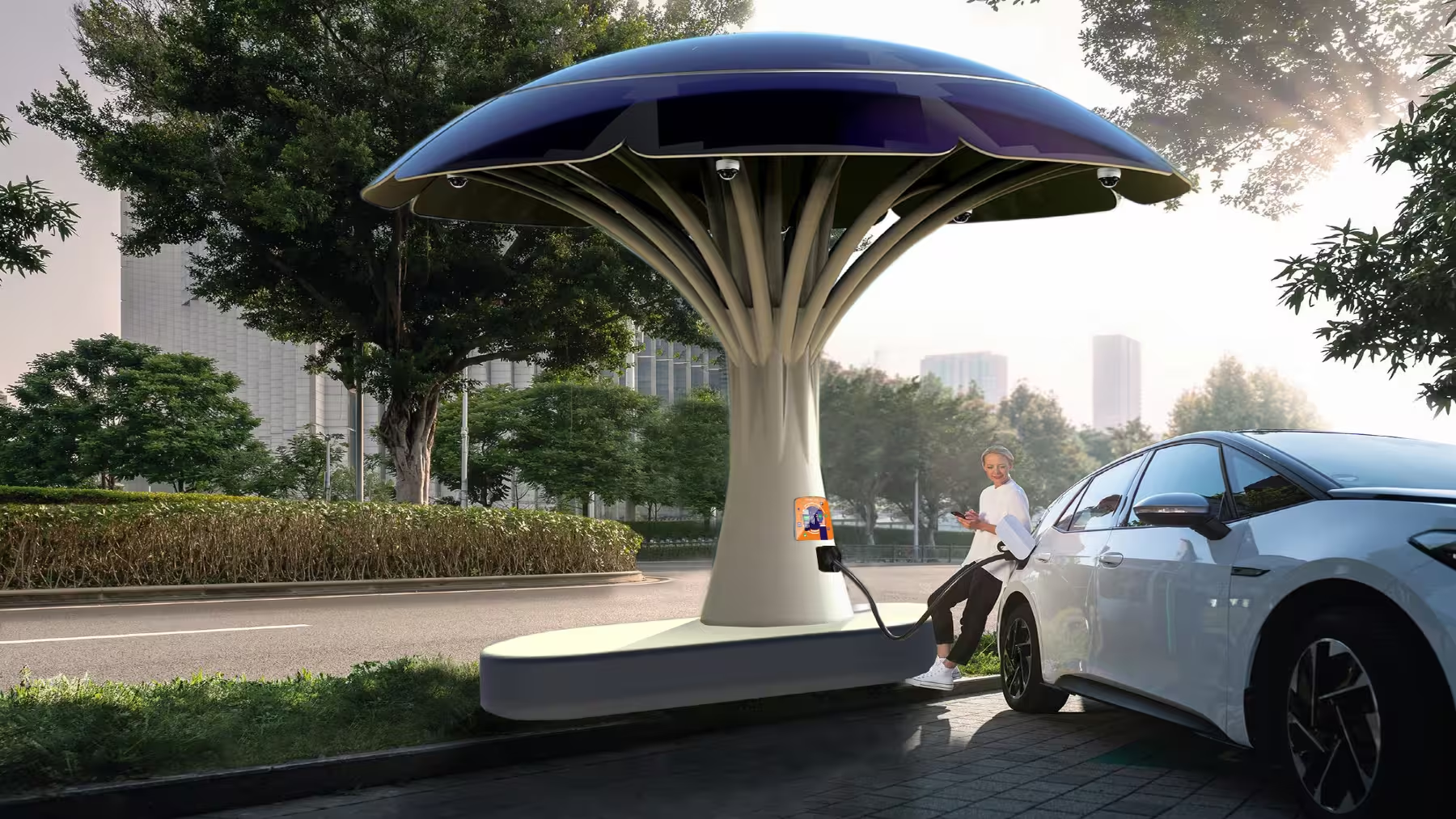
Imagine walking into your garden and seeing what looks like a giant umbrella that’s actually powering your entire house. That’s not science fiction anymore—it’s the SolarBotanic™ Tree, a revolutionary device that mimics nature’s own energy-harvesting process. This isn’t your typical rooftop solar panel setup; it’s biomimicry at its finest, turning your backyard into a personal power station.
SolarBotanicTM Tree: The game-changer for residential eEnergy consumption
The SolarBotanic™ Tree not only imitates nature; it also enhances it. While regular trees only convert sun energy to chemical energy, the SolarBotanic™ Tree will instead harness it for electricity that can be used. The project takes its cue from nature’s oldest research lab, where it will integrate both solar and wind energy through the use of photovoltaic cells and piezoelectric materials.
How is it different from rooftop solar panels? It’s an aesthetics and efficiency combination. With traditional solar, your yard is dotted with industrial-sized equipment. With Earthly. It’s something that complements your landscape. Not only will it provide energy, it will improve your psychological outlook by exposing you to nature through its biophilic design elements.
Advanced biomimicry technology ensures year-round energy production
The SolarBotanic™ Tree has nano-leaves that can resist severe weather conditions, in addition to using strong materials. This is unlike any other solar power system, depending solely on the sun for energy, since the SolarBotanic system derives energy from various sources and will continue to generate energy during weak sunshine. They can hook up to each other to create mini-power networks that communicate by sharing energy, much like a forest.
Revolutionary energy output powers homes and electric vehicles
But that’s not the exciting part—and that’s where your ‘aha’ moment comes in. Each SolarBotanic™ Tree produces 6,000 kWh every year, which can power a three-bedroom home, along with an electric vehicle, for that same period. This energy output averages that consumed by an American home, and it comes from that massive, leafy structure you can locate behind your house.
But the real magic happens with the integrated systems. The device includes battery storage for overnight power, grid connections for cheaper off-peak energy, and smart management systems that optimize everything automatically. Commercial parking lots can install multiple units to create rapid EV charging stations while maintaining beautiful, natural-looking environments.
Key performance specifications include:
- Output per annum: 6,000 kWh
- Coverage: Three-bedroom house + EV Charging
- Weather Resistant: All-season operation
- Installation: Kit form, certified partners
- Grid integration: Smart energy management system
Scalable micro-grid networks form energy ecologies for neighborhoods
SolarBotanic™ Trees are highly effective on their own, and even better when used in combination. They can hook up to each other to create mini-power networks that communicate by sharing energy, much like a forest. The innovation has spent the past seven years in the process of development, incorporating feedback from both its consumers, architects, and suppliers.
The manufacturing process is also impressive. The testing for the field versions has commenced at the Advanced Manufacturing Research Centre in Sheffield, while market distribution will happen by the end of 2023. The next version (v03) will hit the market in 2025, with advanced functionality for integration with both solar and wind.
Timeline for commercial availability:
- 2023: SolarBotanicTM Tree v02 fully
- 2025: Version v03, featuring advanced wind
- Current: Building the certified installation partner networks
The SolarBotanic ™ Tree is more than an alternative energy source; it’s a whole new way for us to integrate energy production seamlessly into our environment. With 6,000 kWh per year energy production and its unique, nature-designed model, energy autonomy shifts from a function meant for industries to something that adds value to your home’s décor. Your backyard is your power plant, your power plant is your garden.
Disclaimer: Our coverage of events affecting companies is purely informative and descriptive. Under no circumstances does it seek to promote an opinion or create a trend, nor can it be taken as investment advice or a recommendation of any kind.