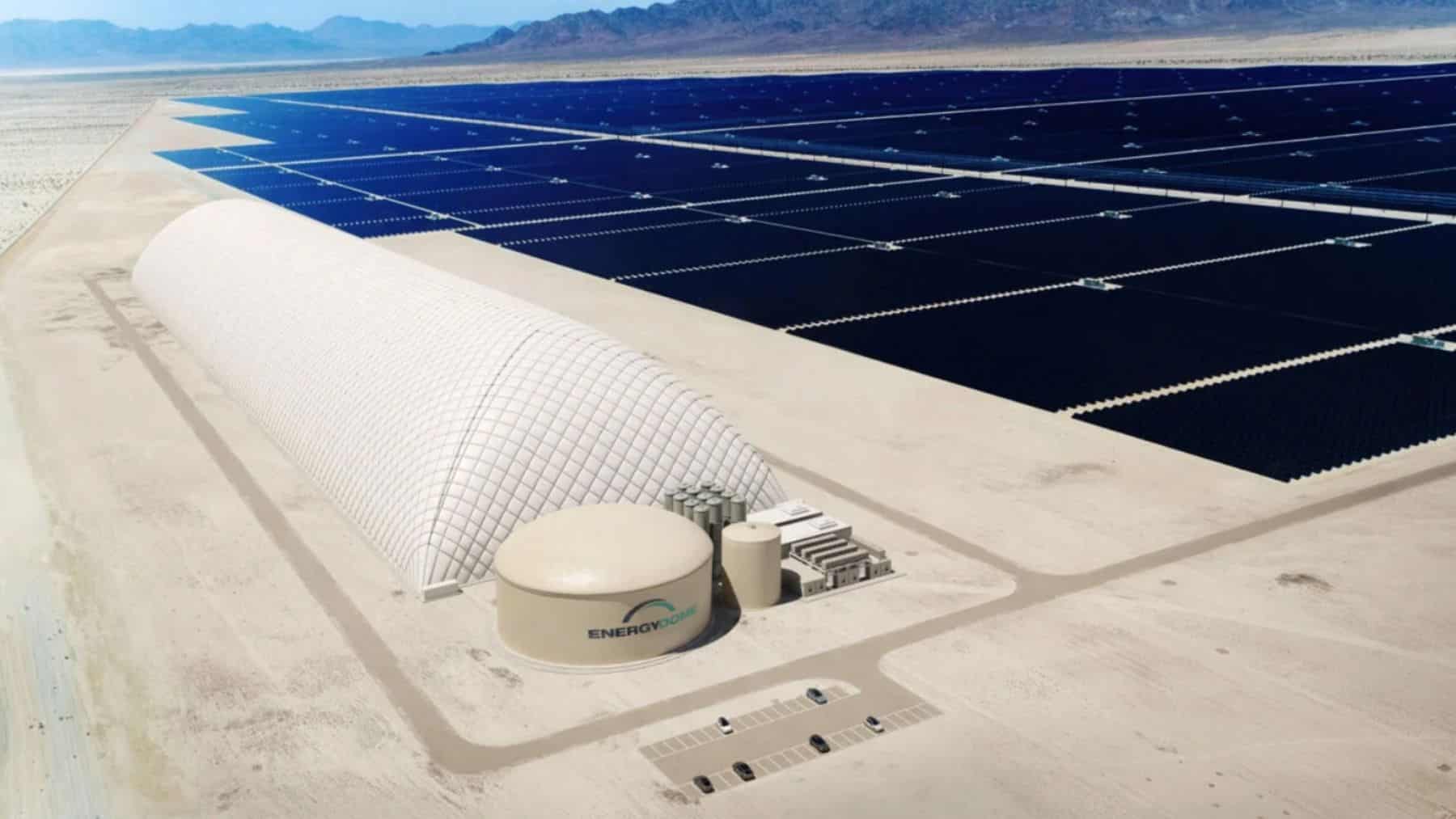
When considering 20 MW of potential inside a white dome, it is always either lithium, hydrogen, or coal that comes to mind. However, hidden in the hills of Ottana, Sardinia, there is a white dome that hides energy storage that is quite different. Hidden inside of the dome is not another hydrogen project, a coal reserve or lithium-ion potential, but the ability to reshape the landscape with clean power. This project by Energy Dome with ENGIE signifies a turning point in energy innovation.
Looking at an alternate energy storage method
An agreement between ENGIE and the Italian energy storage startup Energy Dome has led to long-term energy storage in the form of a one-of-a-kind CO₂ Battery. Offering 20MW/ 200MWh of power, the facility will ensure 10 hours of continuous discharge making it possible for stored renewable energy to be dispatched overnight or during peak demand times.
When it comes to this CO₂ Battery, it is geared towards deep decarbonization. It basically utilizes compressed carbon dioxide as the working fluid and stores it in a flexible membrane-covered dome. This method was chosen as there is no use of rare earth materials, hazardous chemicals, or flammable elements and this makes it a far safer, more sustainable, and a cost-effective alternative.
Understanding more about the inner workings of the CO₂ battery
Energy Dome’s innovation considers a closed-loop thermodynamic cycle. While the charging process is ongoing, carbon dioxide gas gets compressed and generates heat that is stored separately. This CO₂ gets liquefied thereafter and gets stored under pressure. At the time when electricity is needed, the entire process gets reversed and as such the liquid CO₂ gets evaporated and expanded through a turbine that produces power while attempting to recover the stored heat.
The entire electrochemical system is avoided. The innovative system makes use of turbines, compressors, and heat exchangers that completely eliminates the serious manufacturing process and supply chains. Energy Dome’s design is site-indepedent and thus installation is permissible in regions where pumped-hydro or gravity-based systems are impractical. The best part is that the CO₂ utilized in the cycle gets contained fully and can be reused which means that there are no emissions during the process.
A business model fixated on energy storage
The ENGIE-Energy Dome collaboration is looking towards an agreement that is more of a business model fixated on storage where it is the utilities that pay for the energy storage as a service and where the assets get operated by a specialized technology provider. Engie has considered optimizing the battery’s dispatch in Italy’s energy markets and reinforces the idea of the country increasing its renewable energy generation.
With public support and private commitment, expansion strategy is also on the cards. Energy Dome is considering a much similar project in Wisconsin, USA, that will occur in partnership with Alliant Energy and construction is planned for 2026.
Having accolades including the LDES Company of the Year at the 2024 Energy Storage Awards, it is Energy Dome that is looking towards deployment. CEO, Claudio Spadacini has mentioned that deployment is on the cards as the company is choosing to accelerate global decarbonization by looking at this form of energy storage. While Spain is absorbing CO₂ from the atmosphere, Italy is looking at another CO₂ option.
What the battery in Sardinia could mean in the long run?
While America is looking at firing up a hydrogen engine beast, the Italian island, Sarinia, is looking at a technological milestone that does not look to hydrogen, lithium, or any other solution. What seems like a technological milestone is more than just that. The 20MW CO₂ Battery in Sardinia is a way to reshape the way in which the world is storing renewable energy. Without lithium, hydrogen, or fossil fuels, a whole new door to a sustainable solution is now being opened.
With backing from Engie and international funding partners, the white dome symbolizes energy transition for not only Italy, but globally.