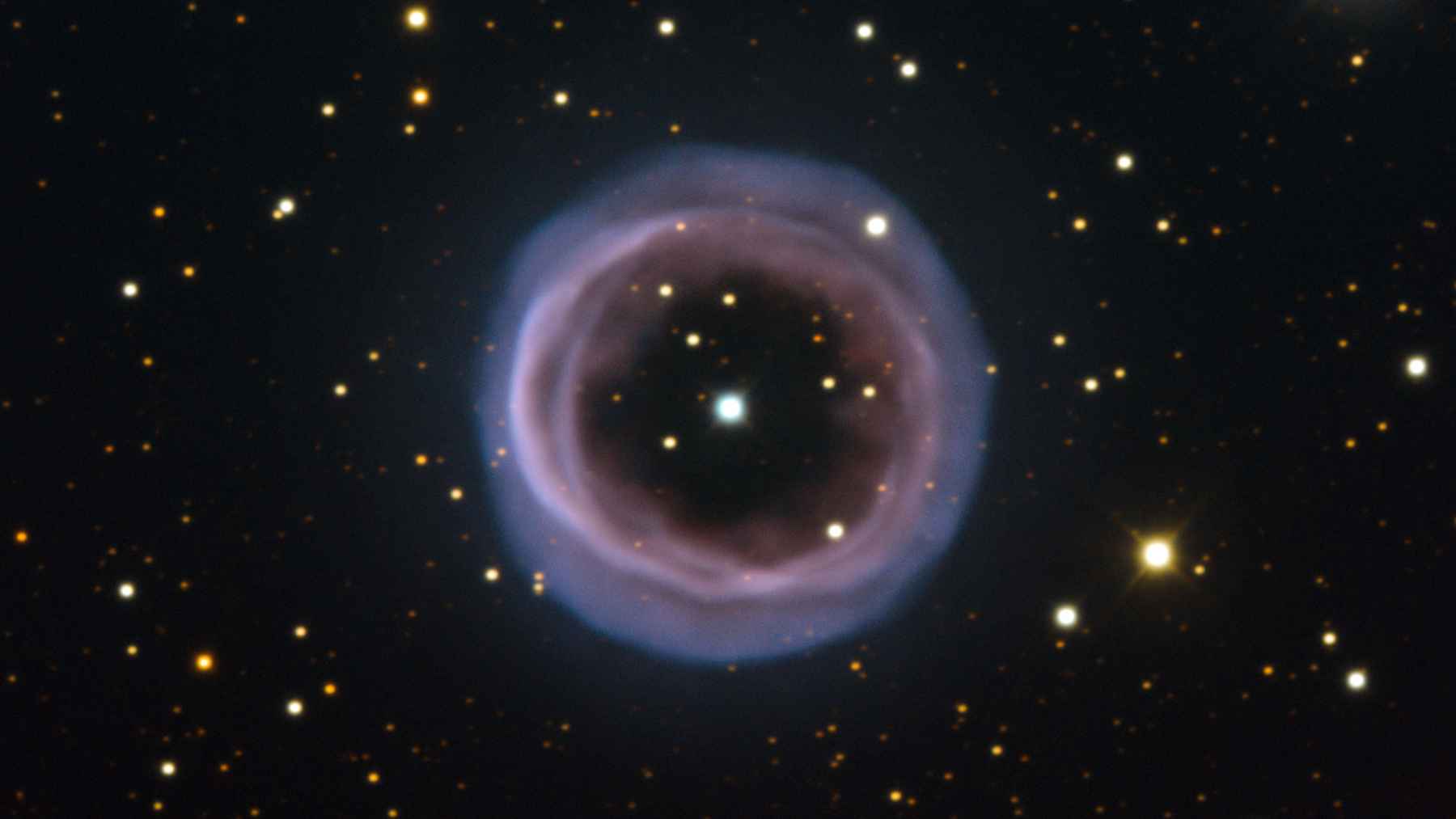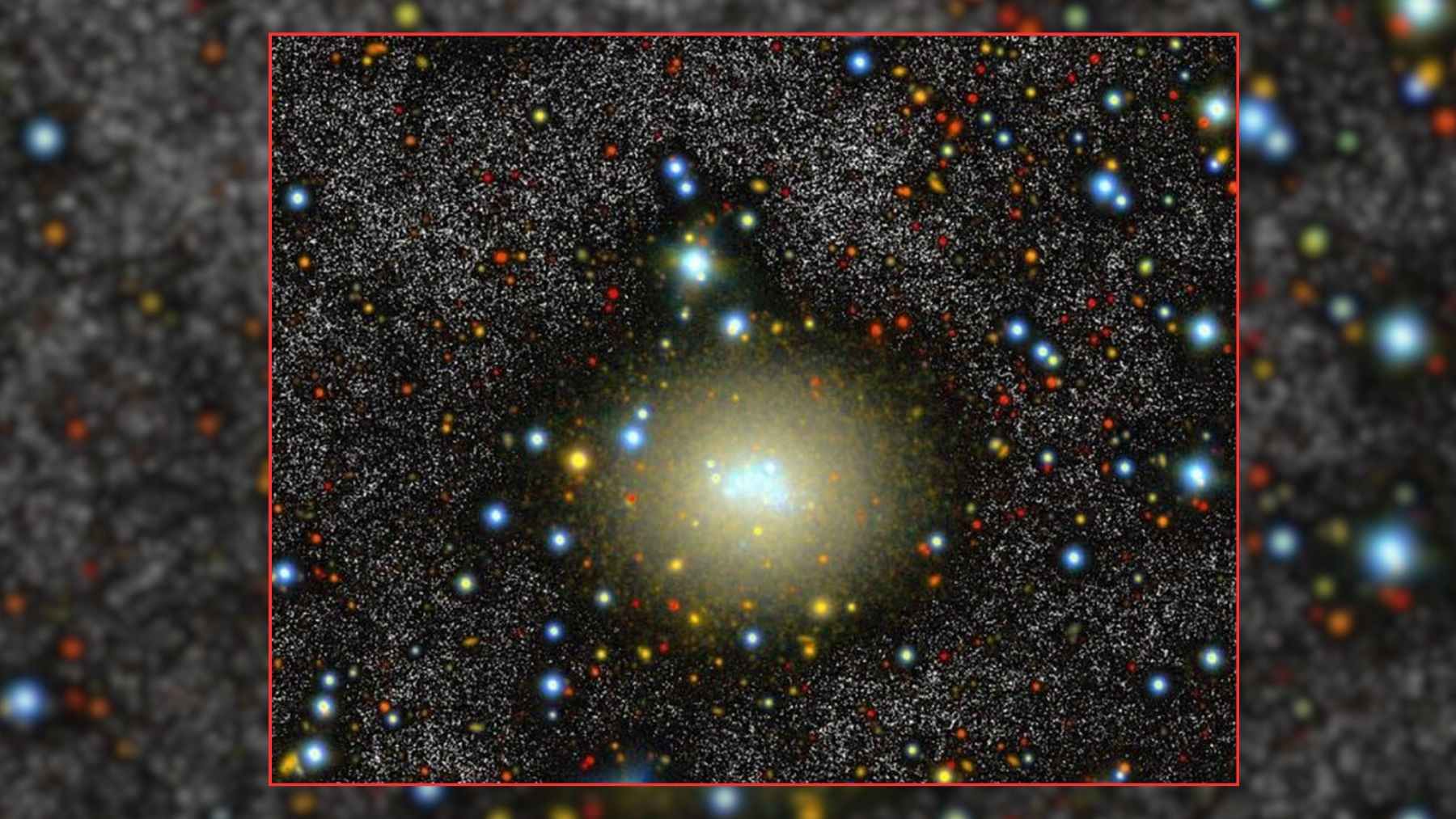
In one of the emptiest regions of the nearby universe, a small galaxy is quietly breaking the rules. NGC 6789 sits about 12 million light years from Earth in an area astronomers call the Local Void, yet it is still forming new stars in its center. So how is this little system still making stars at all?
A new study led by Ignacio Trujillo at the Instituto de Astrofísica de Canarias, working with colleagues in Spain, used some of the deepest optical images ever taken of this dwarf galaxy to figure out where the star-making fuel is coming from. The team found that roughly four percent of the galaxy’s total stellar mass was created within the past 600 million years, yet the images reveal no obvious source of fresh gas to power that growth.
A tiny survivor in the Local Void
Galaxies usually live in busy neighborhoods filled with other galaxies and large clouds of gas. They pull in this material over time, which keeps star formation going for billions of years.
NGC 6789 is different. It is a blue compact dwarf galaxy, a small and relatively dense system whose bright blue color comes from many young stars packed into its core, and it sits deep inside the Local Void, a huge region almost empty of galaxies and cold gas, so in theory it should have run out of fuel long ago.
Peering into the outskirts for hidden clues
To test whether NGC 6789 recently swallowed a smaller neighbor, the researchers used the new Two-meter Twin Telescope, also known as TTT3, at Teide Observatory in Spain. This instrument allowed them to capture ultra-deep images that can reveal faint arcs and streams of stars around the galaxy.
If the dwarf galaxy had torn apart another system in the recent past, gravity should have left telltale features in those outer regions, such as long tidal tails or shell-like structures. Instead the images show a smooth, undisturbed outer galaxy, which strongly suggests that no recent merger has taken place.
Star formation with no obvious fuel
The deep images confirm what earlier space telescopes had hinted at, which is a compact central zone bursting with relatively young stars. Based on the brightness and colors of those stars, the team estimates that about four percent of all the stars in NGC 6789 formed in the last 600 million years.
In a normal environment, that level of recent growth would not be surprising. In the middle of a sparse cosmic desert where there is almost no known gas to draw from, it becomes a puzzle that keeps astronomers up at night, and for many of them it is a bit like finding a lone gas station still open in the middle of an empty desert highway.
Two unlikely explanations
Trujillo and his colleagues outline only two realistic ways for the galaxy to keep making stars without a visible supply line. One option is that NGC 6789 has held on to a small reservoir of gas from its birth, slowly using it up over billions of years while living far from other galaxies.
The other possibility is that pristine, previously untouched gas from intergalactic space is somehow trickling into the galaxy in a very gentle way. If that is happening, it leaves almost no mark on the outer structure of the galaxy, which for the most part looks calm and regular in the new images.
What earlier studies revealed
Years before this latest work, astronomers had already studied NGC 6789 in detail to measure the chemical makeup of its gas and stars. In 2012, Rubén García Benito and Enrique Pérez Montero reported that the galaxy is metal-poor and chemically uniform, a classic signature of a small system that has not been strongly disturbed by neighbors.
Taken together, the older spectroscopy and the new deep imaging point in the same direction. This little galaxy seems to have spent most of its life quietly evolving on its own, which makes its recent burst of central star formation even harder to explain.
Why this lonely galaxy matters
Galaxies like NGC 6789 sit at the edge of what our current theories can easily explain. If a tiny system in a nearly empty region can still light up new stars in its core, then ideas about how gas flows into galaxies may need to be updated, especially for the smallest ones.
Future observations, perhaps combining even deeper imaging with radio maps of cold gas, could help reveal whether a hidden trickle of material is feeding the dwarf galaxy from outside or whether it is living off a last internal stash. For now, this lonely object in the Local Void is a reminder that the universe still hides surprises in places that look almost completely empty.
The study was published in the journal of “Research Notes of the American Astronomical Society”.
Image Credit: Ignacio Trujillo