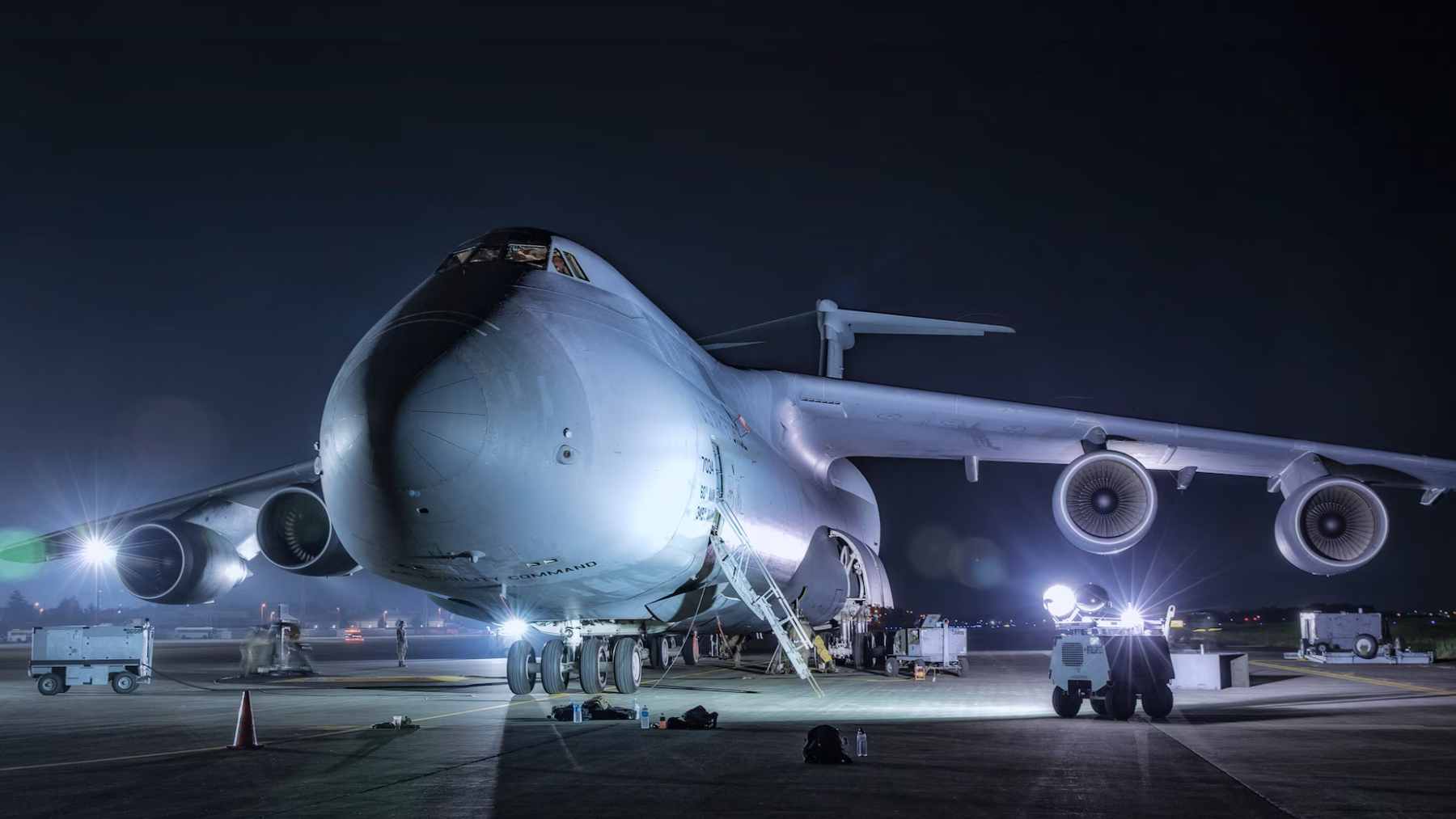
A U.S. Air Force C-5M Super Galaxy declared an in-flight emergency while cruising over the Pacific Ocean after departing Travis Air Force Base in Northern California. The massive transportplane turned back toward the mainland and later landed safely, according to public flight-tracking posts and aviation monitoring reports.
What happened onboard has not been publicly explained in those reports. Still, when a plane this large signals trouble, people notice fast. Who wouldn’t?
What happened during the return to Travis
Public tracking posts said the aircraft took off from Travis on Tuesday evening and was headed toward Hawaii when the crew entered the emergency transponder code known as “squawk 7700.” Reports described the aircraft turning around about an hour into the flight while at roughly 30,000 feet.
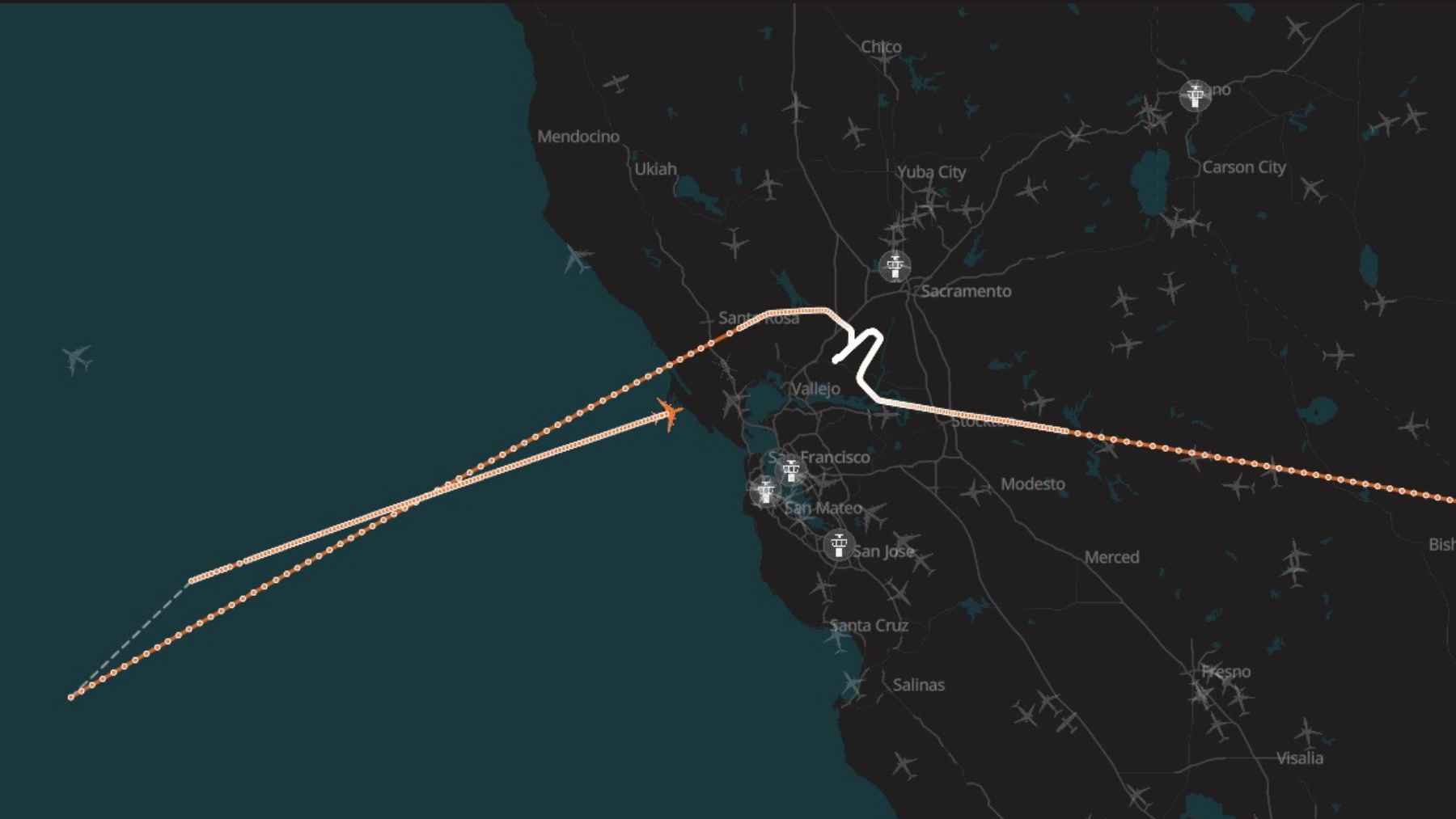
After that, the plane descended and continued back toward its departure base, a pattern that often suggests the crew wanted a controlled return rather than pressing onward over open water. Flight-tracking updates described the aircraft setting up for an approach into Travis.
An update circulating in aviation monitoring reports said the C-5M landed on runway 21L at 10:39 p.m. local time. No injuries or damage were reported in the same posts, and no cause for the emergency was included.
What “squawk 7700” means in plain English
A transponder code is a quick way for pilots to communicate with air traffic control using the aircraft’s onboard equipment. In simple terms, it’s like flipping on a bright, unmistakable signal that says, “We need help.” It is not a diagnosis, and it does not automatically mean a crash is imminent.
The Federal Aviation Administration explains that code 7700 is designed to trigger an alarm or special indicator for controllers, helping them spot the emergency immediately and respond faster. That can mean clearing airspace, coordinating priority handling, and lining up airport rescue and firefighting resources if needed.
There’s an everyday-life parallel here. If your smoke alarm goes off at home, it doesn’t tell you whether it’s burnt toast or something worse, but it does force everyone to pay attention right now.
Why the C-5M Super Galaxy draws attention
The C-5M Super Galaxy is the largest aircraft in the Air Force inventory, built to move oversized cargo and personnel across long distances. The service describes it as a strategic transport aircraft meant for heavy-lift missions that smaller planes simply cannot handle.
That size is part of the story. When an aircraft like this turns around mid-ocean, it can affect scheduling, cargo flow, and downstream operations, even if the landing ends up uneventful.
And it’s a reminder of how many things have to go right on anyflight, especially with large, complex aircraft. Most of the time, you never think about it, the same way you rarely think about the power grid until the lights flicker.
Why Travis is a critical hub for Pacific flights
Travis Air Force Base is often described as a major logistics gateway for U.S. military movement across the Pacific. Its host unit, the 60th Air Mobility Wing, is described on the base’s official materials as the largest air mobility organization in the Air Force by personnel, operating aircraft that include the C-5M.
Official unit information also notes that Travis handles more cargo and passengers than any other military air terminal in the United States. In practical terms, that means a steady stream of missions supporting deployments, humanitarian movement, and routine transport across a huge region.
For communities nearby, it also explains why residents sometimes see giant aircraft overhead at odd hours. It can be loud, it can shake windows, and it can spark questions quickly when an emergency code shows up on tracking apps.
The main report was published by AirLive.