Every time you breathe in fresh air or watch the ocean roll in, you see only the surface of a story that begins far below your feet. New research suggests that two strange “blobs” of rock near the boundary between Earth’s core and mantle may be relics from our planet’s molten youth that helped set up the conditions that make life here possible.
Giant hidden blobs at the core mantle boundary
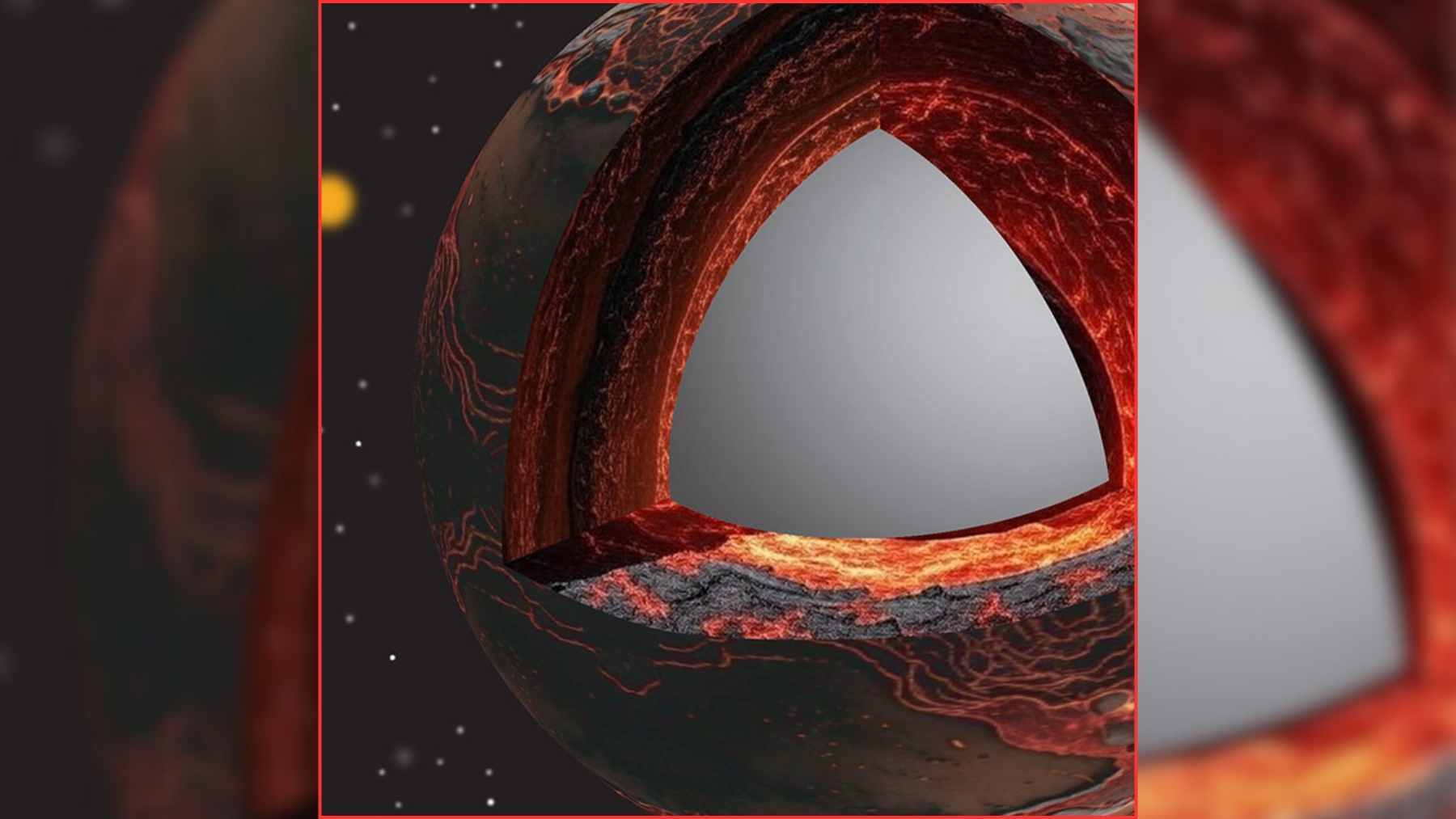
For decades, seismologists have known that something unusual lurks about 1,800 miles beneath us, where the solid mantle meets the liquid outer core. Seismic waves passing through this zone slow down dramatically in two huge regions. These “large low-shear velocity provinces” sit under Africa and under the Pacific Ocean, while thin “ultra-low velocity zones” cling to the core like scattered lava puddles. The waves there travel much more slowly than in the surrounding mantle, a sign of unusually hot and dense material.
A magma ocean that refused to freeze evenly
Billions of years ago, our planet was covered in a global ocean of magma. As that fiery ocean cooled, scientists expected it to separate into neat chemical layers, similar to frozen juice separating into sugary and watery layers.
Seismic images today show something messier instead. The deep mantle looks lumpy, not neatly layered, which left researchers with a puzzle.
A slow leak from the core
According to the new study, the missing ingredient is the core itself. The team modeled what would happen if elements such as silicon and magnesium slowly leaked from the core into the magma ocean sitting just above it.
In their simulations, this contamination changed how minerals crystallized and stopped a simple layered structure from forming. Instead, dense clumps and puddles emerged at the base of the mantle that look a lot like the low velocity provinces and ultra-low velocity zones we see today.
In other words, those blobs may be frozen traces of an ancient “basal magma ocean” that was stirred by material rising out of the core. Miyazaki describes these features as “fingerprints of Earth’s earliest history” and says that if scientists can explain why they exist, they are closer to understanding how our planet formed and became habitable.
From deep mantle chemistry to the air we breathe
The implications reach far beyond a niche corner of geophysics. Interactions between the core and mantle influence how Earth cools, how mantle plumes rise and where long-lasting volcanic hotspots such as Hawaii and Iceland appear at the surface. Those eruptions release gases, build new crust and help move carbon between the interior, the oceans and the air. Over time, that deep interior engine likely helped set the balance that gives Earth liquid oceans and a relatively stable climate.
By contrast, Venus is wrapped in an atmosphere around one hundred times thicker than ours, while Mars has a thin, fragile envelope of gas. Scientists still do not fully understand why three neighboring worlds took such different paths. Studies like this one suggest that what happens deep inside a rocky planet, including how its core loses heat and how its mantle convects, could be a big part of the answer.
For people watching rising seas or checking the electric bill during a heat wave, all of this might sound very remote. Yet climate models and habitability studies are most robust when they include the full Earth system, from the core to the clouds. Knowing how the interior has evolved helps researchers estimate how long plate tectonics and volcanic outgassing can continue to regulate the atmosphere.
At the end of the day, those hidden blobs beneath Africa and the Pacific are not just geological curiosities. They are natural archives that store information about our planet’s earliest chapters and about the deep processes that still shape the environment we live in today.
The study was published in “Nature Geoscience.”