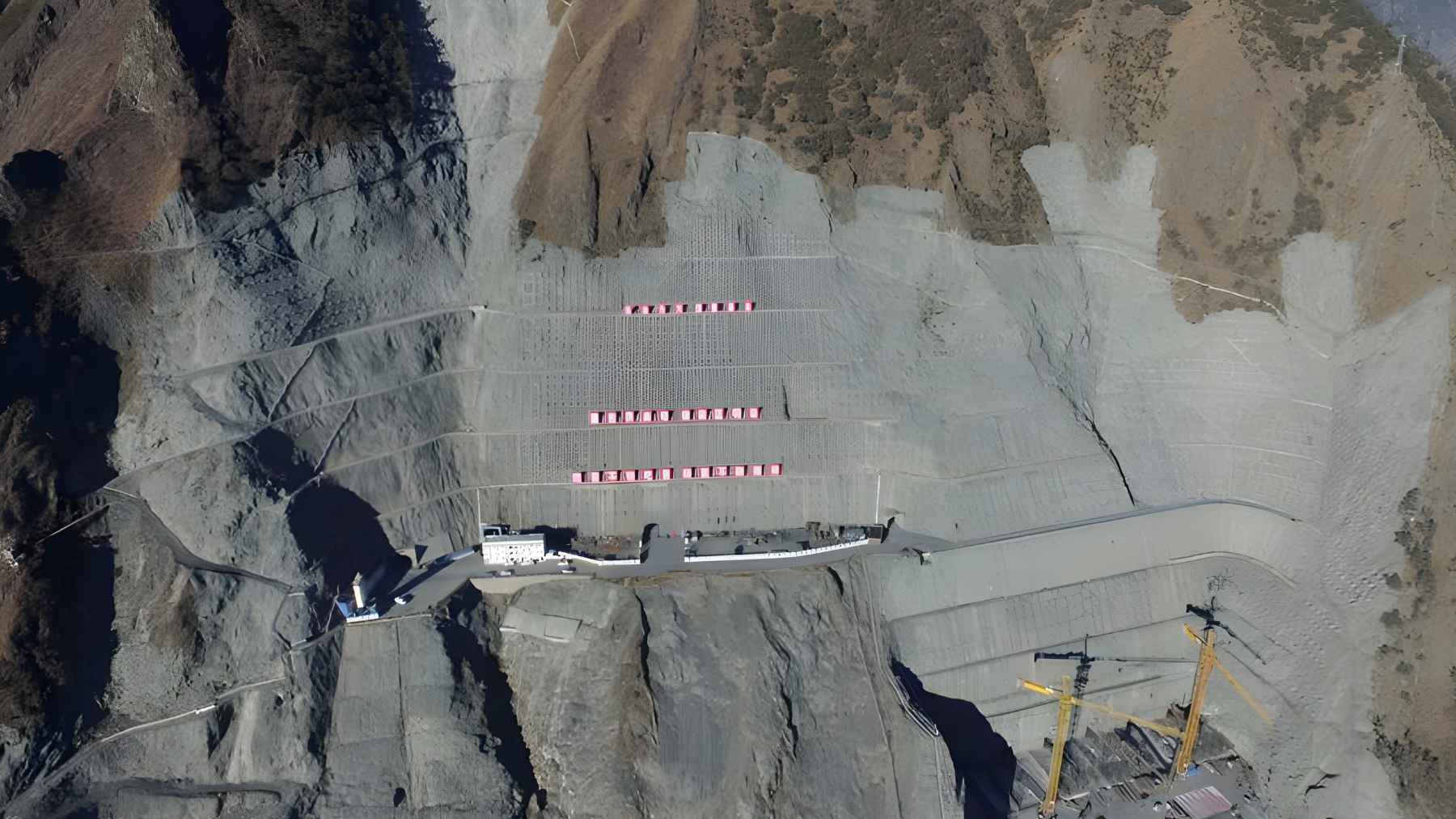
High in the thin air of the Tibetan Plateau, China has switched on a new giant that could generate about 11 billion kilowatt hours of electricity every year. The Lianghekoun hydropower plant now ranks as the country’s highest-altitude mega hydropower station, with a dam almost as tall as the Eiffel Tower and a power output of 3,000 megawatts.
For a country still heavily reliant on coal, that much steady, renewable power is a big deal. Officials say the project can cut raw coal use by more than 13 million tons and avoid about 21 million tons of carbon dioxide emissions each year, compared with equivalent coal generation.
So is China really saying goodbye to solar and wind, as some headlines claim? Not quite. The story on the ground is more complicated, and more interesting.
A mega dam in the mountains
Lianghekou sits on the main stem of the Yalong River in Yajiang County, within the Garze Tibetan Autonomous Prefecture of Sichuan Province. The Yalong is a key tributary of the Yangtze River and one of China’s most important hydropower corridors.
The dam rises about 295 meters and holds back a reservoir designed to store roughly 10.8 billion cubic meters of water. Construction began in 2014 and the final turbine was connected to the grid in March 2022, after an investment of around 66.5 billion yuan, roughly 10.5 billion US dollars.
That water does more than spin turbines. Because the reservoir is so large relative to the river’s flow, engineers can smooth out big swings between wet and dry years. The station helps regulate flows for a chain of downstream dams, which boosts overall power generation and reduces flood risk in the wider Yangtze basin.
Base load power for a solar and wind superpower
Hydropower plants like Lianghekou are sometimes described as the “anchor” of the grid. Unlike solar farms that rely on sunshine or turbines that wait for wind, a big dam can usually deliver power at any hour, then ramp up or down as demand changes.
Chinese planners say the station’s 11 billion kilowatt hours of annual output will support economic hubs such as the Chengdu Chongqing region and help stabilize power supplies in Sichuan, a province that has struggled with summer blackouts during heat waves.
Anyone who has ever watched their air conditioner fight through a sticky August night knows how precious reliable electricity can feel.
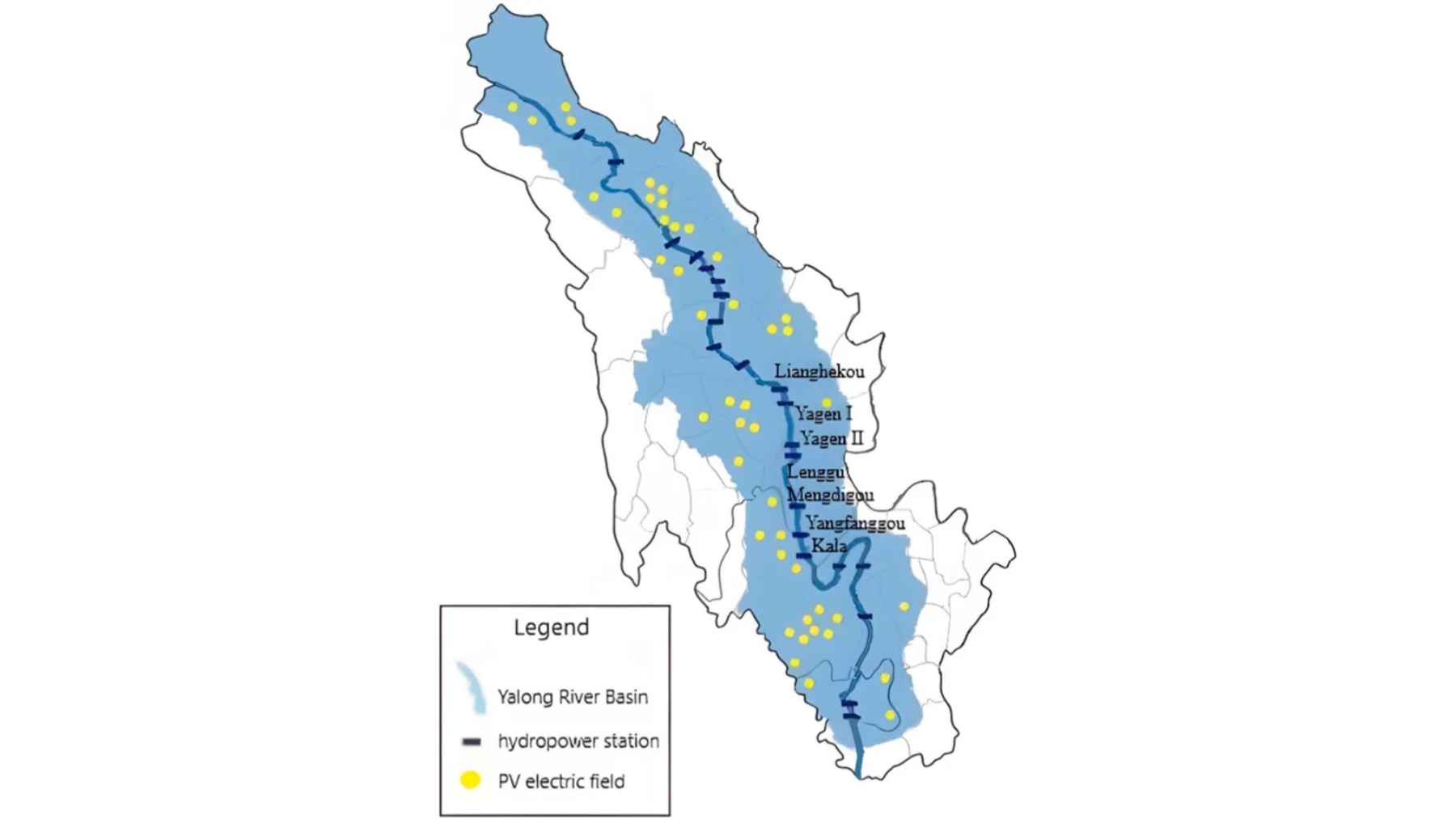
At the same time, the project is part of a wider clean energy buildout along the Yalong. The developer, Yalong River Hydropower Development Company Ltd., aims to turn the basin into a massive demonstration zone that combines large dams, solar farms, wind parks and pumped storage.
Not a farewell to solar and wind
Far from sidelining other renewables, Lianghekou is already working hand in hand with one of the world’s largest high-altitude solar plants. About 50 kilometers away, the Kela photovoltaic project adds one gigawatt of solar capacity and can produce around two billion kilowatt hours of electricity per year.
During bright, dry months when reservoirs are relatively low, the solar plant picks up the slack. In the rainy season, when the river is roaring, hydropower does most of the heavy lifting and the dam can dial back to accommodate changes in solar output.
A recent study of the Yalong basin found that solar tends to peak in the dry season while hydropower peaks in the wet season, which creates a natural seasonal “handshake” between the two technologies.
In practical terms, that means dams like Lianghekou can act a bit like giant water batteries. They store energy in the form of water when solar and wind are plentiful and release it when the sun sets, the wind drops, or millions of people arrive home and switch on lights, stoves and phone chargers at once.
Environmental gains, and real trade offs
Hydropower is low-carbon compared with coal or gas, but it is not impact free. Reservoirs release some greenhouse gases, especially in tropical regions, and large projects require vast quantities of concrete and steel.
On the Yalong, researchers who evaluated the “water footprint” of nineteen hydropower stations found that the basin’s projects use water more efficiently than many dams worldwide and that overall development has not pushed river flows beyond environmental limits, at least from that specific perspective.
Other scientists, however, warn that cascades of dams have changed flow patterns and disrupted fish habitats along parts of the river, reducing what they call river connectivity.
Social costs are also significant. Building Lianghekou involved relocating nearly five thousand residents from the future reservoir area, a pattern seen at many mega dams. How those communities fare over time is part of the real sustainability test, well beyond the engineering drawings.
A glimpse of the next energy system
For the most part, Lianghekou shows what a high renewables grid might look like when it leans on several tools at once instead of a single “silver bullet.” Big flexible dams, large solar arrays, pumped storage and smarter operation of river cascades all work together to cut coal use while trying to limit impacts on water and ecosystems.
At the end of the day, this is about more than one dam in one remote valley. It is about how fast major economies can move away from fossil fuels without sacrificing grid stability or leaving communities and rivers behind.
The scientific study was published in Frontiers in Energy Research.