Ferrari shocked the world months ago when it unveiled its first hydrogen engine, which, if that wasn’t shocking enough, was mounted upside down. However, it still had an even more secret patent that is intended to be a return to its roots (at least, in a way). The curious thing is the fuel they have used, which, far from being controversial (which it is), is about to be illegal in more than 20 countries around the world, including America. It has 12 cylinders and runs at over 800 hp, but it’s not all good news.
Ferrari surprised with hydrogen, but now it’s working on a new fuel: It’s not what you expected
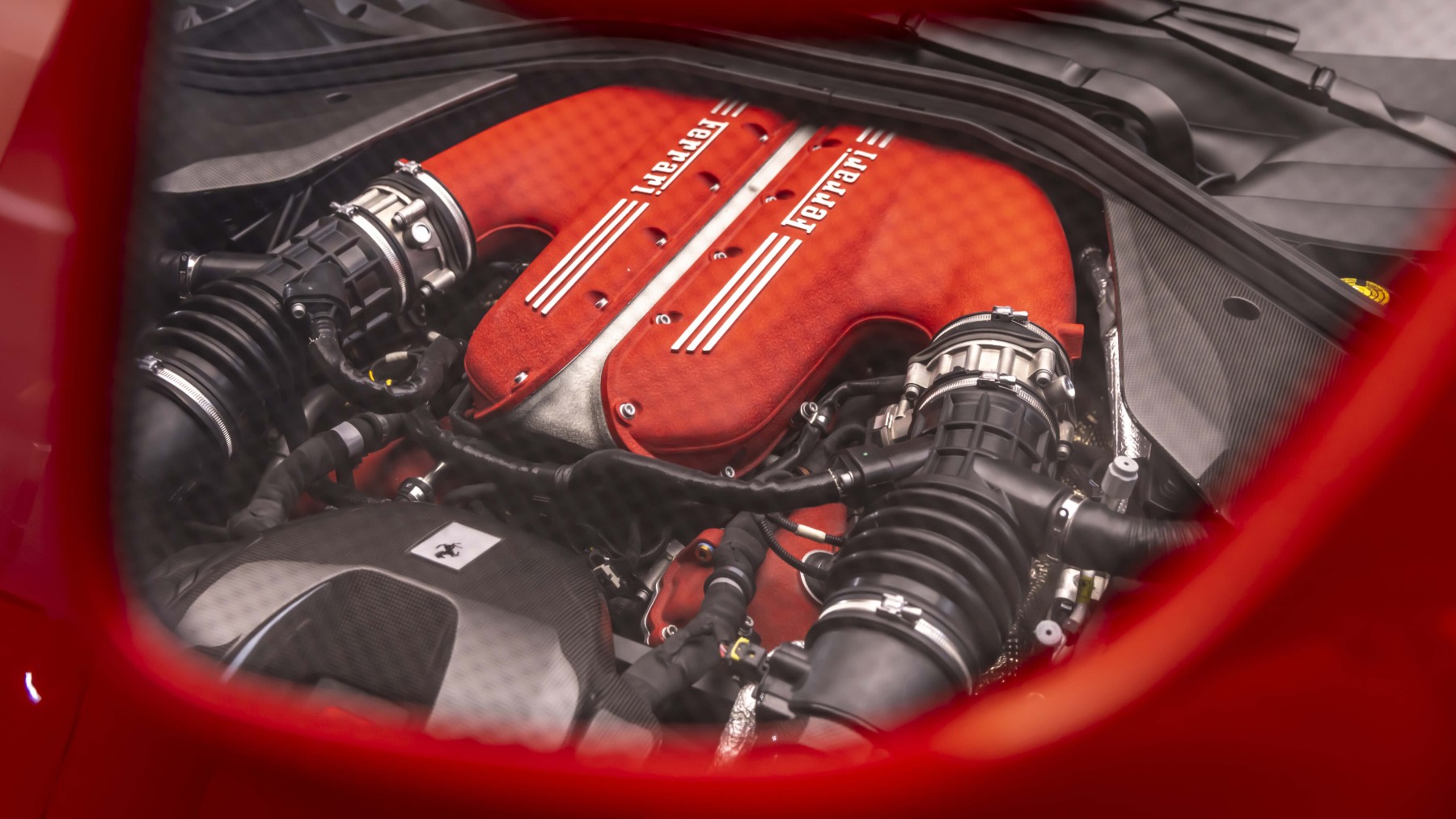
The Ferrari 12Cilindri is not just one of the brand’s marvels, but the best example of how far the Italian carmaker is ready to go. At the heart of this extraordinary machine lies a power plant that embodies Ferrari’s rich heritage and cutting-edge technology: The BM/WM R172 and R173 F140HD have a naturally aspirated V12 engine.
The F140HD is the 4th generation of Ferrari’s V12 engines and has been the jewel of the Ferrari family for many years. In the last developed version of this work of engineering, the horsepower rate was an astounding 830 hp at 9250 rpm. Do not let the limelight cease to dazzle—this is evident with Ferrari’s continued determination to see its engine reach an unbelievably high speed of 9500 rpm.
Speaking of strength, one of the strongest points of this power plant is the torque structure. The engine gives a maximum torque of 500 pound-feet at a rate of 7250 rpm. Still, what makes it special is that 80% of this total torque is produced from as low as 2500 rpm; the throttle response is therefore instant, and the power sensation seems to go on forever no matter the revs chosen.
How is this engine being developed? Ferrari has unveiled its plans, and it’s not an EV
The development of the F140HD engine involved several key innovations:
- Modified Components and Software: Engine components and software have been upgraded, some of which will be found in the more extreme series 812 Competizione.
- Variable-Geometry Intake Ducts: It incorporates some exotic variable-geometry intake ducts that suit the airflow requirements within the entire available rev range.
- Reduced-Friction Components: Lighter valve trains and rotating assemblies with less friction help in involving the engine to rev up faster and also improve response.
- Aspirated Torque Shaping (ATS): This unprecedented software strategy electronically controls the torque in the third and fourth gears to improve low-end and mid-range power.
12-cylinder and 830 hp, but something even better: Some keys to understanding its unprecedented performance
The Ferrari 12Cilindri also comes with a sophisticated new 8-speed DCT (Dual Clutch Transmission). The extra is an eighth gear that really adds to the car’s range – primarily on the highway – as it makes the vehicle more economical to run and much more fun to drive.
The Ferrari 12Cilindri’s performance figures are nothing short of breathtaking:
- 0-62 mph (0-100 km/h): 2.9 seconds.
- 0-124 mph (0-200 km/h): 7.9 seconds.
- Top speed: Although never officially claimed, the top speed was projected to go over the 340 km/h mark (211 mph).
The secret is not its development, but this: New type of aerodynamics has been created
Of course, the 12Cilindri packing such a punch is not because of the punch of its engine. Ferrari has implemented several aerodynamic and chassis innovations to enhance the car’s overall capabilities:Ferrari has implemented several aerodynamic and chassis innovations to enhance the car’s overall capabilities:
- Active Aerodynamics: The back of this car is equipped with load generating flaps, which can be set in two modes, Low Drag (LD) and High Downforce (HD).
- High Downforce (HD). This system is adjustable to driving circumstances and, therefore, can deliver maximum straight-line acceleration or cornering ability.
- Vortex Generators: There are also three pairs of vortex generators on the front underbody, laid out and optimized in the wind tunnel to create downforce.
- Rear-Wheel Steering: It improves both low speed agility and high-speed stability. This is an important aspect since it ensures that the vehicle’s response and control are optimized at low speeds.
This new Ferrari gas engine cannot be good news in itself, as the legendary brand is about to revolutionize the hydrogen sector with its new patent. However, their return to fossil fuels is a leap backwards that puts them on the same level as other brands such as Lamborghini or Volkswagen, with the difference that these two are betting heavily on electric motors. Will it be the beginning of a new era, or will they follow the strategy of the German carmakers? It remains to be seen.