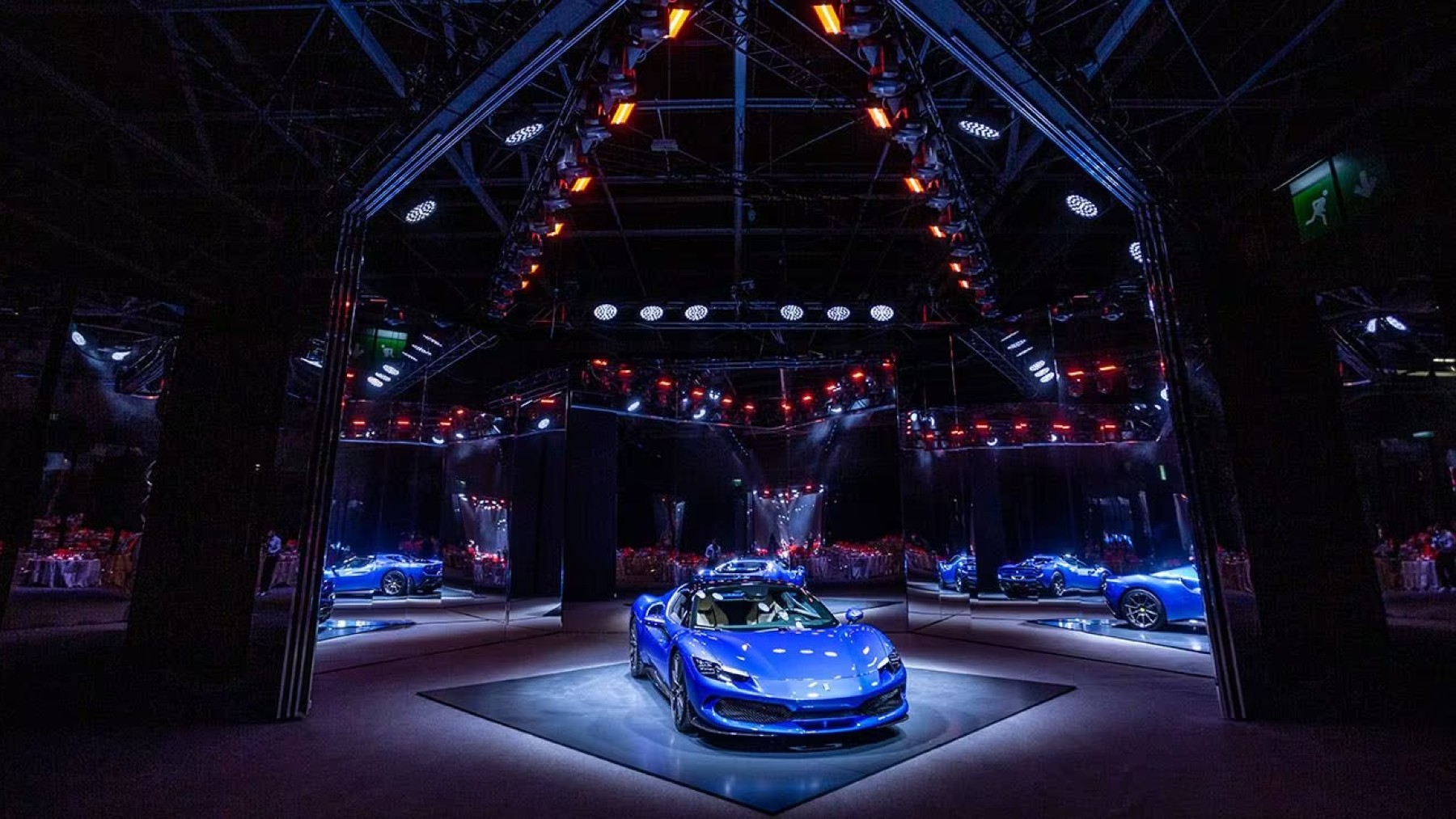
Hydrogen mobility is a future alternative that brands such as Toyota and Hyundai are developing, and Ferrari recently joined in with a reverse-mounted engine. However, the brand seems not to have stopped there, and now they have just unveiled their most secret project: the brand is going to become ‘e-Ferrari’, and they have already opened a mega-factory to innovate with the fuel of the future. It’s not ammonia, not methanol, and not water-based either, but one that most brands on the planet have not yet been able to produce.
Ferrari is switching to “e-Ferrari”: Legendary brand has just destroyed gas engines
Luxury Italian sports carmaker Ferrari has formally introduced its brand-new factory, referred to as the ‘Ferrari Factory, Innovation and Research’, an important first step to the firm’s electrical evolution located in Maranello, Italy. This structure, nicknamed the ‘e-building’, signals a new era in Ferrari’s journey as it gears up for the manufacture of its first EVs, hybrids and traditional ICE vehicles.
The new factory that has been built by the Italian architect Mario Cucinella is a clear indication that; Ferrari is embracing innovation in structures while at the same time embracing sustainability. The e-building measures a total floor area of 42,500 m2 and is 25m tall; it is a hi-tech manufacturing structure that complements Ferrari’s traditional artisanal manufacturing techniques.
A new e-factory has been unveiled: Lamborghini, Tesla and BYD have reasons for concern
The e-building comprises four levels, each serving a specific purpose:
- Lower floor: house general systems.
- First floor: Specialized in the assembly of automobiles as well as light vehicles.
- Mezzanine: Caters to general systems and offices
- Second floor: Covers mainly automobile assembly, powertrains and parts
Much attention is paid to the rational and organic organization of the layout, which would enable Ferrari to respond swiftly to new opportunities, trends in the market, and innovations.
Ferrari’s secret has been unveiled: 20,000 engines are using this innovative fuel, but not hydrogen
Although, Ferrari has not given an exact figure of the increase in production parameters, going by the e-building estimates, there will be a substantial raise in Ferrari’s production from the present 14,000 units per year to around 20,000 units. But Ferrari’s CEO, Benedetto Vigna, has pointed out that the main point of the new plant is not to expand output but to improve its adaptability in production.
The e-building incorporates several environmentally friendly elements:
- There are more than 3,000 photovoltaic panels on the roof that produce approximately 1. It will generate up to 3 megawatts of power at full capacity.
- Push to inundate the design with natural light at the expense of exterior windows, in measurement of the architectural impact.
- Rainwater collection system.
- Avail the ability of trees and green areas.
Two enigmas to be solved: From the first vehicles to be produced, to their stratospheric price
Perhaps the most remarkable component of the e-building is its emphasis on electric and hybrid powertrain manufacture. Ferrari will manufacture various components for its electrified vehicles in-house, including:
- Electric motors.
- High-voltage batteries.
- E-axles.
- Hybridized engines.
The second is the establishment of vertical integration, which lets Ferrari closely regulate the quality and performance of the electric powertrains to match those of the Ferrari name. Ferrari, the car manufacturing giant, plans to launch its first pure electric car in late 2025, and production is expected to begin in 2026.
While the company has been tight-lipped about the specifics of this groundbreaking model, some details have emerged:
- Expected price point: Starting with the price before options, at least $500,000, thus making it a niche brand in Ferrari’s portfolio.
- Production start: Early 2026.
- Design philosophy: Ferrari wants to keep the characteristics of the brand in regard to performance and engagement, even if it is transitioning towards electrification.
As you can see, the e-Ferrari project (not the official name, mind you) is a demonstration of how the brand is not going to focus all its innovation on hydrogen. This was a mistake that, in our opinion, Japan made with Toyota, and it cost them dearly. What’s more, by now you’ve heard all the hoaxes about the ammonia engine that the brand is supposedly developing (and which we debunked a month ago). The truth is that we still don’t know which way the carmakers are going to go, as it is still very much undefined.