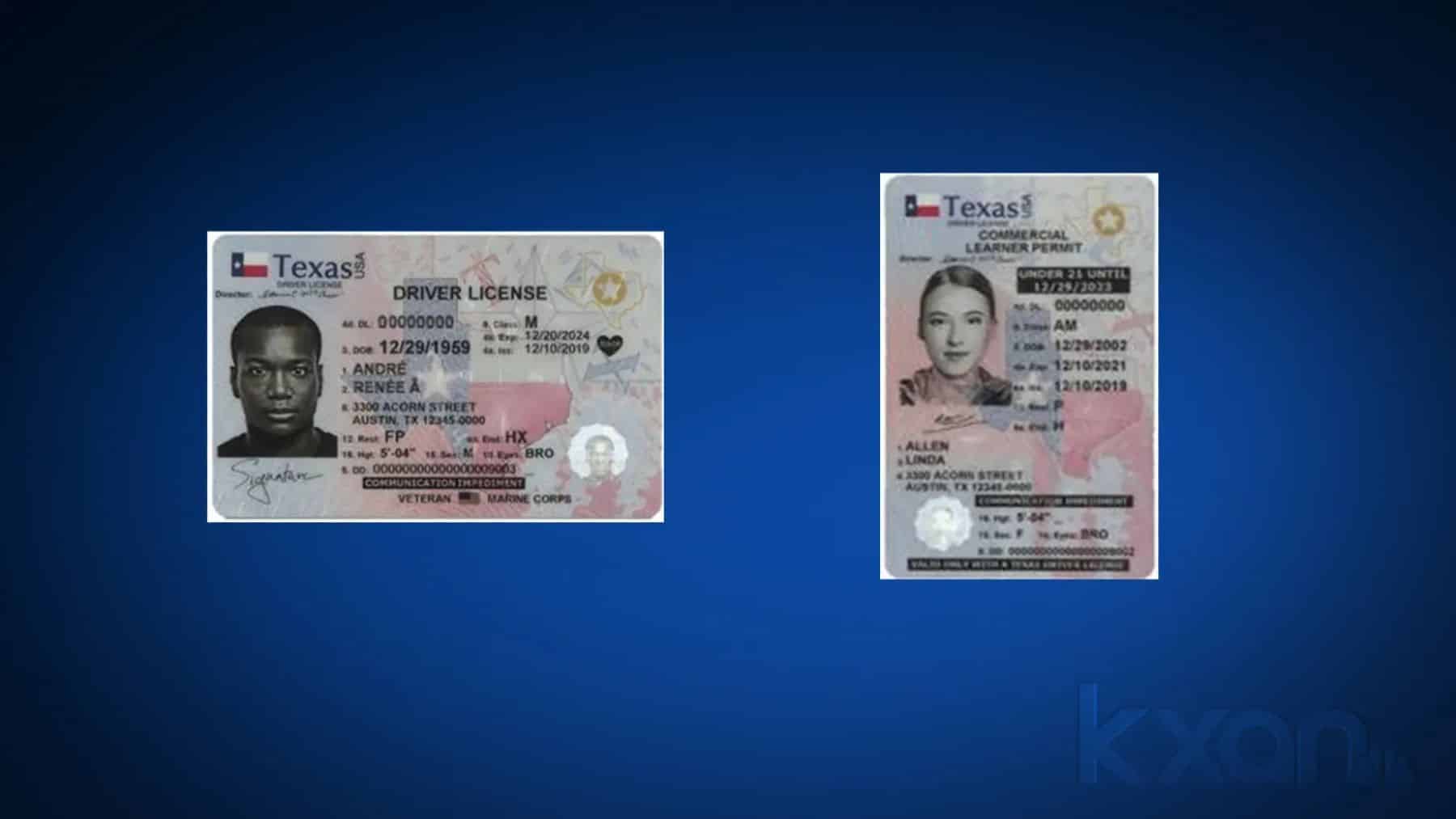
Acquiring a driver’s license is essential, and legally required by law, if you want to drive on the state’s roads. Licenses are important verification methods for authorities to ensure that you not only are legally allowed to drive on the road, but can also be used to identify who you are in the case of an accident. When applying for a driver’s license, you do have to pay for it. However, this is not the case for certain individuals.
How to apply for a license in Texas
While applying for your license if often associated with teenagers getting access to the roads on their own for the first time, you must also apply for a license if you are new to the state. While needing to head down to the DMV is often broadly acknowledged as a chore, it is essential that you do so to ensure that you are adhering to the legal requirements on the road.
New drivers must submit the following if they wish to receive a license:
- An application with relevant documentation
- Schedule an appointment
- Pay the relevant fee
- Provide your fingerprints for a background check
- Undergo a vision test
- Pass your driver’s test
- Submit photos for your license
These people may not have to pay the license fee
According to the Texas Department of Public Safety, the following costs are associated with getting your driver’s license:
- If you are under the age of 18, it will cost you $16 dollars to receive your license
- If you are over the age of 18, the cost of a driver’s license permit increases to $33
- If you are 84 and older, the cost of a new driver’s license permit decreases to $9
Once you turn 18, your driver’s license permit is valid for eight years. Once you turn 84, the permit is only valid for two years.
However, if you are a veteran who received a disability while in service, these rates do not apply to you. Veterans with service-related disabilities can get their driver’s license permit for free, provided that they meet certain requirements. You need to have received an honorable discharge from service, and your service-related disability must cause 60% or more of physical or mental impairment. You must also show that you receive disability compensation from the Department of Veteran Affairs.
It is importsnt to note that this exclusion for veterans with service-related disabilities is only for personal licenses and Real ID licenses issued by DPS and does not apply for commercial licenses.
License laws subject to updates
Across the US, states are constantly updating their license requirements and policies. This is to continue to ensure safety on the roads at all times. One big controversial law across states is the driver’s license exam and older individuals. Illinois recently passed legislation which raised the age in which elderly drivers would be required to retake a driving exam in order to keep their licenses. The raising of the age was down to efforts by advocacy groups in ensuring that older drivers maintain their independence for as long as possible.
Other states are making changes with regards to reinstating suspended licenses. Suspension of your license usually occurs when you have too many traffic violations or fines in your name. This is done to ensure that drivers adhere to traffic laws, as the lack of consequences would mean that it would be harder to enforce traffic laws on the road.
Palm Beach County in Florida recently gave drivers with suspended licenses the chance to get their license back through their annual Operation Green Light initiative. The program provides drivers the chance to resolve their traffic fines and violations and have their licenses reinstated on the same day.