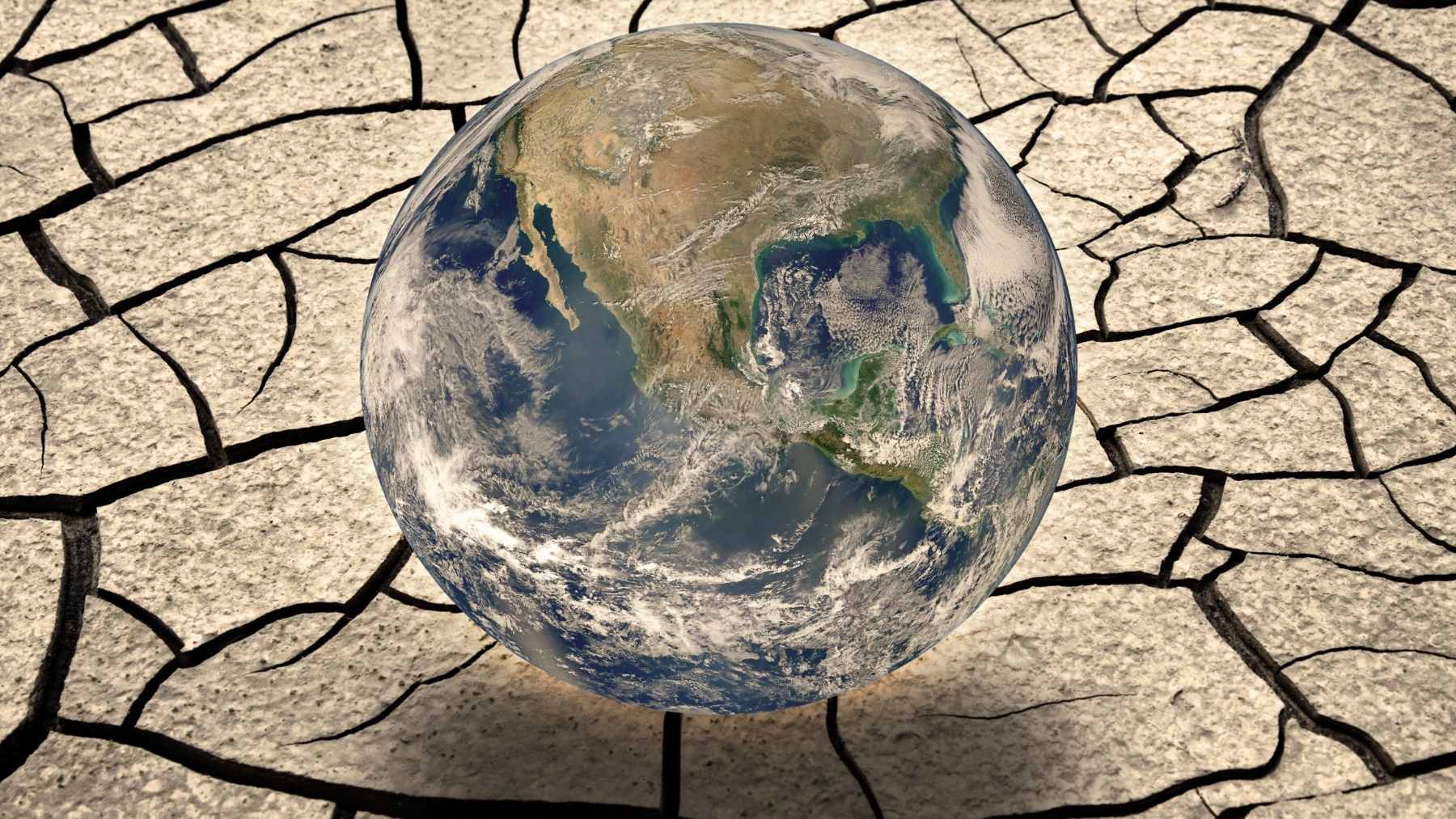
What if the taps in your city simply stopped running. Not because of a broken pipe, but because the reservoirs behind them had finally run dry. A new study in Nature Communications warns that this kind of “Day Zero Drought” is no longer a distant fear. For many regions, it may already be emerging in the 2020s and 2030s.
Researchers call these events Day Zero Drought, or DZD, when long multi year droughts collide with rising water demand and shrinking reservoirs. Using a large set of climate simulations, they find that nearly three quarters of drought prone land areas could face unprecedented drought driven water scarcity by 2100 under a high emission scenario.
In those places, the next big water crisis would be clearly linked to human driven climate change rather than natural swings in the weather.
From Cape Town’s scare to a global pattern
The work grows out of real world close calls. Cape Town came within months of turning off most household taps in 2018 after a three year rainfall deficit drained its main reservoir to critical levels. Chennai in India and cities like Los Angeles have faced similar stress, with strict restrictions and anxious residents counting every bucket.
The new study scales that risk up to the entire planet. The authors track four ingredients that have to arrive together for a Day Zero Drought.
Prolonged lack of rain, hotter conditions that pull more water back into the air, extremely low river flows, and water demand that outstrips the reduced supply. In regions that rely on big dams, they also check how long it would take for a reservoir to empty under those pressures.
Once all those pieces line up in a way that has almost no precedent in pre industrial climate records, the clock for “Time of First Emergence” starts. In simple terms, that is the first decade when scientists can say with very high confidence that a truly new kind of water crisis has arrived.
Hotspots in the Mediterranean, Africa, and North America
The picture that emerges is sobering. By the end of the century, regions across the Mediterranean, southern Africa, parts of North America, India, northern China, and southern Australia are projected to face persistent compound water stress. In many of these places, the first Day Zero Drought conditions are likely to appear between 2020 and 2030.
The models suggest that about 14 percent of the world’s large reservoirs could be pushed to the brink during their local Day Zero decade. For communities that depend on those lakes for drinking water, irrigation, industry, and hydropower, the risk is simple. When the big blue patch on the map shrinks, everything that depends on it follows.
Cities on the front line
By the study’s own estimates, more than 753 million people could be exposed when their region first crosses into Day Zero Drought conditions under the high emission pathway. That is almost one in eleven people alive today.
Urban residents carry a larger share of that risk. Roughly 467 million city dwellers are projected to be exposed at the moment of first emergence, compared with 286 million people in rural areas. The Mediterranean stands out.
There, around 196 million urban residents and 85 million rural residents could face Day Zero conditions as their new normal.
In rural regions of northern and southern Africa and parts of Asia, the story tilts the other way. Farmers who rely on rainfall and rivers for crops and livestock are hit first, with direct impacts on food security and local economies.
When recovery time disappears
One of the more unsettling findings concerns rhythm. In many hotspot regions, the typical Day Zero Drought lasts longer than the break before the next one. That means communities do not get a true recovery period. Reservoirs stay low, ecosystems stay stressed, and even a good rainy season may not be enough to refill the system before the next hit.
The Mediterranean, southern Africa, parts of Asia, and Australia stand out for this pattern. There, the study shows a high frequency of events where DZD duration is longer than the waiting time to the next event.
In practical terms, that can translate into repeated water restrictions, rising electric bills as utilities scramble for new supplies, and long arguments over who gets how much.
Why limiting warming still matters
The analysis also links Day Zero Drought to global temperature targets. Around 61 percent of the regions where DZD emerges do so in a world that is only 1 to 2.5 degrees Celsius warmer than pre industrial levels.
Exposure peaks near 1.5 degrees. At that warming level, about 488 million people are projected to face their first DZD, including 322 million urban residents and 166 million rural residents.
That suggests two parallel tracks. Cutting emissions can still reduce long term risk. At the same time, cities and countries need to rethink how they manage water.
The authors highlight options that include more efficient use across sectors, diversified supply such as rainwater harvesting and wastewater reuse, and reservoir management that does not hide growing stress until it is too late.
For anyone who has watched a reservoir shoreline creep steadily inward year after year, the warning will feel familiar. The difference now is that scientists have mapped where that line is likely to cross into truly uncharted territory, and roughly when.
The study was published on Nature Communications.