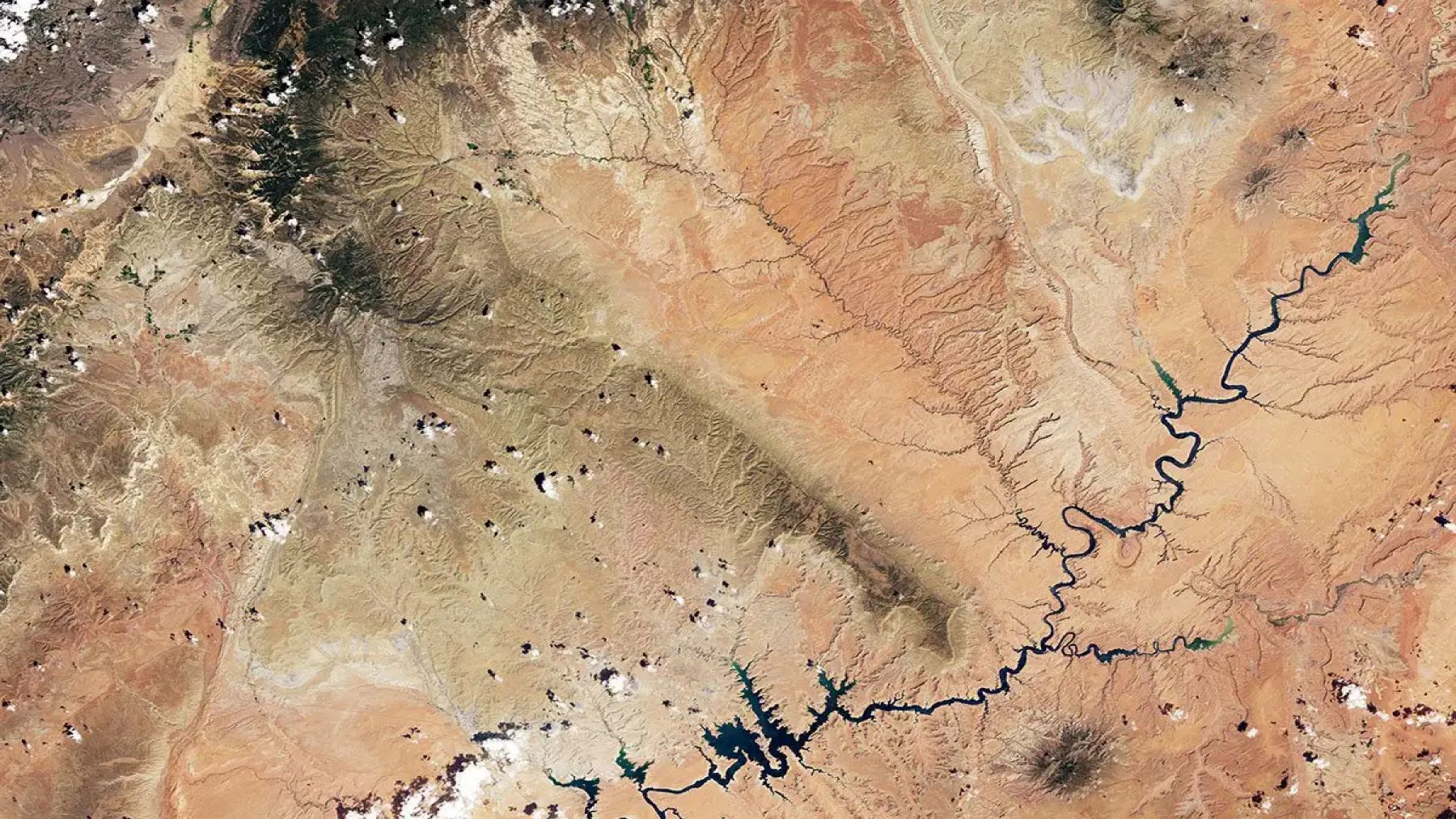
Water is the basis of all life, supporting ecosystems, agriculture, and human civilization. However, a worsening crisis can disrupt societies and economies around the world. Diminishing rainfall, growing populations, and climate change push the US toward extreme water shortages. At the same time, increasing global water scarcity brings about some fear that World War III will be over water, not oil. The union of environmental stress and geopolitical instability forms a bleak portrait of the coming decades unless there is a passage to another kind of world.
The water crisis in America is a ticking time bomb
Despite the illusion of efficiency, the US is entering a water crisis. Other studies have indicated that almost half of the nation’s freshwater basins could fall short of their monthly demand within the next 50 years. This could result in devastating water shortages in not only dry areas such as the Southwest and the Great Plains but also states in the Midwest and the South.
Climate change is a key driver of this crisis. Climate change is transforming rainfall patterns, worsening droughts, and accelerating evaporation rates internationally. However, as extreme rain events occur, some regions see more intense rainfall, making it difficult to capture and store water.
Meanwhile, the western US is facing extended droughts, with California suffering some of its greatest water shortages in recorded history. Water demand is also skyrocketing. With the US population projected to surpass 514 million by 2100, it will only add more pressure on scarce resources. How much water do Americans use? We estimate the amount at about 345 billion gallons per day, a demand that will rise as agricultural and industrial needs increase.
Groundwater, an important source of drinking water and irrigation, is being used faster than it can be replaced. The Central Valley Aquifer, California’s lifeblood for the nation’s agricultural industry, has lost ten cubic miles of water in four years.
By 2030 there will be 700 million climate refugees: The dire warning of water scarcity
The water crisis (like this water scarcity that experts say will leave us without technology) is not limited to the US. Water scarcity is turning into a significant geopolitical issue across the globe. As former UN Secretary-General Ban Ki-Moon warned: “Water scarcity threatens economic and social gains and is a potent fuel for wars and conflict.”
Water consumption has grown more sharply than population, leaving cities from Cape Town to Chennai unable to guarantee reliable supplies. The World Bank predicts that water scarcity may force up to 700 million people to move by 2030, throwing flames in already unstable regions. In 2017, devastating droughts drove 20 million people across Africa and the Middle East from their homes because of food shortages and conflict in an unprecedented humanitarian crisis since World War II.
There are certain regions that are identified as hot spots for future potential water conflicts but especially in contexts where shared trans-boundary rivers and basins cross over multiple nations. The Nile, Ganges-Brahmaputra, Indus, Tigris-Euphrates, and Colorado River basins are among the most threatened. Water allocation tensions in these regions could create political instability or push them toward war.
Around the globe: Why international support is fundamental to water stability
This calls for a noticed approach to the water crisis. Conservation can achieve a lot, for example, Los Angeles’ population has increased by a million since the 1970’s, yet it has kept its water use steady through efficient measures. Water meters, outdated infrastructure repair, and promotion of responsible water consumption are simple steps that bring down over-consumption of water. Modern technologies also hold promise.
Desalination plants, which turn seawater into potable water, are being spun up at high speeds. California currently has 11 such plants and plans 10 more. Nonetheless, desalinated water is expensive, twice the amount of extracted freshwater. To minimize such water waste, advances in agricultural irrigation, like drip irrigation and soil moisture sensors, can play a part, too. Cutting irrigation by just 2% would avert shortages in a third of the basins at risk.
Water security must also be a priority for policymakers. Increased investment in infrastructure, tighter regulation of groundwater extraction, and better cooperation on trans-boundary water treaties are all essential. Internationally, all countries must cooperate to reduce the likelihood of waterborne wars by committing to equitable and sustainable resource use.
The water crisis is one of the greatest challenges of the 21st century. Across the US, with supply of water dwindling and demand rising, a storm of water shortages are brewing. This water scarcity is causing political instability, that could lead to future wars. Solutions exist, from conservation to technological innovation, but action is needed urgently to make sure that water remains a resource for peace and prosperity, and not a catalyst for crisis (like this water produced out of nothing).