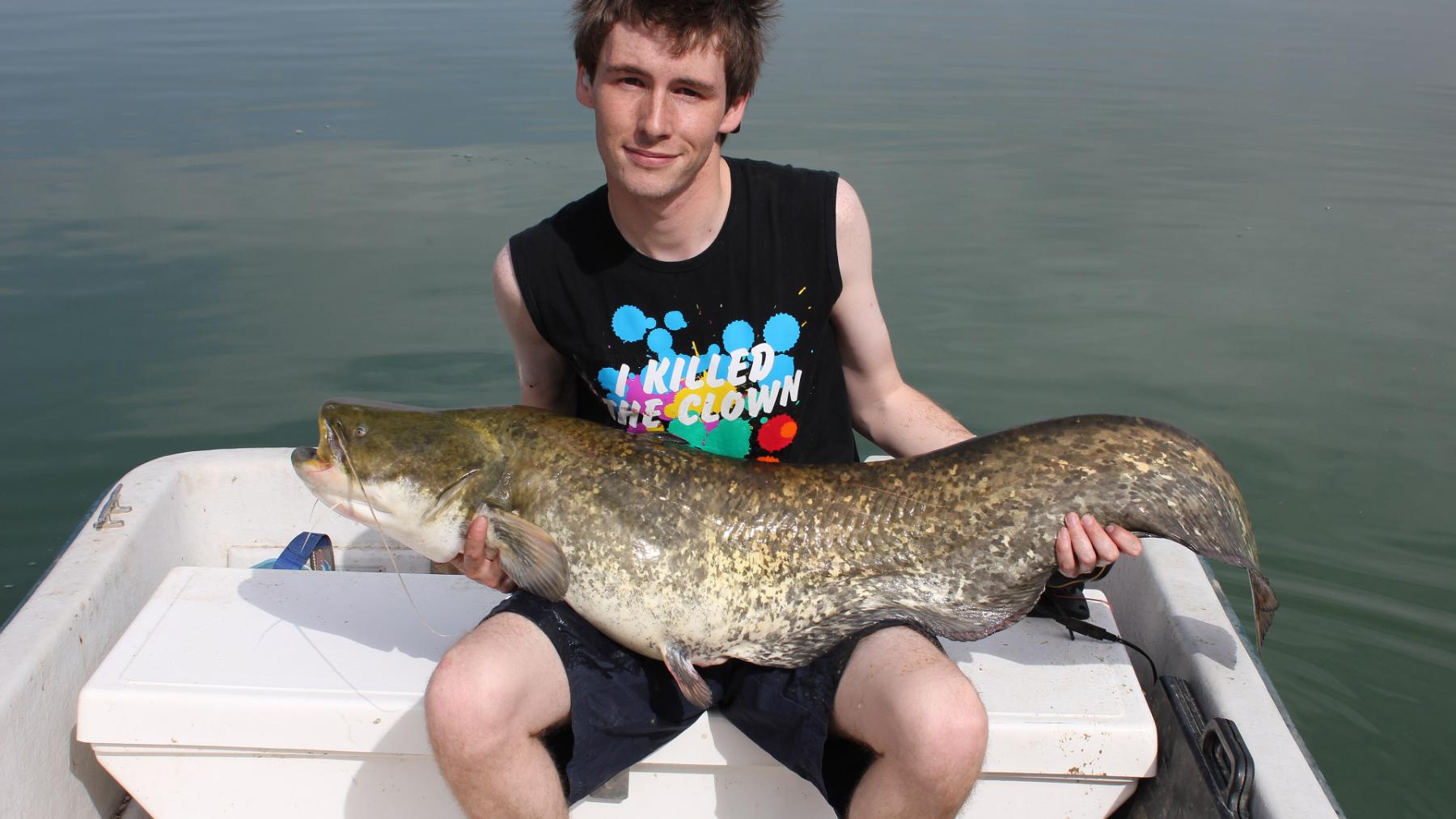
Some fishing trips end with a couple of perch and a sunburn. Others end with a fish longer than the angler is tall. That’s what happened on Poland’s Vistula River on Sunday, September 13, 2026, when angler Beata Wojewoda hauled a wels catfish measuring 234 centimeters (about 7 feet 8 inches) into her boat.
The giant was measured, photographed and released back into the river. It’s her personal best, and a striking reminder that Europe’s largest freshwater predator is still thriving in the rivers where it naturally belongs.
A birthday trip on the Vistula
Wojewoda, who runs the popular fishing profile “Hej tu Rybka” (roughly “Hey, little fish”), was on the water near Sandomierz in southeastern Poland. She shared the boat with Dawid Kaszlikowski, an experienced angler who knows this stretch of the Vistula well.
According to the local news site tyna.info.pl, the outing was a birthday treat she gave herself. For most of the day nothing big happened. The catfish only showed up at the very last spot they tried, a place where shallow water suddenly drops into deeper channels.
“Two Vistula hunters on one boat,” she wrote on social media, crediting her partner’s knowledge of the river and the choice of that final location.
Too much fish for one person
The fish took a lure designed for zander (a European relative of the walleye), not a bait meant for catfish. Within seconds, Wojewoda realized she could not handle the pull on her own.
“I would have lost this fish on my own,” she told tyna.info.pl. She also stressed that they found it without sonar or any electronic fish finders, just by reading the river.
Local reports put the fish’s weight at around 90 kilograms, or roughly 198 pounds. That’s about the weight of a grown man, attached to the end of a fishing line.
“Those were emotions”
Kaszlikowski also celebrated online. He described being a guest on the “Hej tu Rybka” boat and wrote that the result could only be one thing, “a huge, record catfish from the Vistula.” He added, simply, “Those were emotions.”
Wojewoda has claimed it may be the largest fish ever caught by a woman in Poland. That claim hasn’t been independently verified, and Polish outlets present the catch as her personal record rather than a national one.
Either way, it was a moment most anglers only dream about. And the story didn’t end with a trophy on the wall.
Meet the wels catfish
The wels catfish (Silurus glanis) is a native of Europe and Asia. According to FishBase, its natural range covers the North, Baltic, Black, Caspian and Aral Sea basins, reaching as far north as southern Sweden and Finland. Since the Vistula drains into the Baltic, this fish was very much at home.
It lives in large and medium lowland rivers, backwaters, well-vegetated lakes and deep reservoirs. Adults are mostly night hunters that prey on fish and other aquatic animals, while the young start out on invertebrates.
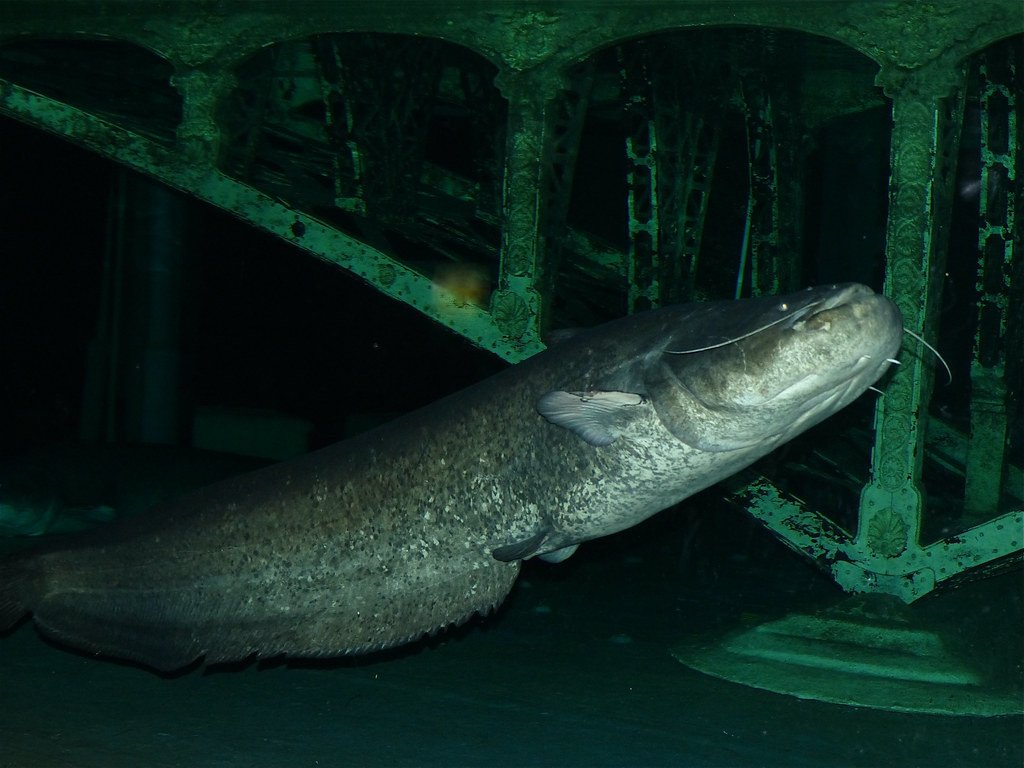
How big can they get? FishBase lists a maximum recorded length of about 9 feet and a top published weight of around 287 pounds. They can also live a very long time, up to 80 years.
From native giant to invasive hunter
In Poland, the wels is part of the natural river community. But across much of Europe it has been widely introduced by people, and several countries have reported negative effects on local ecosystems.
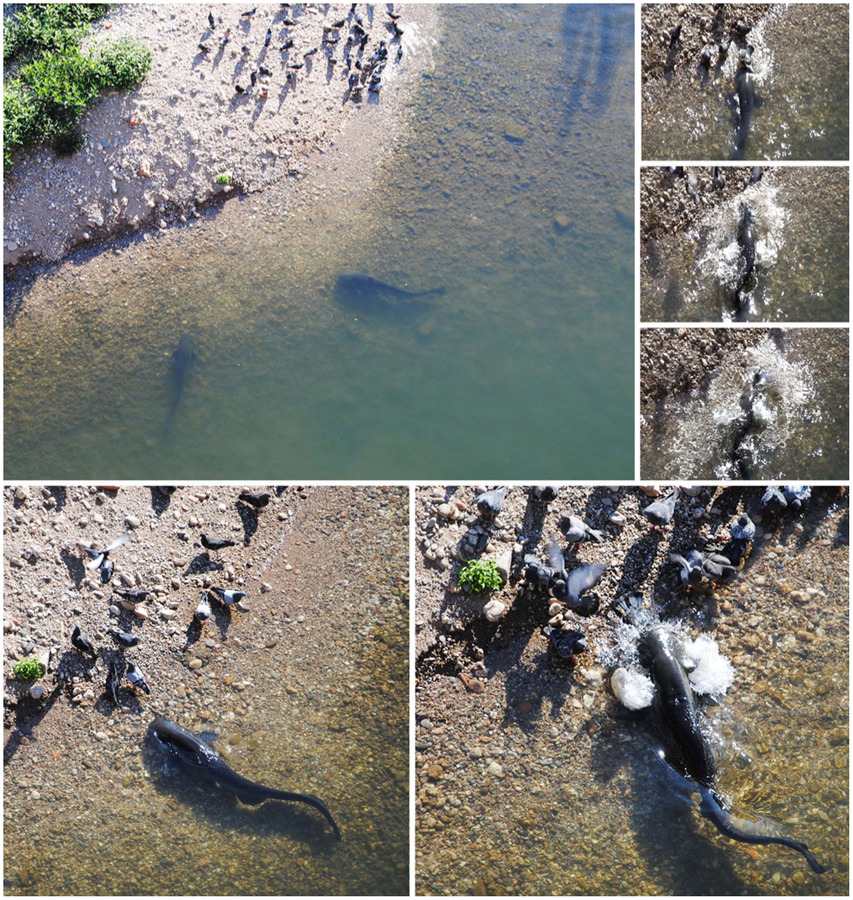
The most famous example comes from France. A 2012 study published in PLOS ONE filmed introduced catfish in the Tarn River in Albi deliberately beaching themselves to grab pigeons on the riverbank. Out of 45 beaching attempts observed, 28% ended with a bird caught.
The researchers, led by Julien Cucherousset, noted that this behavior had not been reported in the species’ native range. In other words, a fish that is a normal part of the Vistula can behave very differently in a river where it doesn’t belong.
Why letting it go matters
Catch and release has become common among big-fish anglers, and Wojewoda followed that approach, returning the catfish to the water after a quick photo session. For a species that can live for decades, a fish of this size is likely many years old.
Big adults are also part of what keeps a population going. Wels catfish reach maturity at two or three years of age and spawn in pairs, with males guarding the nest, so healthy adults help keep the next generation coming.
The International Union for Conservation of Nature currently lists the species as “Least Concern.” That’s good news, but it doesn’t mean individual rivers can’t lose their biggest fish if too many are taken out.
A river still full of surprises
At the end of the day, this is a fishing story. But it’s also a small snapshot of a big European river that can still produce true giants.
For Wojewoda, it’s a personal milestone she won’t forget. For everyone else, it’s a reminder that somewhere under the surface of the Vistula, that 7-foot catfish is still swimming.
The official statement was published on “Hej tu Rybka (Facebook)“.
Photo: Joe Pell / Wikimedia Commons (CC BY 2.0)