It is common knowledge that the world is going through really alarming crises in terms of the climate crisis and the great droughts that are experienced throughout the world. For this reason, different companies and organizations are constantly working to find a solution to these major problems related to the lack of water in different countries using energy from space.
A new way to combat the water crisis: This could be the end of one of our biggest problems
Well, now a team of researchers have found a way to generate large quantities of water. With this promising innovation, we would be talking about contributing significantly to those areas where there are extreme droughts that harm the population and the proper development of the area.
The team of researchers from the King Abdullah University of Science and Technology was the one who devised and carried out a truly revolutionary solar device that promises to significantly transform the way we collect water in areas with great shortages, becoming one of the most promising tools of today, especially if we seek to help the areas most affected by the water crisis.
How does this innovative tool work? The secret is the most renewable energy ever created
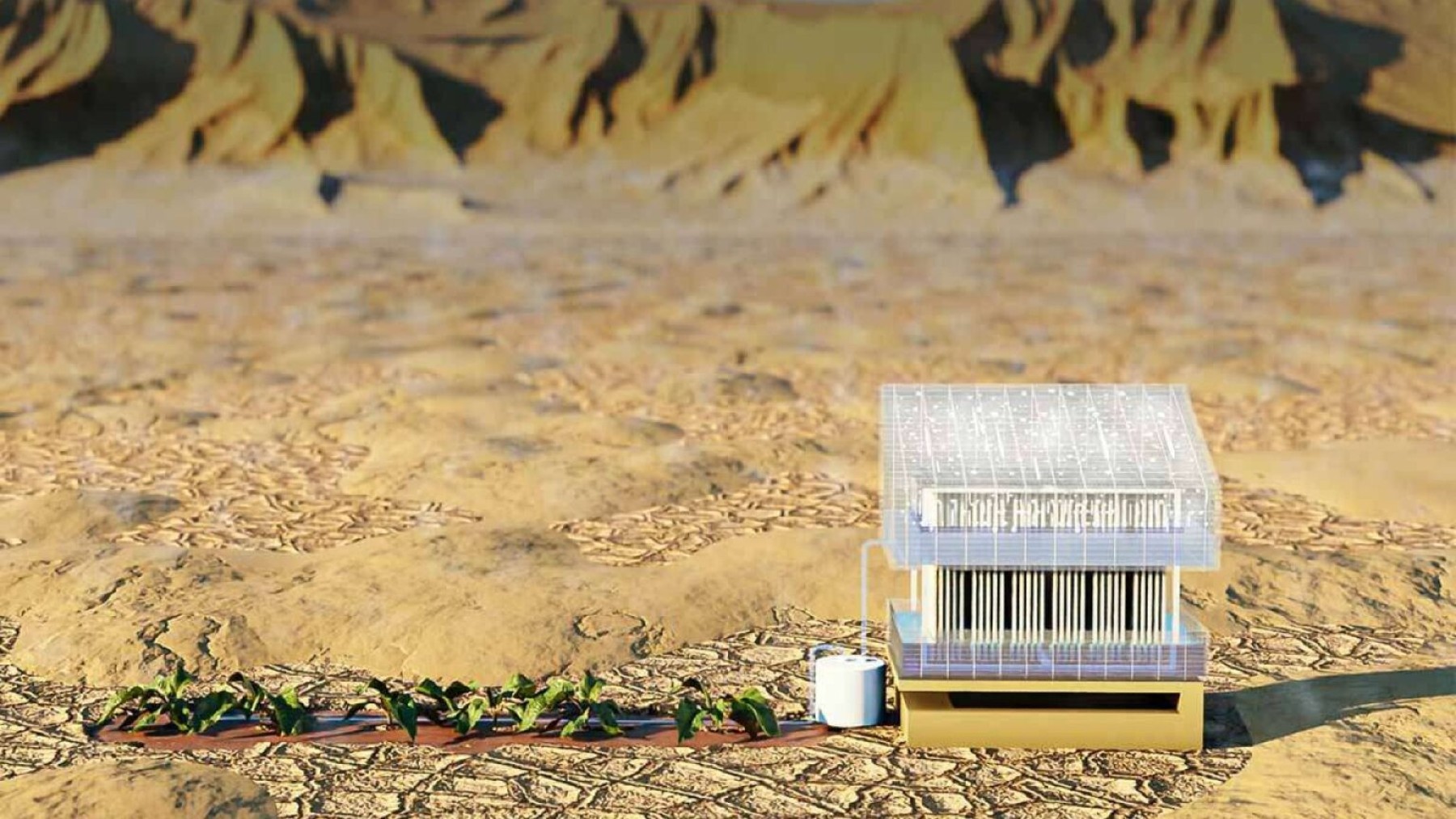
This innovative device is mainly composed of a structure made of vertical micro channels that are filled with a saline solution. The latter was applied so that it interacts correctly with the water molecules available in the air.
However, this device must first go through four stages for proper water production. First, the water in the air must be captured, and for this purpose, there is a structure at the bottom of the device that is exposed. This is where the humidity in the air is collected.
Subsequently, steam must be generated as a crucial part of the process. At this stage, the upper part of the device, which is carefully enclosed in an airtight chamber, plays a key role. With the help of the sun, the water that was collected from the air is heated, begins to evaporate and finally turns into steam.
Then, the vapor condensation stage comes into play, a crucial process for the final production of liquid water. Specifically, this process occurs on the inner surface of the chamber mentioned above, where the previously generated steam begins to cool and generate fully potable liquid water.
To finish this process, the only thing left to do is to collect the water, which is now completely ready for human consumption. This important creation can be one of the great answers to combat the great droughts that are experienced in the most disadvantaged and hot areas of the world. In addition to being able to use this device for irrigation of crops or livestock.
How much water can it generate? This invention will change everything, and it’s not hydrogen-fueled
If we talk a little about the results that can be obtained from this promising device, we can start by indicating that tests were conducted in Saudi Arabia and showed that this generator can produce between two and three liters of water per square meter per day. These figures could be particularly advantageous since no human intervention is required for this process to be carried out.
According to the tests carried out, this device demonstrates that it is capable of operating efficiently and generating a large amount of H2O in weeks, making it a tool with great potential to be applied in extremely desert areas where access to drinking water is almost nil.
This solar device, with its ability to generate drinking water from the humidity in the air, offers an extremely promising solution for the areas most affected by drought. Being able to produce water efficiently and completely autonomously, we could say that it is a vital tool for places with scarce access to potable H2O.