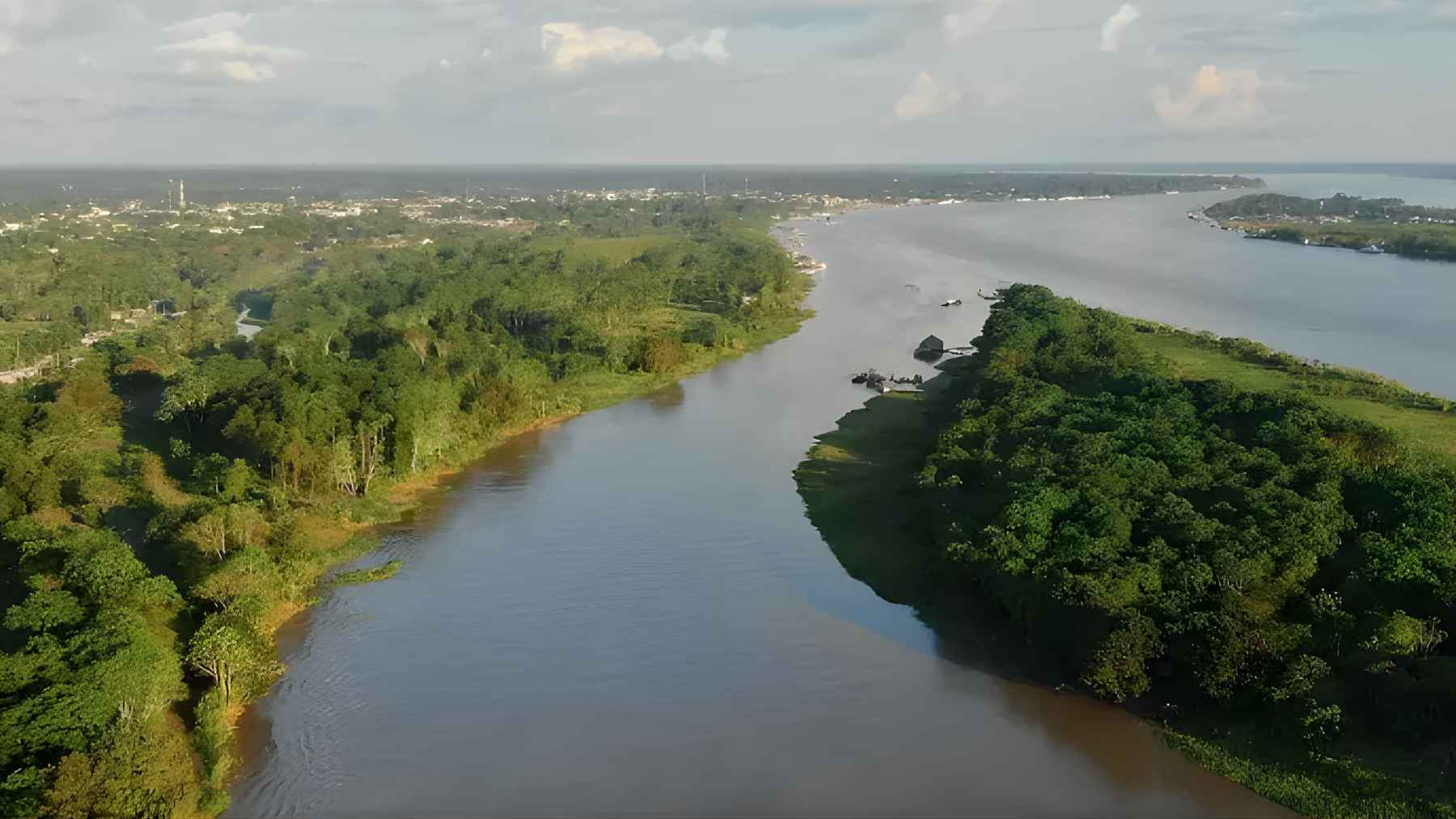
In a decision that could reshape the future of the rainforest, Colombia has moved to declare all of its share of the Amazon rainforest a Renewable Natural Resources Reserve, closing the door to new large-scale mining and hydrocarbon projects across 483,000 square kilometers of tropical forest.
That area represents about 42% of Colombia’s continental territory and roughly 7% of the whole Amazon basin.
The announcement came in Belém do Pará during the environment ministers meeting of the Amazon Cooperation Treaty Organization (known as OTCA) at COP30, where acting environment minister Irene Vélez Torres described the move as Colombia “taking the first step” and invited neighboring countries to join an “Amazon Alliance for Life.”
A historic shield for a vital forest
On paper it looks like a zoning change. In practice, it places a political shield over more than 48 million hectares of rainforest that help regulate rainfall, cool the region and store vast amounts of carbon.
Scientists warn that the Amazon as a whole is already close to a tipping point where deforestation between 20% and 25% could push large swaths toward a dry savanna type landscape. Current estimates place total forest loss near that lower bound.
For farmers watching rainy seasons become less predictable and city dwellers facing harsher heat waves, keeping this “green air conditioner” running is not an abstract concern.
What the ban actually covers
The new reserve status applies to six departments in the Colombian Amazon region, including Amazonas, Caquetá, Guaviare, Guainía, Putumayo and Vaupés. Within that territory, the government says it will stop granting new licenses for industrial-scale mining and oil and gas exploration or production.
According to official figures, the measure is designed to block the future development of 43 planned hydrocarbon blocks and around 286 pending mining applications that had not yet broken ground. In simple terms, it tries to close the door before these projects ever move from paper to bulldozers.
Communities and biodiversity at the center
The Colombian Amazon is not an empty green patch on the map. It is home to about 1.2 million people, most of them Indigenous, small-scale farmers and Afro descendent communities who have acted as de facto forest guardians for generations.
The region hosts around 10% of all known plant species on Earth and plays a key role in feeding Andean wetlands that supply water to millions. Vélez has framed the policy as an ethical choice rather than a simple economic trade off, saying that caring for the Amazon is an “ethical investment in the future of the region and of humanity.”
Regional cooperation and a new Amazon commission
At the same COP30 event, the Amazon countries launched a new Special Commission on Environment and Climate, known as Cemac, under the Amazon Cooperation Treaty Organization (OTCA). The platform is meant to coordinate action on sustainable development, biodiversity, forests and water, and to tackle environmental crimes that do not stop at national borders.
Colombia has asked that Cemac become the main space to implement the Belém Declaration on Amazon cooperation and to push, over time, for a regional deal that phases out fossil fuels in the basin. The message is clear enough. One country’s ban will not save the forest if its neighbors keep drilling and digging.
Big promise, real hurdles
There is also a legal and political reality check. Shortly after the announcement, Colombia’s Interior Ministry reminded the government that any decision of this scale must go through a formal prior consultation process with hundreds of Indigenous and other ethnic communities in the region before it can fully enter into force.
That requirement has temporarily placed the measure in suspense while authorities work out how to conduct that consultation across such a vast and remote territory.
Even once the rule is finalized, enforcement will be a test. Illegal gold mining, land grabbing and informal road building already fragment many of the ecosystems the resolution seeks to protect. Alternatives that bring income without clearing trees will be essential if the promise of a “just energy transition” is to feel real in river towns far from Bogotá.
At the end of the day, Colombia has drawn a firm green line across its share of the Amazon and invited the rest of the basin to step up alongside it. Whether that line holds on the ground will influence not only local communities, but the global climate that shapes everything from crop yields to the electricity bill.
The official statement was issued by Colombia’s Ministry of Environment and Sustainable Development.