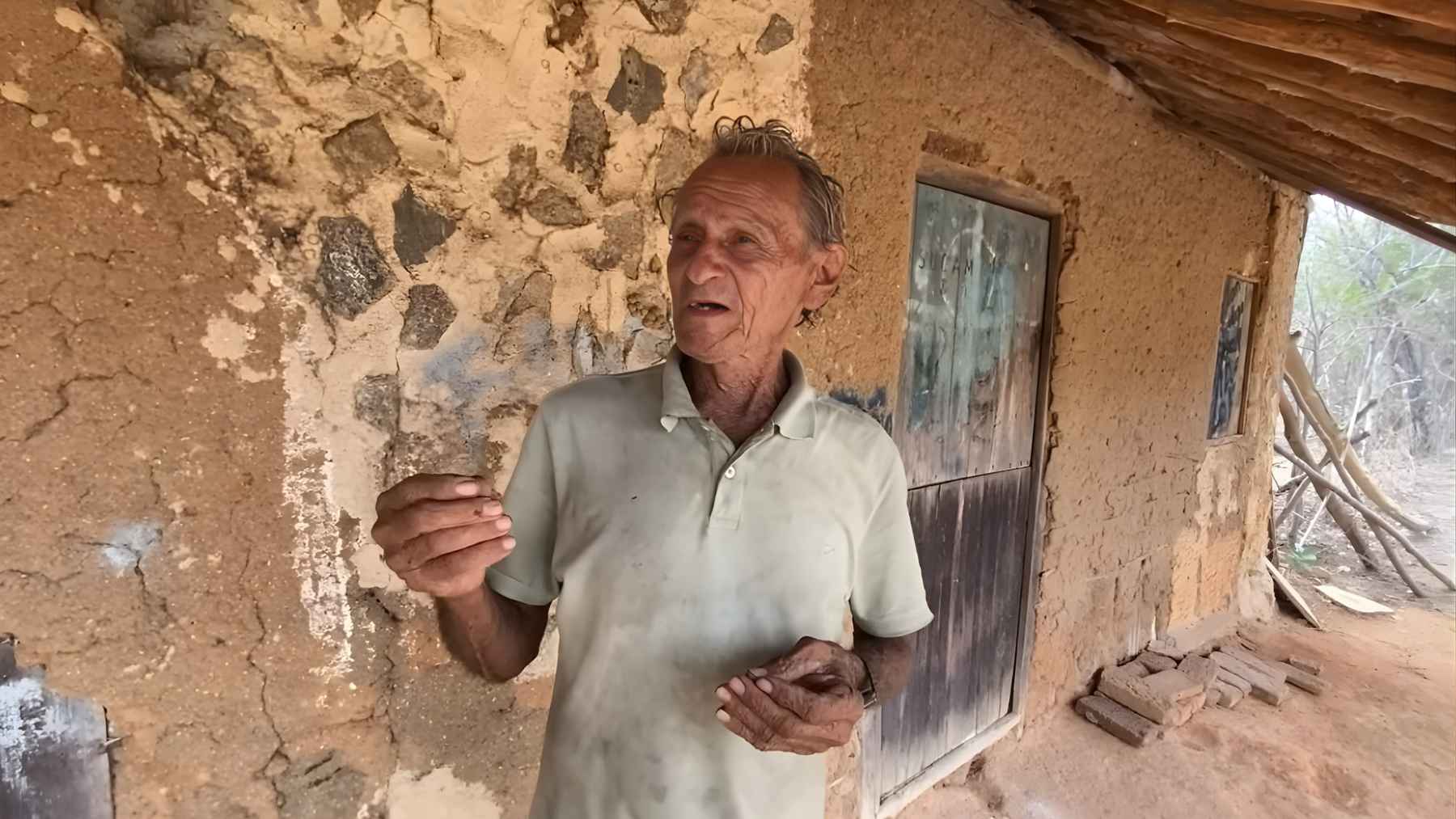
Francisco Matias is not just an internet curiosity. In rural Hidrolândia in Brazil’s Northeast, the 80-year-old known as Seu Chiquinho lives alone in the 106-year-old clay house his father built in 1920. He brings in well water, stores it in clay containers, cooks on a wood stove, and still spends part of the morning tending the land.
What does that kind of life tell us in an age obsessed with smart homes and instant everything? Quite a lot, actually.
It would be easy to package his story as nostalgia. But the better angle is environmental. Seu Chiquinho’s home shows how traditional building knowledge can work with the climate using local materials and very little energy. It also shows the harder side of rural self-reliance, because hauling water and cooking with fire are not quaint details when they shape every single day.
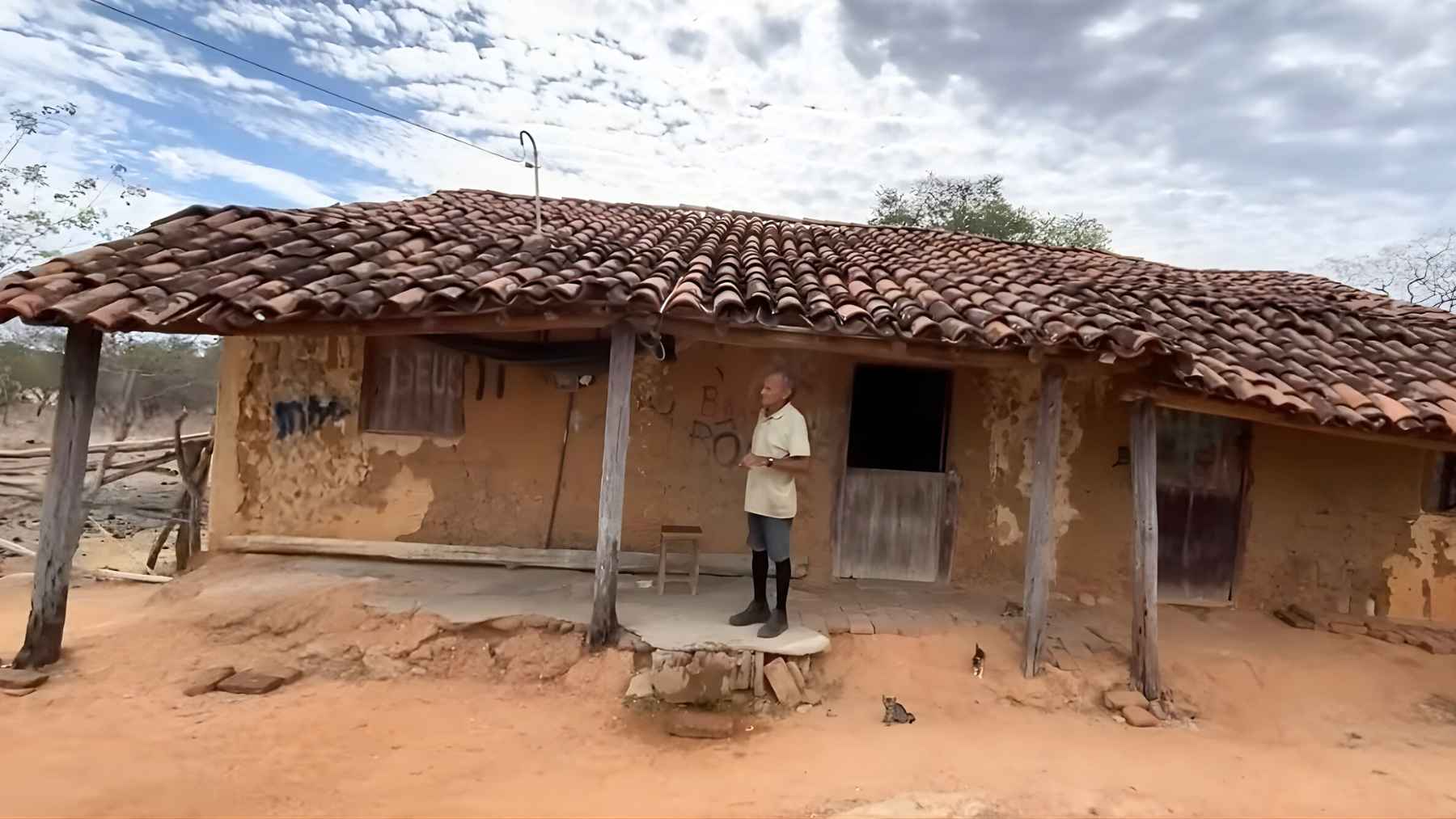
A house that works with the heat
The house itself may be the most interesting part of the story. Built in 1920 by Antônio Matias, it has stayed standing for more than a century. Earthen construction like taipa and adobe is not just a relic. A recent study on adobe structures found that these walls have high thermal inertia, delay heat transfer, and keep indoor temperature swings small during warm periods.
In practical terms, that can mean steadier rooms and less need for fans or air conditioning. When that sticky afternoon heat settles in, that matters.
Simple routines and family memory
Seu Chiquinho’s routine is straightforward, but not light. He fetches water from a nearby well every week, transports it in drums, and stores it in clay pots inside the house. The wood stove is still his kitchen. After breakfast, he spends two to three hours clearing brush, fixing fences, and preparing small plots near the Rio Feitos.
He returned from Rio de Janeiro for good decades ago, remained unmarried, and kept the house after his parents died about 28 years ago. He may live alone, but by his own account, “there is always someone who comes by.”
Old wisdom and modern limits
This is where the numbers help. In 2023, only 32.3 percent of rural households in Brazil used the general water network as their main source of supply. Another 12.8 percent depended mainly on shallow wells, while 29.8 percent relied on deep or artesian wells. So to many city readers, carrying water home in containers may sound almost unthinkable. In parts of rural Brazil, it is still part of the landscape.
Cooking tells a similar story. By one official metric, 94.5 percent of Brazil’s population had access to clean cooking in 2023; yet 11.8 million households still used wood for cooking that year. Brazil’s energy planning agency also stresses that “clean cooking” is not mainly about greenhouse gases in this context.
It is about indoor air quality and safer technology inside the home. That point matters because the World Health Organization says about 2.1 billion people worldwide still cook with solid fuels or inefficient stoves, producing harmful household air pollution.
So what should readers take from Seu Chiquinho’s story? For the most part, the lesson is not that the past was better. It is that some older forms of knowledge still make sense. Thick clay walls, local materials, low waste, and a life organized around the land can reduce energy demand in ways that feel surprisingly current.
But sustainability should not mean carrying avoidable burdens or breathing more smoke. The smartest path is probably a mix of both, keeping the passive design and the sense of limits, while expanding clean water and clean cooking.
The official report cited in this article was published on the EPE website.