Imagine this: you wake up every morning in a bright apartment with a sweeping view of the city, and while you prepare your breakfast, your windows are generating electricity in a silent, invisible, and sustainable way. We know it sounds like something out of a movie, but in fact, it is already a possibility – even a reality for some. All of this is thanks to transparent solar window technology, initially developed by researchers at Michigan State University.
Before the windows themselves, we need to talk about the transparent solar panels
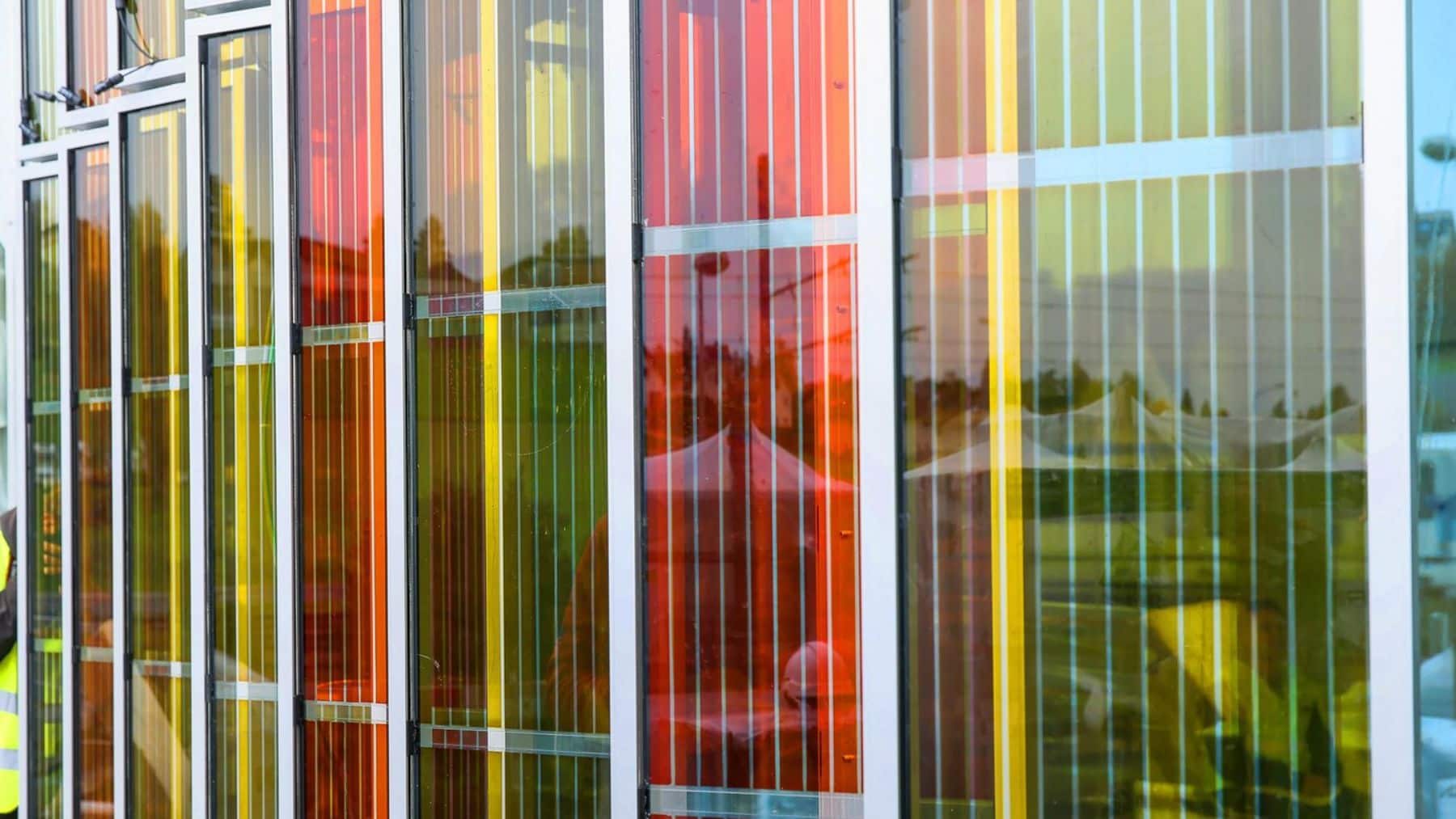
First, let’s understand how this new technology works. Transparent solar panels work differently from the traditional panels we are used to seeing on roofs. This is because they are built with a special type of photovoltaic glass, which, while allowing light to pass through, absorbs UV and infrared radiation, precisely the wavelengths that carry the most energy.
These invisible particles, when absorbed, undergo a conversion process thanks to invisible solar cells embedded in the molecular structure of the glass. It is this detail that allows the windows to function exactly like any conventional window, while simultaneously generating electricity. It is worth mentioning that the technology was developed by Richard Lunt and his team in 2014, and has been evolving ever since.
It looks like the windows of buildings will generate energy now
Okay, so what can we expect from these new solar windows? Well, the possibilities of this technology are huge, especially when we talk about big cities. Just to give you an idea, it is expected that in the United States alone, there will be between 5 and 7 billion square meters of glass surfaces. We are talking about commercial buildings, skyscrapers, schools, and shopping malls that use entire glass facades that, with the right technology, could become sources of clean and constant energy.
That’s why companies like Ubiquitous Energy, co-founded by Richard Lunt himself, are working to scale this innovation. Since 2024, the company has been focused on mass-producing floor-to-ceiling solar windows, aiming for commercial buildings. But the idea is to turn each transparent surface into a small, individual solar plant (quite different, but just as innovative, as this floating solar plant that mimics island architecture).
Beyond the US, adoption is also growing rapidly in Europe. For example, Dutch company Physee is installing 15,000 SmartWindows in office buildings, combining power generation with indoor climate control sensors. In Denmark, the Copenhagen International School already operates more than 12,000 transparent solar panels that provide more than half of the building’s energy. Oh! And Asia is also expected to follow this trend closely over the next few years.
Why transparent solar windows could be our future?
In addition to having a direct energy impact, transparent solar windows represent a significant step forward in achieving global sustainability goals. The great advantage of these windows is that they can be integrated into existing structures, without the need for new land or large installations. For example, in highly populated cities such as São Paulo, New York or Tokyo, installing large areas of solar panels is a logistical and architectural challenge.
Now, with solar glass, we will adapt to what already exists, taking advantage of the current urban infrastructure to generate clean and local energy. Not stopping there, another advantage is the decentralization of energy generation. What does this mean? Well, instead of depending on distant plants or polluting sources, each building can produce part or all of the energy it consumes, with minimal impact on the landscape, just like this new wind turbine that has a futuristic and brilliant design, which corresponds to 10,000 solar cells.