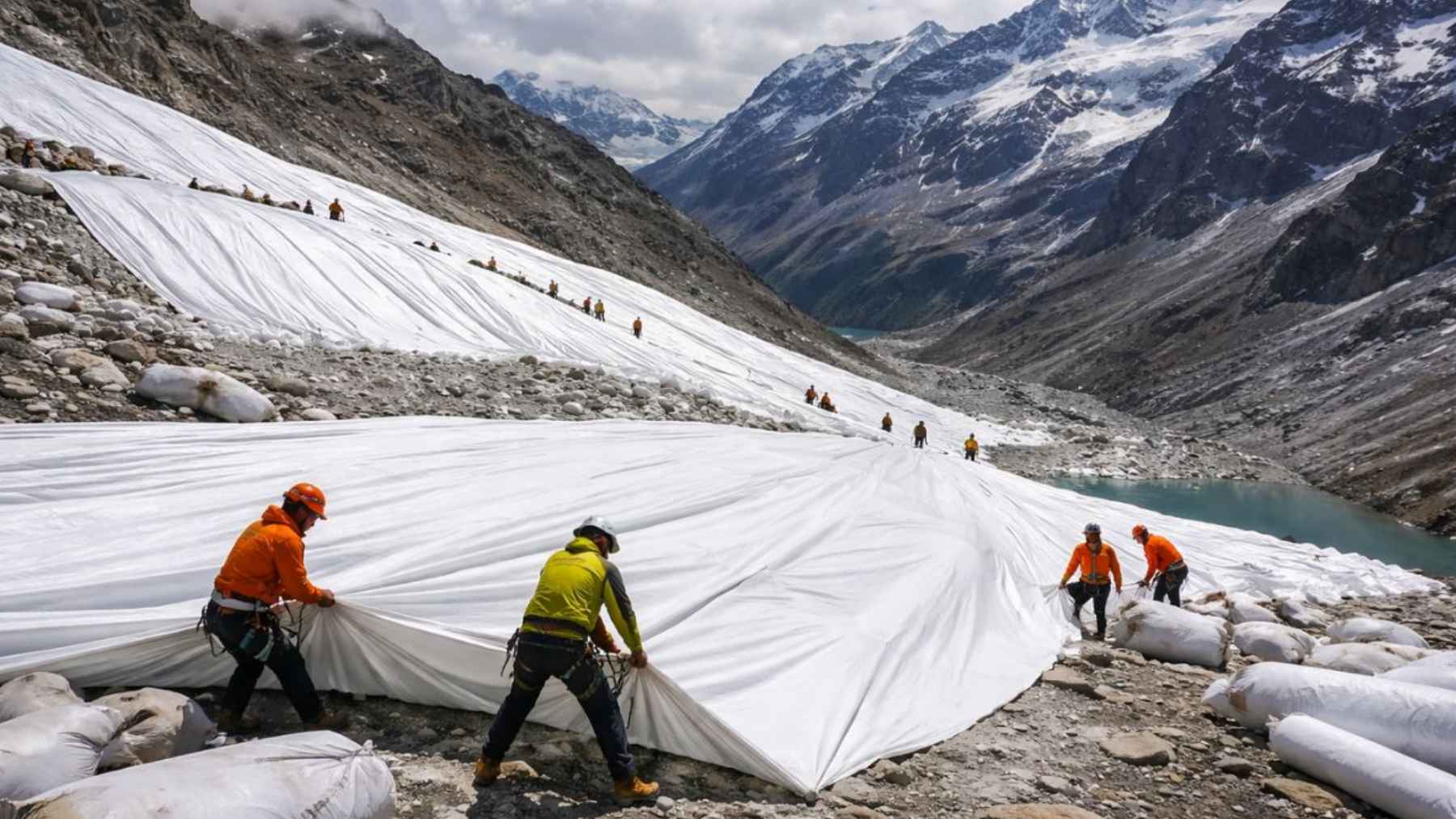
Back in 2019, a group of researchers from the Chinese Academy of Sciences hiked up to Dagu Glacier in Sichuan and did something that sounded almost like science fiction. They unrolled huge white sheets over the ice, turning part of the glacier into what looked like a giant outdoor mattress to see if they could slow the melt.
Field data and a detailed 2023 study in the journal Remote Sensing now show that the blankets really do cut melting in the covered patches, in some cases by roughly one third over a summer season.
Other experiments using high-tech reflective fibers on lower altitude glaciers have reported summer melt reductions of up to about 70% in small test areas.
Blankets on ice how the idea works
The basic concept is simple enough to explain at a high school level. A glacier normally absorbs a lot of sunlight, especially once the surface darkens with dust or soot, which speeds up melting.
Geotextile blankets are bright, often white fabrics laid directly on the ice to boost what scientists call albedo, the share of light that bounces back into space instead of warming the surface. In everyday terms, they turn parts of the glacier into something closer to a white rooftop than a dark parking lot on a hot day.
In the Dagu experiments, teams anchored the fabric across a few hundred square meters on steep, high-altitude ice. After a couple of months, the insulated patch had lost about a meter less ice than nearby uncovered areas, a sign that the fabric was blocking a good chunk of solar energy and heat exchange.
What the Chinese experiments actually found
The Remote Sensing study led by Yida Xie and colleagues at the State Key Laboratory of Cryospheric Science in Lanzhou compared covered and uncovered sections of Dagu Glacier No. 17 between 2020 and 2021. On average, the protected area lost about 15% less ice mass per year than the bare ice next to it.
Media summaries of the same work describe summer melt reductions of up to around 34% in the covered zone, which lines up with the one meter difference measured in earlier trials. That sounds impressive, and in the small patch that actually carries a blanket, it is.
A related Remote Sensing study on Urumqi Glacier No. 1 in the Tien Shan mountains tested several types of reflective covers. In that case, advanced fabrics and films cut local summer melt by roughly 50% to 70% in the protected areas, showing how powerful these materials can be when conditions are right.
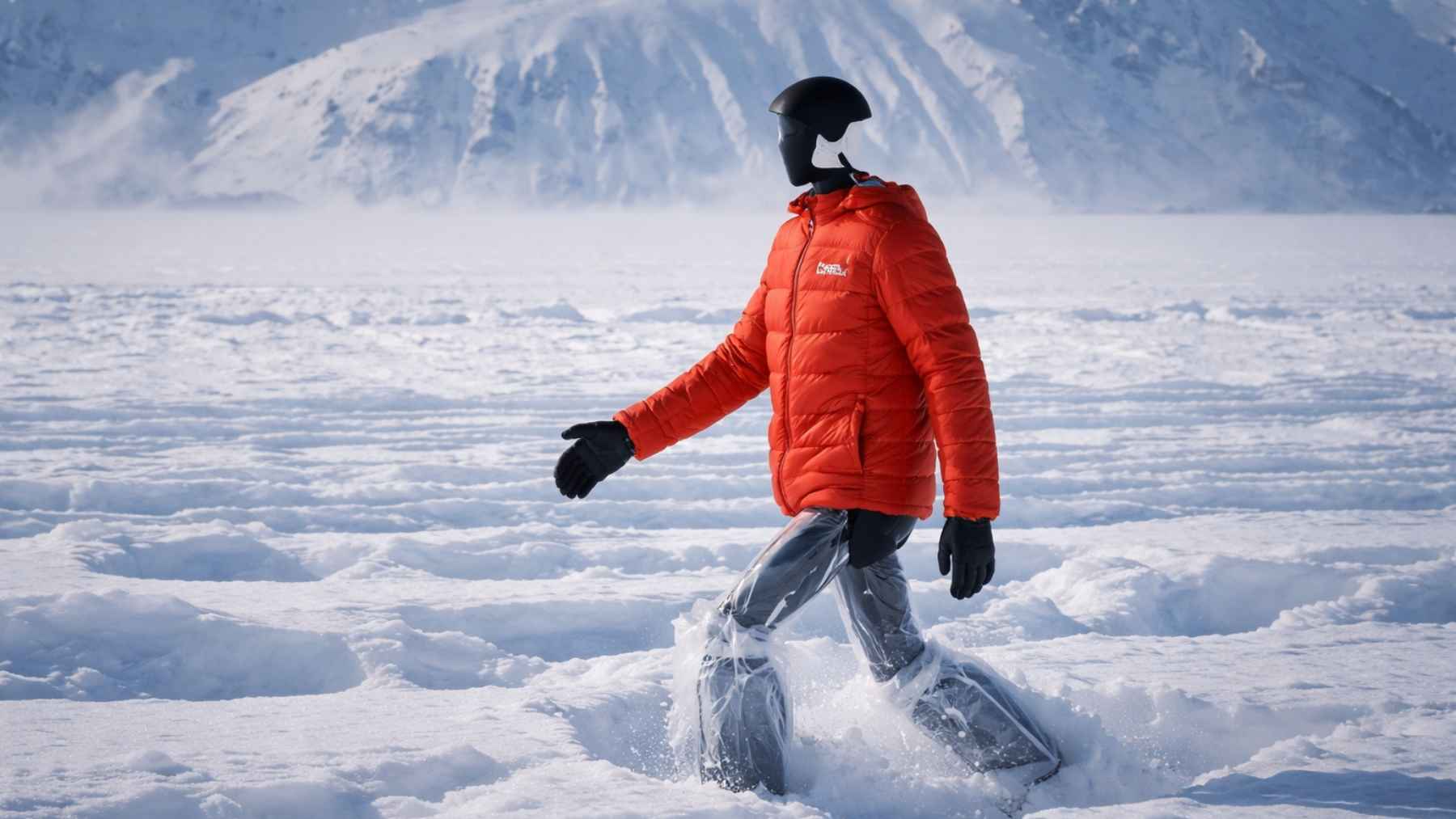
More recently, a team from Nanjing University has tried nano thin cooling films on Dagu. In company backed reports, the group says small test patches slowed melting by three to four times compared with bare ice, although those results still need long-term monitoring.
Limits, costs and environmental concerns
All this comes with a big catch. The blankets only protect the exact places where they are laid, and those areas are tiny compared with an entire glacier valley. Outside the fabric, the ice keeps shrinking as the region warms.
Covering larger areas quickly runs into money and logistics. Studies from Alpine ski resorts in Switzerland and Austria show that insulating glaciers with fabric can save ice locally but would cost hundreds of millions per year if scaled up to whole mountain ranges, while barely denting total national glacier loss.
There is also an environmental side to consider. Even if geotextiles are designed to be reusable and more eco friendly, producing and transporting them creates emissions, and scientists warn about microplastic fibers or chemicals entering downstream water if the sheets age or tear.
A temporary fix in a warming world
Chinese research institutes such as the Northwest Institute of Eco-Environment and Resources now test glacier blankets alongside artificial snowmaking and other tools. Officials and experts openly describe these projects as a race against time to protect key water sources and tourist sites that are already under heavy climate stress.
At the end of the day, most glaciologists and bodies like UNESCO agree on one point. Local interventions can buy a little time for specific glaciers, but only deep cuts in greenhouse gas emissions will slow the overall retreat of mountain ice.
For people who rely on glacier meltwater or who visit ice-covered peaks on vacation, that message can feel sobering. Yet it also makes these blankets useful in another way, as a very visible reminder that the climate problem has already reached places once thought eternal.
The study was published in Remote Sensing.