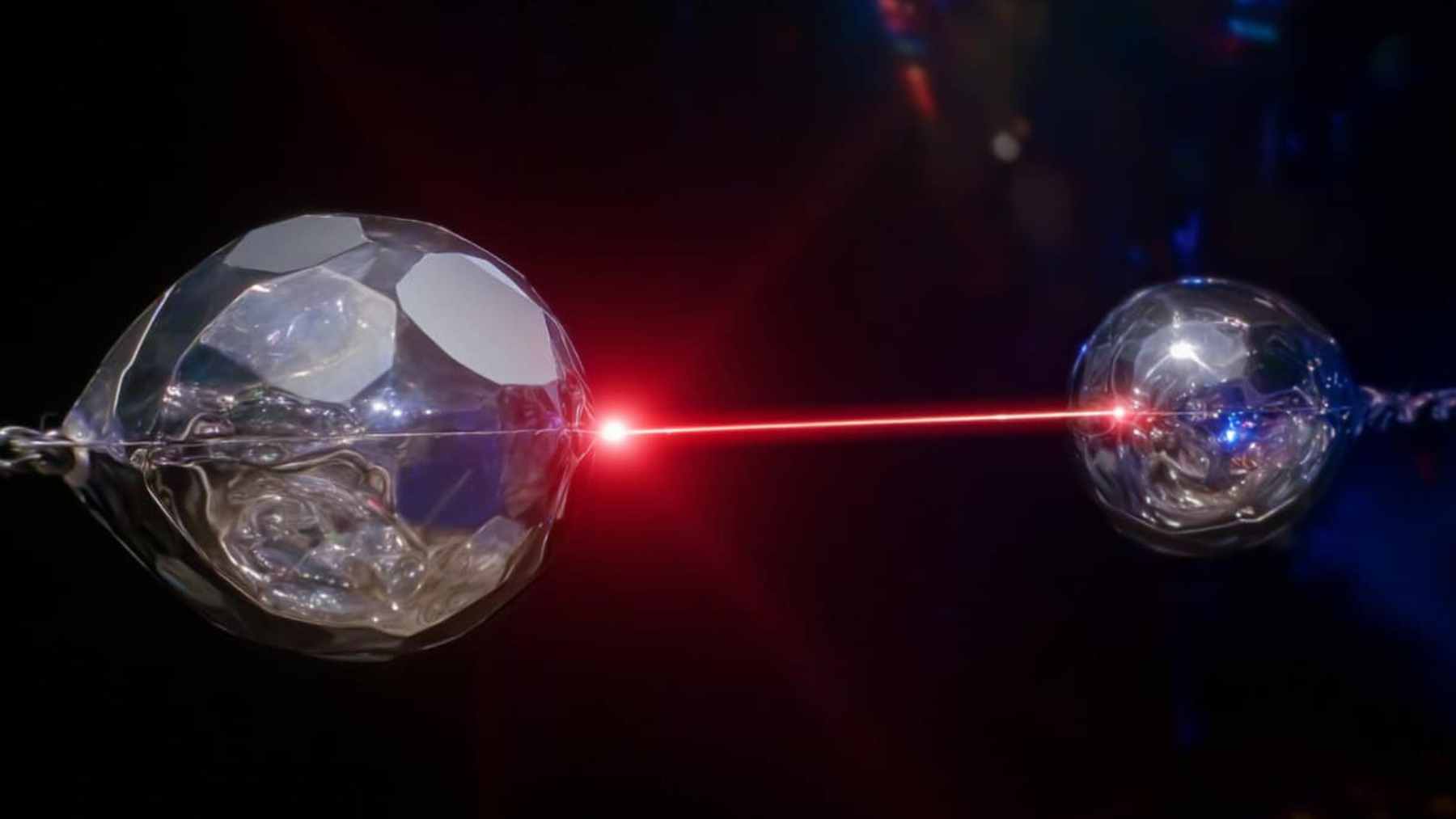
In a lab in Stuttgart, physicists have quietly pulled off something that once belonged in science fiction. They have teleported quantum information between particles of light that were born in two different tiny crystals and at wavelengths that can travel through ordinary fiber optic cables. To a large extent, this tackles one of the hardest hardware problems on the road to a quantum internet that could better protect bank accounts, power grids, and even climate data from increasingly smart cyberattacks.
Everyday life online still feels fragile. Password leaks, stolen identities, mysterious charges on the electric bill when a hacked smart meter runs wild. As artificial intelligence makes phishing and hacking more convincing, researchers are racing to build communication systems where any attempt to eavesdrop leaves a clear fingerprint. That is where quantum cryptography comes in. It uses the strange rules of quantum physics so that, if someone tries to intercept a message, the disturbance can be detected.
So what did the Stuttgart team actually do, and why are people talking about teleportation? In classical communication, every photo, text, or streaming movie boils down to strings of zeros and ones. In a quantum network, those zeros and ones ride on individual photons.
Their value can be encoded in polarization (the direction in which the light wave wiggles), which can point horizontally, vertically, or in a delicate superposition of both at once. Because of quantum rules, that polarization cannot be fully measured without changing it, which is why quantum signals can reveal if someone has looked at them without permission.
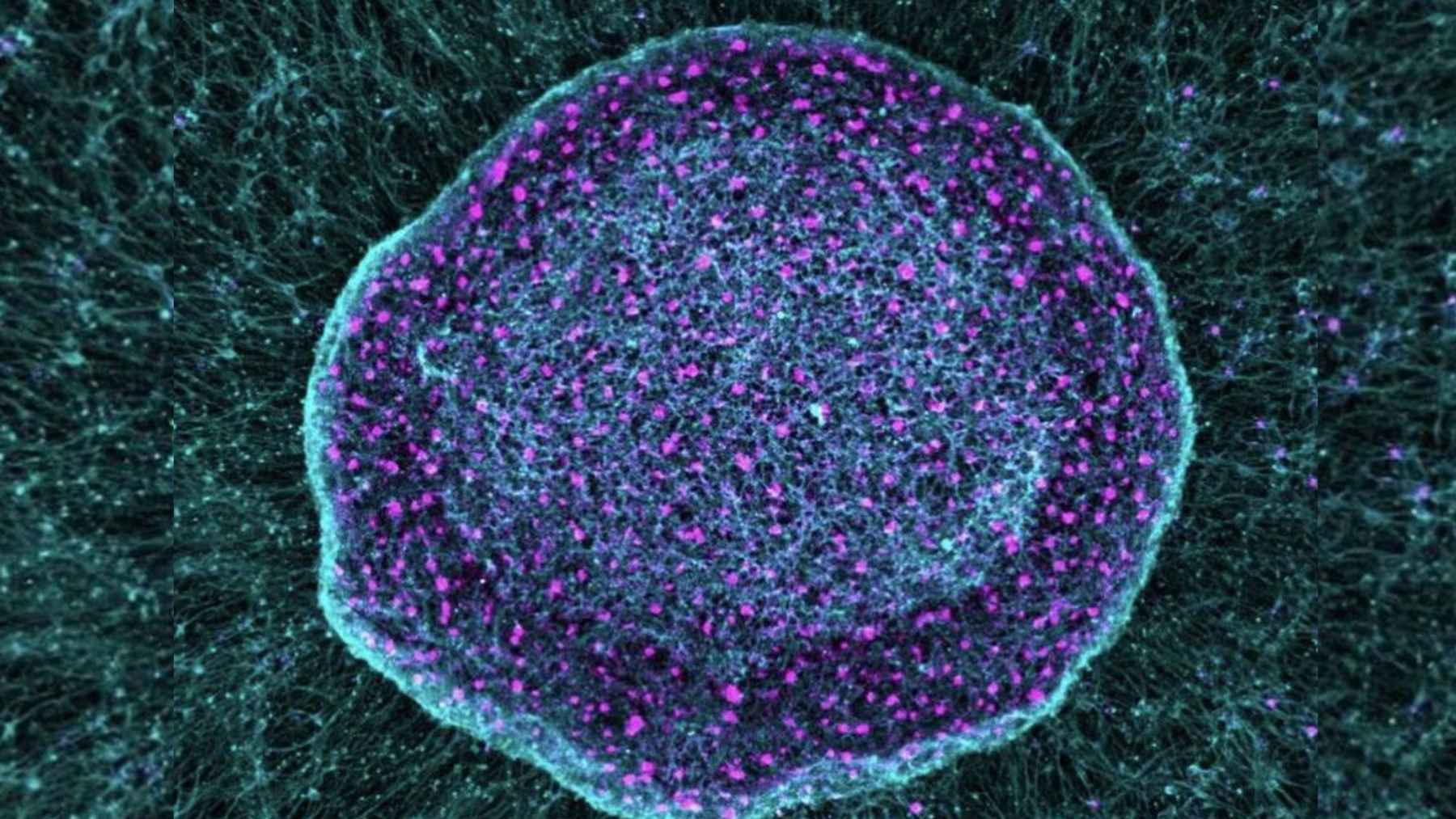
The new experiment used special semiconductor structures called quantum dots, nanometer-scale “islands” in a crystal that behave a bit like artificial atoms.
One quantum dot generated single photons on demand, while a second dot produced pairs of entangled photons that share a joint quantum state even when they are separated. To make teleportation work, photons coming from these different dots had to look almost identical in color and timing, which is extremely difficult in practice.
The team solved this by sending photons through quantum frequency converters that shifted their light into the standard telecom band while preserving their polarization.
In the key step of the experiment, the polarization state of a single photon from the first dot was “beamed” onto a photon from the second dot. One photon from the entangled pair met the single photon in a special measurement, and the other photon in the pair, sitting a few meters away, ended up carrying the original information.
Researchers report a teleportation success rate just above seventy percent, clearly higher than what any classical trick could achieve.
Right now, the two quantum dots in Stuttgart were only separated by about ten meters of optical fiber, which is roughly the length of a hallway. In earlier work by the same team, entanglement from similar quantum dots stayed intact after traveling thirty six kilometers across the city center, closer to real world distances between network nodes. Putting those results together hints at how future systems might chain many such devices to cover national or even continental scales.
This is where quantum repeaters come in. Today, ordinary light signals in fiber are boosted every few dozen kilometers so that your video call does not fizzle out before it reaches the other side of the country. Quantum information cannot simply be amplified, because copying it destroys the very quantum properties that make it useful.
Instead, repeaters will need to use teleportation between carefully prepared photons, catching fragile states before they fade and recreating them farther along the line without ever revealing the actual data.
If that sounds abstract, think about the systems that keep modern society running. Power grids loaded with rooftop solar, offshore wind farms, and millions of electric vehicles depend on real time control signals. Environmental monitoring networks stream data from glaciers, forests, and oceans into climate models.
Water treatment plants rely on remote sensors and valves. Many experts hope that, one day, quantum networks could form a secure backbone for this digital infrastructure so that a single spoofed command cannot black out a region or corrupt vital climate records.
The Stuttgart result does not deliver that future yet, but it points in a practical direction by using semiconductor devices and telecom wavelengths that fit existing fiber infrastructure.
The researchers are realistic about the road ahead. They want to push teleportation over much greater distances, further stabilize their quantum dots, and raise the success rate beyond its current level by refining semiconductor fabrication and frequency conversion.
As team members put it, this experiment represents years of patient work turning fundamental physics into something that could eventually plug into real networks rather than just stay on a lab bench.
The study was published in Nature Communications.