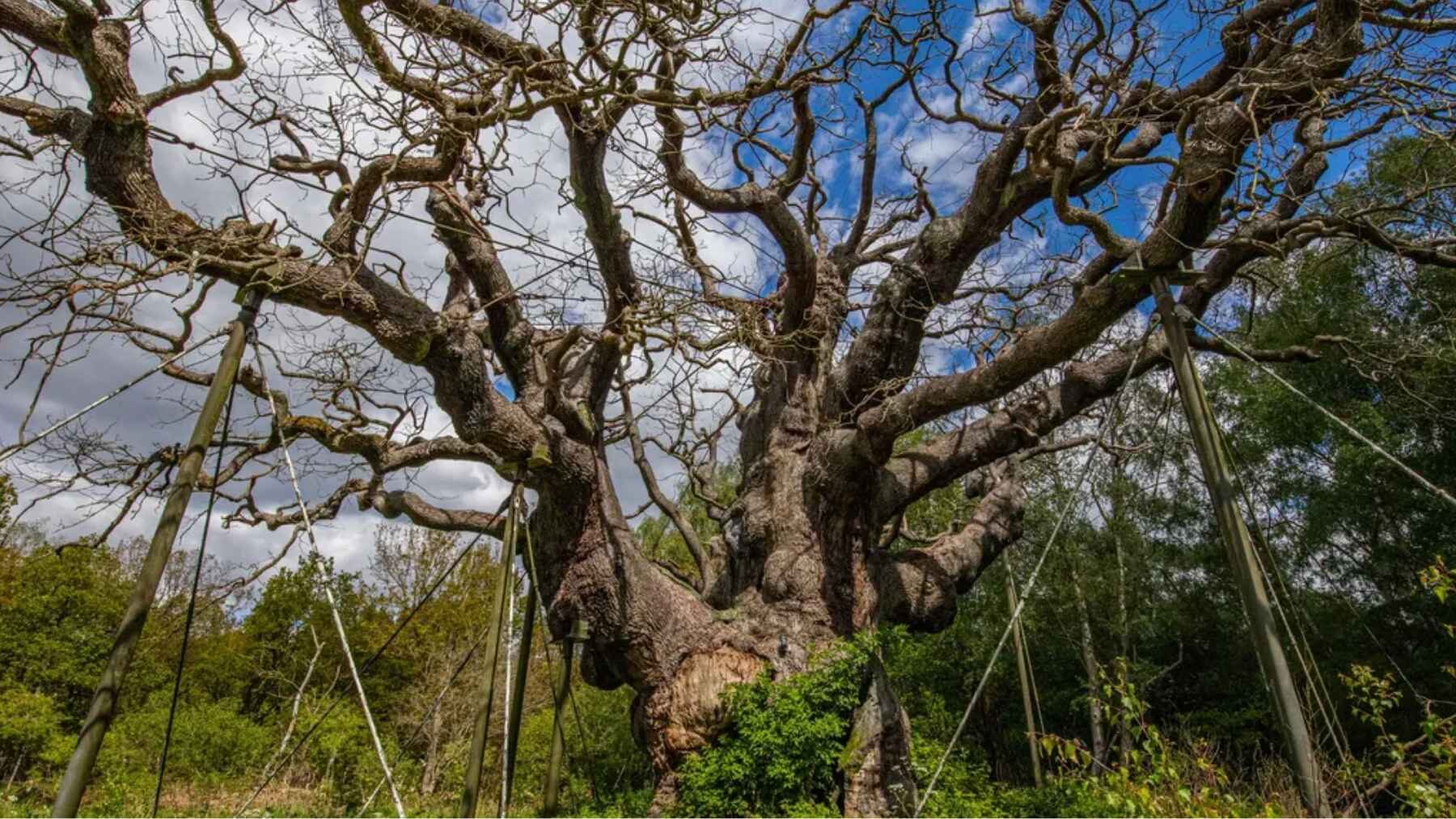
Have you ever stood beneath an old tree and wondered how much history passed under its branches? In Sherwood Forest, England, that question now feels heavier after experts said the Major Oak, the ancient tree long tied to the legend of Robin Hood, is believed to have died after failing to produce leaves this spring.
The Royal Society for the Protection of Birds (RSPB) announced that the famous oak, thought to be up to 1,200 years old, had been in “visible decline” for several years despite efforts to improve its health. The tree may no longer be alive, but it will remain standing as a natural monument, a wildlife refuge, and a warning about how fragile even the oldest giants can become.
A legend in Sherwood
For centuries, the Major Oak has been wrapped into the story of Robin Hood, the outlaw said to have stolen from the rich to give to the poor. According to the popular legend, he and his followers used the enormous tree as a hiding place while escaping the sheriff of Nottingham.
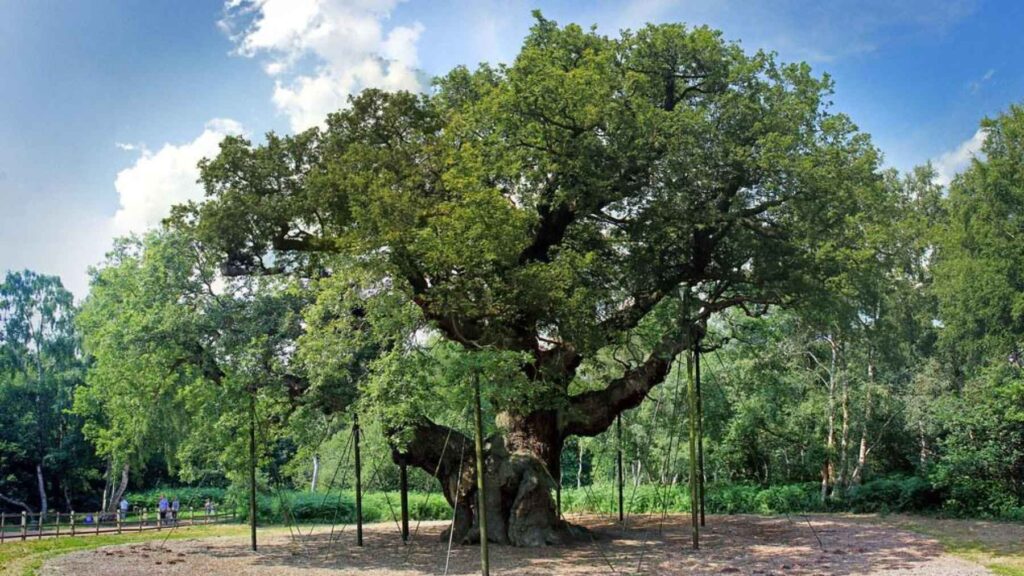
The oak’s size helped feed that story. RSPB describes it as having a trunk circumference of about 36 feet and a crown spreading about 92 feet, the kind of scale that makes a visitor stop mid-walk and simply stare.
Its name is linked to Major Hayman Rooke, an 18th-century antiquarian and naturalist who wrote about the tree in 1790. Later, it became more than a local landmark, winning the Woodland Trust’s Tree of the Year title in 2014 and becoming the first tree recorded on the Ancient Tree Inventory.
Why the Major Oak declined
So what killed a tree that had survived wars, storms, and generations of human history? There was no single cause, and that is the troubling part.
RSPB said the decline came from a complicated mix of aging, old conservation attempts, soil damage, a weakened root system, and climate-linked heat waves and droughts. In practical terms, the tree was fighting problems above ground and below it at the same time.
Some earlier efforts to preserve the oak’s famous shape may have hurt it in the long run. Metal supports, chains, concrete filling, and protective coverings were meant to keep the tree standing, but they also stopped it from aging in a more natural way.
The ground beneath it mattered
A tree this old does not live on legend alone. It needs soil that breathes.
Recent investigations by the Sherwood Forest team and specialists found that the soil around the Major Oak was extremely hard and lacked life. Its root system was also much smaller and weaker than earlier scans had suggested, making it harder for water, oxygen, and nutrients to reach the tree.
Millions of visitors came to see the oak over the years, and those footsteps added up. It is the kind of damage that happens slowly, almost invisibly, like a footpath turning from soft earth into packed ground after years of weekend walks.
Climate made recovery harder
The Major Oak was already vulnerable, but recent heat waves and droughts made survival even harder. That sticky summer heat we all know can be uncomfortable for people, but for ancient trees with weakened roots, it can become a serious threat.
RSPB says climate change and related extreme weather compounded the challenges facing the oak. Generally, these trees evolved to cope with change over long periods, not with fast shifts that arrive within a few decades.
That is why the Major Oak’s death is not only a cultural loss. It is also an ecological signal, one that points to the pressure ancient trees face across a warming landscape.
Death still feeds life
The Major Oak will remain standing for many years, according to RSPB. It will still anchor the landscape, even without leaves, and experts will keep monitoring its ecology and structural safety.
When the tree eventually collapses, it will not simply become waste. Decaying wood is a vital habitat for birds, insects, mammals, fungi, and the many small lives that keep a forest working.
Ultimately, that is the quiet power of an ancient tree. Even in death, it gives something back, returning nutrients to the soil and supporting new life in the forest around it.
Saplings carry the story forward
The Major Oak’s story is not ending at the stump. Acorns and cuttings from the tree have already been grown into saplings, and RSPB says young Major Oaks have been planted in locations around the world.
That means the tree’s genetic legacy is still alive. One day, those saplings may grow their own acorns, host their own wildlife, and gather their own stories from people who stop to look up.
There is something simple and hopeful in that. A tree dies, but a forest remembers.
A lesson for ancient trees
Sherwood Forest is home to one of the largest collections of ancient and veteran oaks in Western Europe. RSPB says ancient oaks, generally those at least 400 years old, are biodiversity powerhouses that provide food and shelter for hundreds of species.
The knowledge gained while caring for the Major Oak will now be used to help protect other old trees in Sherwood Forest, across the United Kingdom, and beyond. That work matters because many ancient trees decline quietly, without the fame or attention given to Robin Hood’s oak.
The official statement was published on RSPB.