When Japan’s new HTV-X1 cargo ship thundered off the pad from Tanegashima on October 26, it did more than restart the country’s supply line to the International Space Station. It also carried a suite of life support hardware and green tech experiments designed to keep future space habitats cleaner and more sustainable. What does a cargo delivery to orbit have to do with climate and sustainability on Earth. Quite a lot, as it turns out.
H3 rocket launch and International Space Station docking
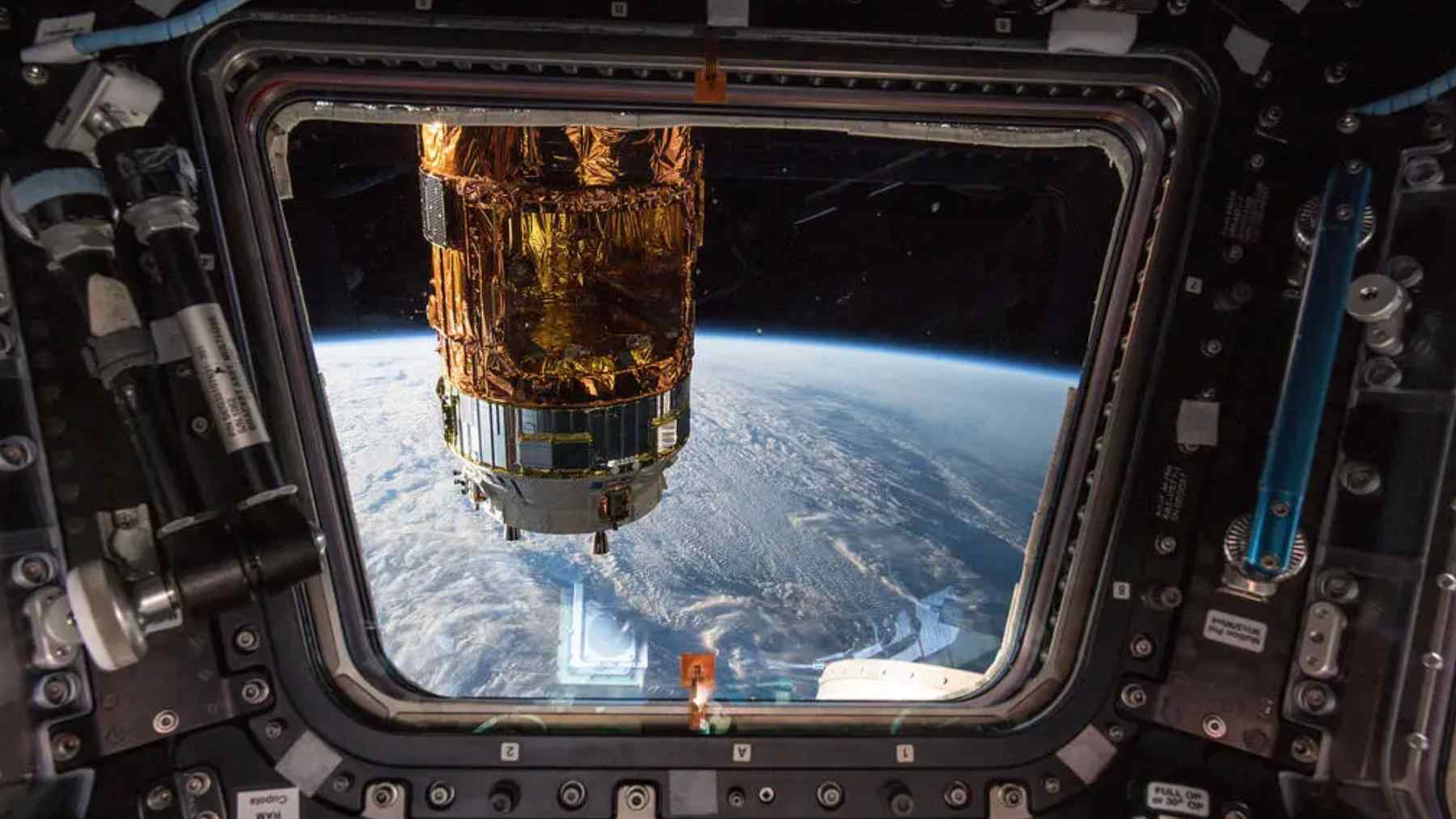
The uncrewed spacecraft rode Japan’s H3 flagship rocket on its first cargo mission and reached orbit around fourteen minutes after liftoff. After a quiet cruise of several days, JAXA astronaut Kimiya Yui reached out with the station’s Canadian-built robotic arm, Canadarm2, and captured HTV-X1 so it could be gently attached to the orbiting outpost.
On October 30 Japan time, controllers completed berthing to the Earth-facing port of the Harmony module. JAXA reports that internal and external cargo is now being transferred gradually to the station, turning the new vehicle into a floating warehouse of science and supplies.
ISS supplies and pressurized cargo
Inside its pressurized hold, HTV-X1 brought what keeps astronauts alive day to day. Tanks with nitrogen and oxygen, water resupply hardware, food, fresh produce and other consumables fill much of the roughly four metric tons of pressurized cargo that arrived with this mission.
CO2 removal and life support technology
It also carries a new Demonstration System for CO2 Removal, known as DRCS, which JAXA describes as hardware for future human space exploration. In simple terms, this system helps scrub carbon dioxide from the station’s air. Every exhaled breath adds to that load in a sealed module, so efficient CO2 removal is as essential as the water in the galley or the power running through the solar arrays.
When you think about it, the ISS behaves like a miniature climate system. Heat has to be controlled, air must stay breathable and water is reused again and again. Technologies like DRCS aim to make that closed loop more efficient. Over time, similar concepts can inspire cleaner ventilation and carbon capture back on Earth, where indoor air quality and rising greenhouse gases are everyday worries rather than abstract physics.
Sustainability experiments and ISS National Laboratory research
Beyond life support, HTV-X1 is packed with experiments that touch directly on sustainability in orbit. The cargo list includes a Nitrogen Oxygen Recharge System tank and a water resupply tank that keep existing ISS systems running, along with a testbed to automate work in Japan’s Kibo laboratory so astronauts can spend more time on demanding scientific tasks instead of routine tending.
Several projects sponsored by the ISS National Laboratory ride with this first HTV-X flight. More than twenty investigations, many of them materials tests on an external platform, will expose new films, composites and coatings to the harsh vacuum and radiation of low-Earth orbit in order to design tougher, lighter products back home. One startup experiment will test post-mission disposal devices that allow satellites to deorbit themselves at the end of life, helping cut the growth of space debris that threatens future missions.
There is also a set of small distributed sensors designed to monitor environmental quality inside future commercial space stations. Think of them as an early cousin of the smart thermostats and air monitors many homes already use, only tuned for microgravity cabins where a minor leak or contaminant can matter far more than a drafty window on Earth.
HTV-X program and Japan’s ISS resupply role
All of this science needed a reliable ride. HTV-X1 is Japan’s next-generation answer, replacing the earlier Kounotori vehicles that flew nine successful cargo runs between 2009 and 2020. The new freighter is about eight meters long and, according to JAXA, can deliver one of the heaviest cargo loads among current space station resupply craft, giving international partners more room for both essentials and experiments.
JAXA President Hiroshi Yamakawa underlined the broader meaning of the mission. In his words, “HTV-X represents the important role and responsibility Japan should fulfill for the ISS. It’s very significant that our path forward has now become clearer today.” He later added that the successful cargo delivery marks a new chapter in next generation space transportation and exploration.
Space solar power concepts and next generation testing
That chapter extends beyond a single docking. Unlike many earlier cargo craft that ended their service quickly after undocking, HTV-X is built to stay in orbit for additional months as a free-flying testbed. For HTV-X1, JAXA plans a technology phase that includes small satellite deployments, precision laser ranging trials and in orbit demonstrations of lightweight antennas and next generation solar cells intended for large space structures, including potential space solar power concepts.
In practical terms, that means each launch does more work. The same rocket exhaust that sends up food and water also supports extended experiments on cleaner energy, smarter navigation and better environmental monitoring. To a large extent, agencies are trying to squeeze maximum scientific value out of every kilogram that leaves the ground.
Sustainable spaceflight and why it matters on Earth
Of course, no single cargo ship can solve climate change or fully clean up the crowded space around Earth. Experts regularly point out that sustainable spaceflight will need tougher traffic rules, smarter satellite design and cleaner propulsion. HTV-X1 does not change that reality. What it does provide is a concrete example of how resupply missions can double as laboratories for greener technologies, from CO2 removal to debris reducing hardware and environmental sensors.
For people sweating through another sticky summer or watching the electric bill creep higher, a cargo freighter hundreds of kilometers overhead may feel very distant. Yet many of the systems being tested on this mission, from advanced solar cells to robust materials and smart environmental monitors, feed the same toolbox that engineers use to make life on Earth more resilient. At the end of the day, the small steps toward sustainability in orbit are part of the same story as the ones on the ground.
The official statement on HTV-X1’s status was published on JAXA’s website.