Getting to the outer solar system with today’s rockets is like driving across a continent in first gear. Engineers at NASA say they have just nudged space travel toward something faster. At the agency’s Marshall Space Flight Center they completed more than one hundred non-nuclear “cold flow” tests of a full-scale nuclear rocket reactor core, the first time hardware of this kind has been pushed this far since the 1960s.
The barrel-sized test article, roughly a 100-gallon drum, was built by BWX Technologies to copy the plumbing of a real reactor without any radioactive fuel. During the campaign, engineers pumped liquid hydrogen simulants through the core to see how the propellant would move and press against the walls under different conditions. Those details matter because unstable flow can trigger vibrations that damage an engine long before it ever leaves Earth.
According to NASA, the cold flow tests showed that the current reactor layout avoids destructive flow-induced oscillations and pressure waves, while producing a trove of data to check computer models. Test objectives included simulating real operating conditions and validating analytical tools that will guide the design of control systems for future engines.
Jason Turpin, who manages the Space Nuclear Propulsion Office at Marshall, summed it up simply. “We are doing more than proving a new technology,” he said, describing the campaign as a key stepping stone toward a flight-capable system.
How a nuclear rocket works
In a conventional chemical rocket, propellants release energy when they burn and the hot exhaust races out of a nozzle. Nuclear thermal propulsion flips that script. A compact fission reactor sits at the heart of the engine, heating liquid hydrogen as it flows through internal channels. The heated gas then rushes through a nozzle and pushes the spacecraft forward.
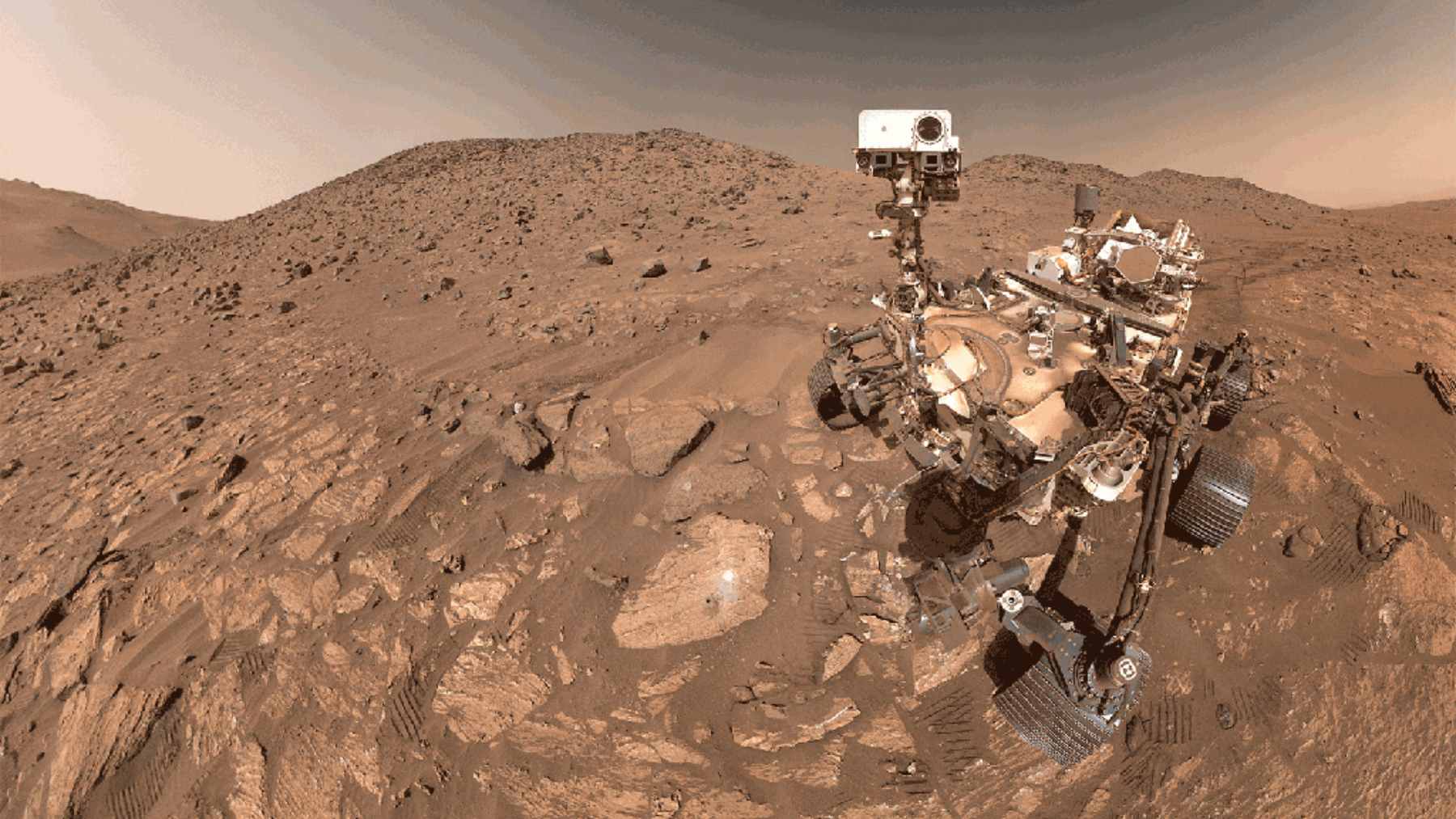
NASA’s technical summaries say that a nuclear thermal rocket can use propellant about twice as efficiently as today’s chemical engines while still providing strong thrust. In practical terms, that means the same launch mass could carry more cargo, thicker radiation shielding, or extra propellant reserves for emergency maneuvers. For a crewed Mars mission, higher efficiency could shave months off the trip and cut the time astronauts spend in microgravity and cosmic radiation on the way there and back.
Robotic probes would also benefit. Solar power drops off quickly in the outer solar system, so panels must grow very large for modest output. A nuclear-powered spacecraft could instead run instruments and high-gain antennas from steady reactor power. That would make it easier to send orbiters, landers, and even sample return missions to distant icy moons and dwarf planets that are hard to reach with chemical propulsion and solar panels alone.
What was tested, and what was not
So what exactly did the team fire up on the test stand? The hardware in Alabama never came close to a chain reaction. The engineering unit contained no fissile material and produced no radiation. This campaign was about fluid dynamics and structural behavior rather than nuclear fuel.
Looking ahead, NASA says any real flight reactor would stay cold and inactive during launch on a conventional booster. Only after the spacecraft reached a safe distance from Earth would controllers start up the reactor. Current plans also call for nuclear-powered spacecraft to operate in orbits that will not fall back toward Earth until their radioactivity has decayed to safe levels. The agency is developing these rules together with the US Department of Energy and national laboratories that already manage high-consequence nuclear systems.
A long road to real missions
It is easy to see the promise here and forget that no nuclear rocket has ever flown. The last round of US reactor tests ended in the early 1970s, when earlier programs were canceled before flight. The current work is closer to dress rehearsal than opening night. The agency is not yet building a specific engine for a specific spacecraft. Instead it is checking, step by step, that a modern reactor and its plumbing can be manufactured, modeled, and controlled with acceptable risk.
If those boxes are eventually ticked, future Mars crews might trade the slow cruise for a faster crossing, and robotic explorers could fan out across the solar system with more power and payload. For now, the barrel-sized reactor core at Marshall is a reminder that even in an era of climate worries and crowded launch calendars, engineers are still redesigning the engines that will carry us farther from home.
The official statement was published by NASA.