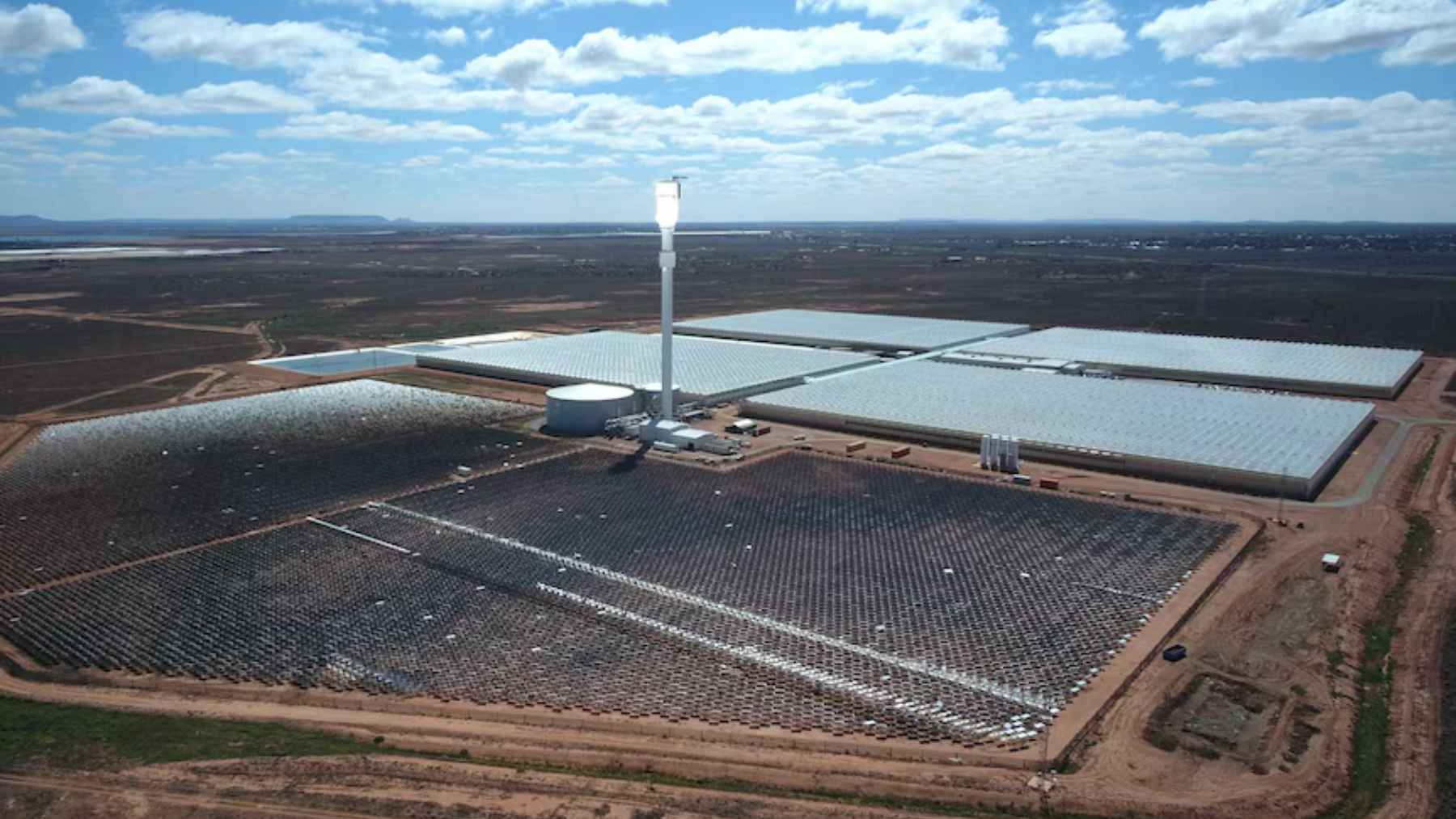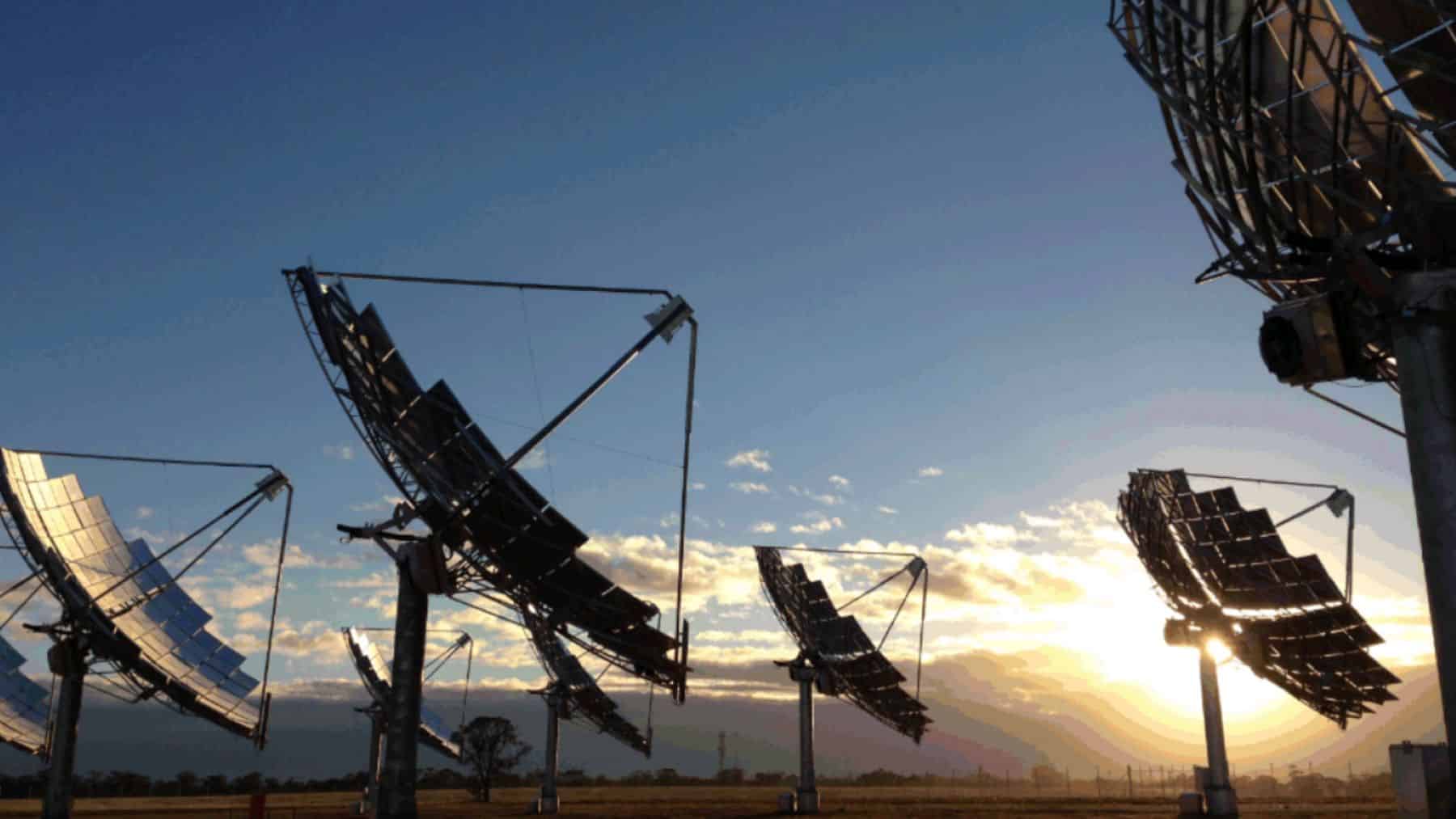
A project that was once believed to be Australia’s solar crown jewel has now been abandoned, and the reason for the project’s abandonment is rather surprising. It was the Mildura Solar Project that initially made waves as a renewable energy project ideal for the Australian landscape. Boasting futuristic solar panels and giant reflective dishes, Mildura once served as a beacon of hope for generating large-scale solar power. Almost 10 years later, this 40-dish megaproject seems to be shelved.
The growth of the 40-dish megaproject in Australia
The vision behind this project was to create a 100 MW concentrating photovoltaic (CPV) complex in Victoria. The project was developed by Solar Systems. Construction started in 2011 in the south of Mildura, Victoria. Dense Array CPV technology was utilized as it promised maximal photovoltaic efficiency.
From the time construction was underway, the idea was to install 40 dishes that would generate 1.5 MW of power each. In 2013, the stage one facility came online, powering 500 homes. Stage two saw further developments with 60 additional dishes set to power over 40,000 homes. If the project were successful to date, it could have become one of Australia’s most ambitious sustainable energy projects.
What led to the downfall of Australia’s solar crown jewel?
The project’s collapse occurred in August 2014 after Silex Systems announced that all operations would be suspended. The reason why all operations had to be halted was rather surprising. The main reason Australia’s crown jewel was not needed any longer was due to the fact that electricity prices in the country had fallen rather significantly. Since cheaper energy was already on the cards for the vast majority, renewable energy projects failed to compete with such low prices.
There was no longer an economically viable reason to keep operations going in the south of Mildura. Furthermore, political uncertainty further complicated the matter. There was a shift in attitudes in terms of the Renewable Energy Target (RET), and that too created somewhat of an unstable renewable energy climate.
With the political uncertainty and the low electricity prices in Australia, a 40-dish megaproject became quite a large risk for the country to continue investing in. Government funding was stopped, and the site was downgraded.
Understanding what remains from the Mildura project
While investment in the Mildura project stopped, it was impossible for the site to disappear. This 1.5 MW demonstration plant provides the data for CPV research. The 40-dish site continues to serve as a constant reminder to onlookers of successful technology and the potential of Australia’s renewable energy future.
Since the end of the Mildura project, both Solar Systems and Silex Systems have downscaled their ambitions and have started working on much smaller-scale arrangements. Should the Mildura project ever become operational again, government funding would be required. With the end of this ambitious project, it could be that Australia is goodbye to photovoltaic energy for good. Since Australia has found an ‘impossible’ material, the country can reveal a new generation of cells.
Economic reality continues to haunt the Mildura project
Australia’s solar project will always be remembered for its sheer solar power potential. While the failure of the project was not brought about by engineering failures, the economic reality in Australia brought about its downfall. The 40 dishes that can be found in the desert backdrop are a constant reminder that innovation cannot always compete with market stability. Nevertheless, the Mildura project will also always serve as a reminder that it is possible to create a well-engineered solar project that can generate more than 100 MW of power. With plans for 1,900,000 solar panels per year by 2026, Australia is starting the biggest project in history. Australia has certainly not quit on sustainable energy projects.
Disclaimer: Our coverage of events affecting companies is purely informative and descriptive. Under no circumstances does it seek to promote an opinion or create a trend, nor can it be taken as investment advice or a recommendation of any kind.