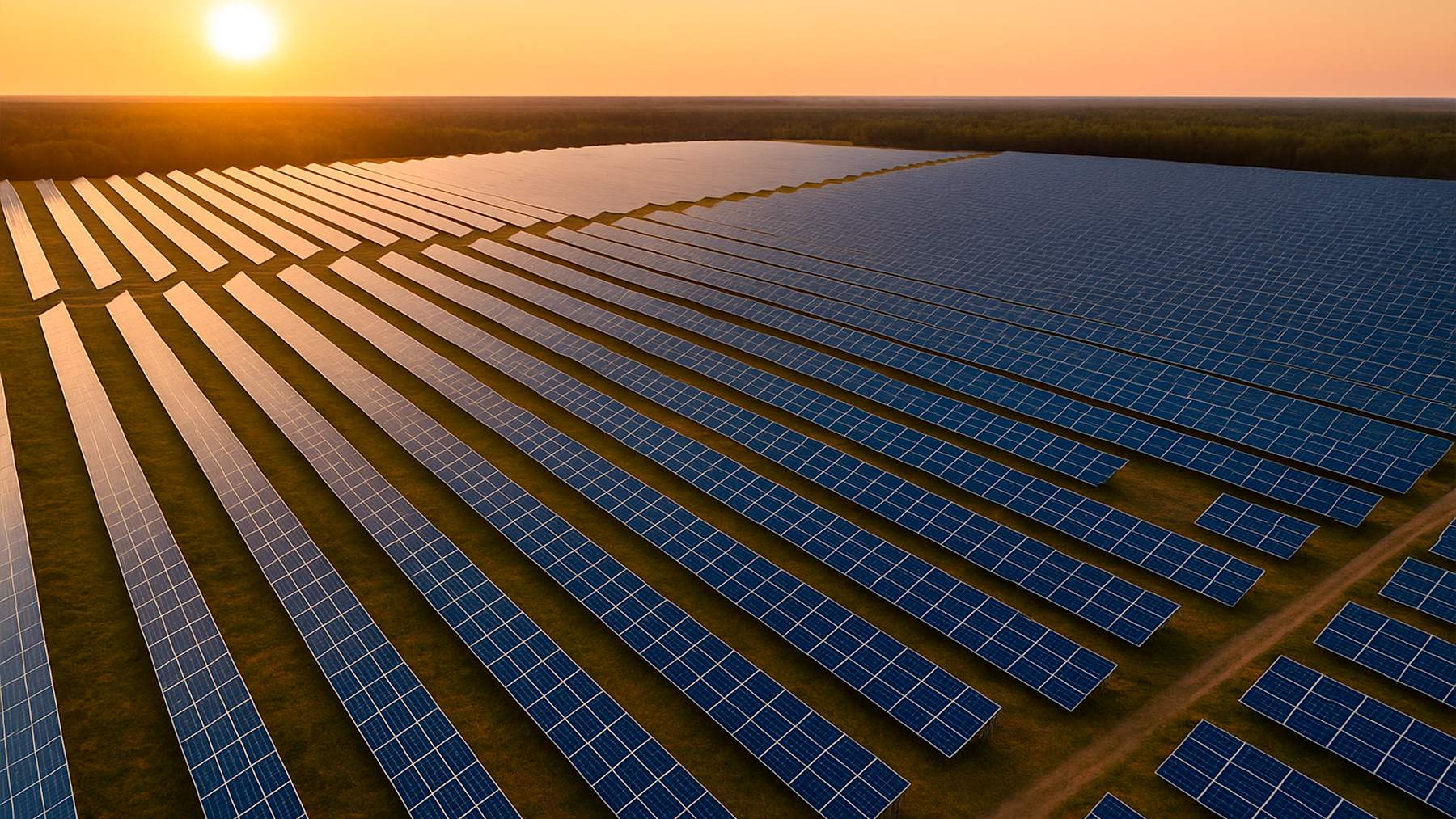
When you think of solar panels, you probably picture China, the United States, or even Europe leading the way, right? But now, one of the most ambitious initiatives in the sector is coming from Australia. All this thanks to Tindo Solar, the only local photovoltaic panel manufacturer, which has just announced a project that could change the balance of solar energy in the country: the construction of a gigafactory capable of producing 1.9 million panels per year. All this with an investment of around US$100 million. But the impact goes far beyond the price. This is a genuine attempt to restore energy sovereignty and reignite the renewables industry within Australia itself.
Australia bets big: can 7,000 solar panels a day power its green future?
We might think that Tindo Solar is a new company arriving with revolutionary ideas, but it’s not new to the game. Since 2022, the company has operated a 150 MW factory, which has already positioned the brand as a local benchmark for quality and innovation. Now, however, it’s taking another leap forward. According to Richard Petterson, CEO of Tindo Solar.
“Our vision is to start production in mid-2025 and manufacture 7,000 panels per day at full capacity”
This new plant, if completed, will be the largest ever built in Australia, even surpassing BP Solar’s legacy structures. And the goal is clear: to meet part of the country’s demand for 22,000 new panels installed per day to meet its decarbonization goals. The project aims to generate:
- Hundreds of new direct jobs.
- A local industrial ecosystem for component production (still almost entirely imported).
- Stability in the face of competition from low-cost Chinese panels.
There are still challenges. One is that Tindo currently doesn’t operate at full capacity and faces fierce international competition. For the project to succeed, it is essential:
- Government stimulus.
- Creation of a national supply chain for raw materials.
Australia wants energy independence, and Tindo’s new solar panel is leading the charge
Not stopping at the factory project, Tindo also launched the Walara Series, Australia’s first line of solar panels featuring n-type technology and a bifacial design, which captures light from both sides of the panel. The highlight is the Walara 425 W G3P model, with 21.8% efficiency and a robust design built to withstand the country’s extreme conditions. It comes equipped with:
- 108 cells that reduce heat loss.
- Double-layer tempered glass with anti-reflective coating.
- Black anodized aluminum frame that prevents microcracks.
“The Walara series represents a significant advancement in Australian solar technology. Our goal was to create a product that would be an evolution of our previous panels, tailored to the installation and customer needs”
Said Richard Petterson, CEO of Tindo. All of this shows that this new generation was created with a well-defined objective: to offer real and reliable performance to local consumers who want more energy autonomy (it’s no wonder that even power-generating windows are being installed in people’s windows).
Can Australia build a solar industry from scratch?
Tindo Solar’s proposal is more than just a business expansion; it could be the trigger for something much bigger. According to Petterson: “Our gigafactory could be the first step toward a competitive and sustainable solar industrial chain in Australia”. If successful, this initiative could attract more investment and encourage local companies to produce components such as glass and electronics.
And, amidst all this, the consumer also benefits: reduced dependence on imports; potentially more affordable prices, with the right incentives; and greater energy security in times of geopolitical instability. This is the combination of advanced technology with a national strategic vision, something many countries attempt, but few can sustain. A successful example in this niche is the US, which has just created its artificial sun.
Disclaimer: Our coverage of events affecting companies is purely informative and descriptive. Under no circumstances does it seek to promote an opinion or create a trend, nor can it be taken as investment advice or a recommendation of any kind. For more information, please visit our Trust Principles.