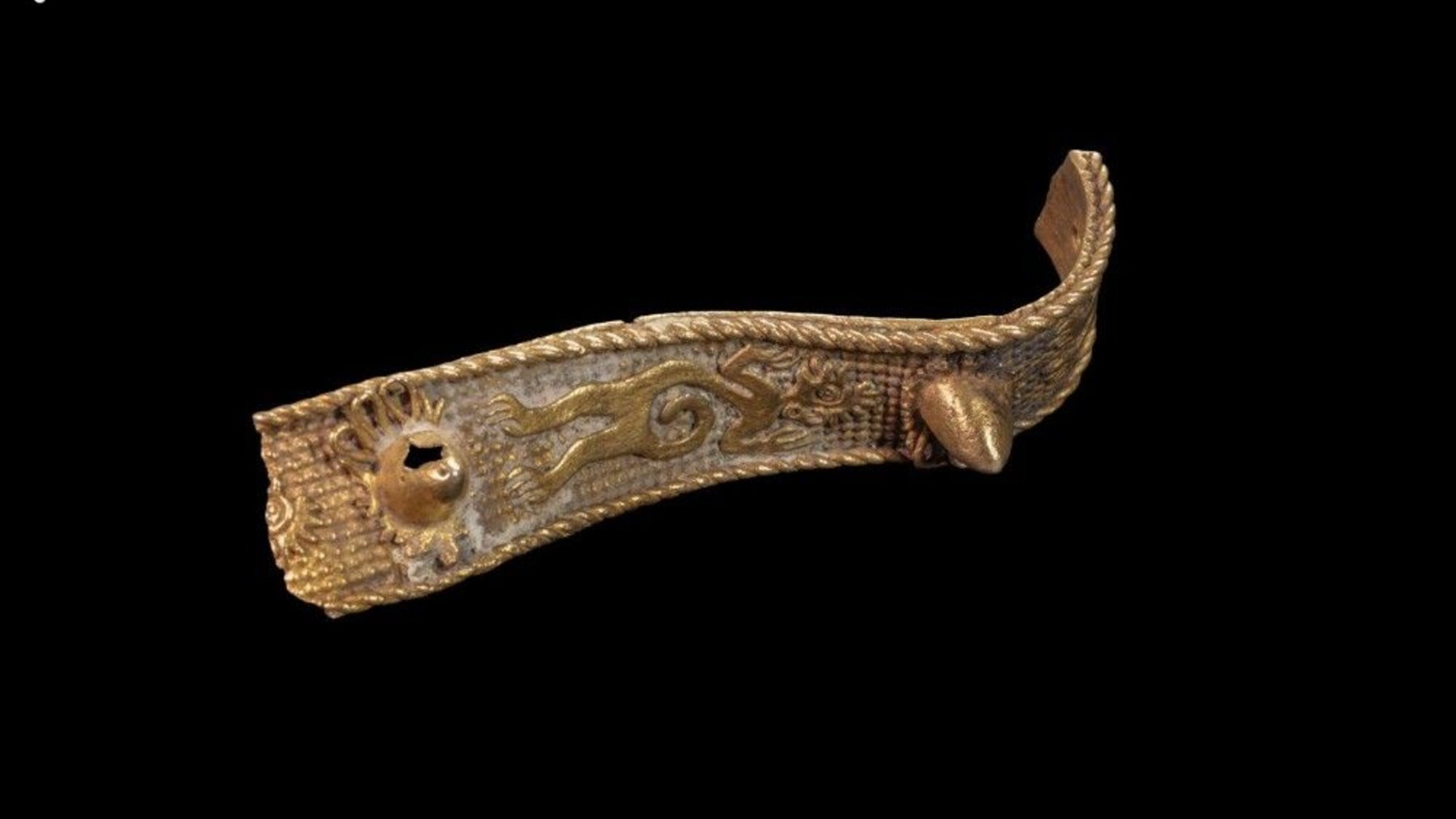
Carved marks on timber recovered from the Sinan shipwreck are revealing how medieval traders organized valuable cargo. South Korean researchers have identified an imperial script, classification codes and matching personal marks on wood from the 14th-century vessel. Together, those clues show how shipments could be sorted and checked long before digital tracking.
The findings come from the National Research Institute of Maritime Heritage, part of the Korea Heritage Service. Its analysis turns a shipment of luxury wood into evidence of everyday commercial work, from labeling goods to checking deliveries, while leaving an intriguing question about who had authority over the cargo.
Old markings reveal a new story
The investigation developed during a project to create precise three-dimensional digital records of the recovered timber. Researchers examined characters and patterns on the wood, including incised marks previously interpreted as numbers or letters of the Roman alphabet. Six artifacts now have markings identified as Phags-pa, the official script of the Yuan Empire.
That changes how these objects can be read. A mark once treated as a simple number may instead connect the cargo to the administrative world surrounding its voyage. The official announcement presents the script alongside other markings, allowing researchers to consider several parts of the cargo management system together.
An imperial character with an uncertain job
The newly identified Phags-pa character is read as “ji” (ǰi). According to the institute, the script was used primarily among the ruling circles responsible for government, administration and diplomacy. Its presence on commercial timber raises the possibility that these goods carried a sign of official oversight.
But what exactly did that sign mean? Researchers suggest it might have represented ruling authority or served as a mark for official cargo inspection and management. The reading of the character is the reported finding, while its precise function remains an interpretation that requires further evidence.
A classic text becomes a sorting system
Another clue appears among approximately 160 pieces of timber bearing Chinese characters. Examples include “天三,” “天六,” “黃五” and “宙柒號,” combinations that pair characters from the opening of the Thousand Character Classic with numbers and, in one example, a character meaning “number.”
The institute interprets these combinations as evidence of systematic classification and serial numbering. Think of the letters and numbers on a delivery label, which help distinguish one package from another in a crowded shipment. Here, the identifiers were carved into the goods themselves.
Matching the label to the wood
Researchers also found Japanese names and personal signature marks on both the timber and wooden cargo tags recovered from the wreck. Names rendered as “Makosaburo” and “Iyajiro” appear among the matching evidence. These connections link markings on the goods themselves with information carried on labels attached to cargo bundles.
According to the institute, the paired marks provided a way to compare information during inspection and receipt of shipments. It also sees evidence that people associated with Japanese destinations, including Tofuku-ji temple, participated closely in loading and distribution. That brings individual participants into a story otherwise told through piles of recovered objects.
Valuable wood on an international journey
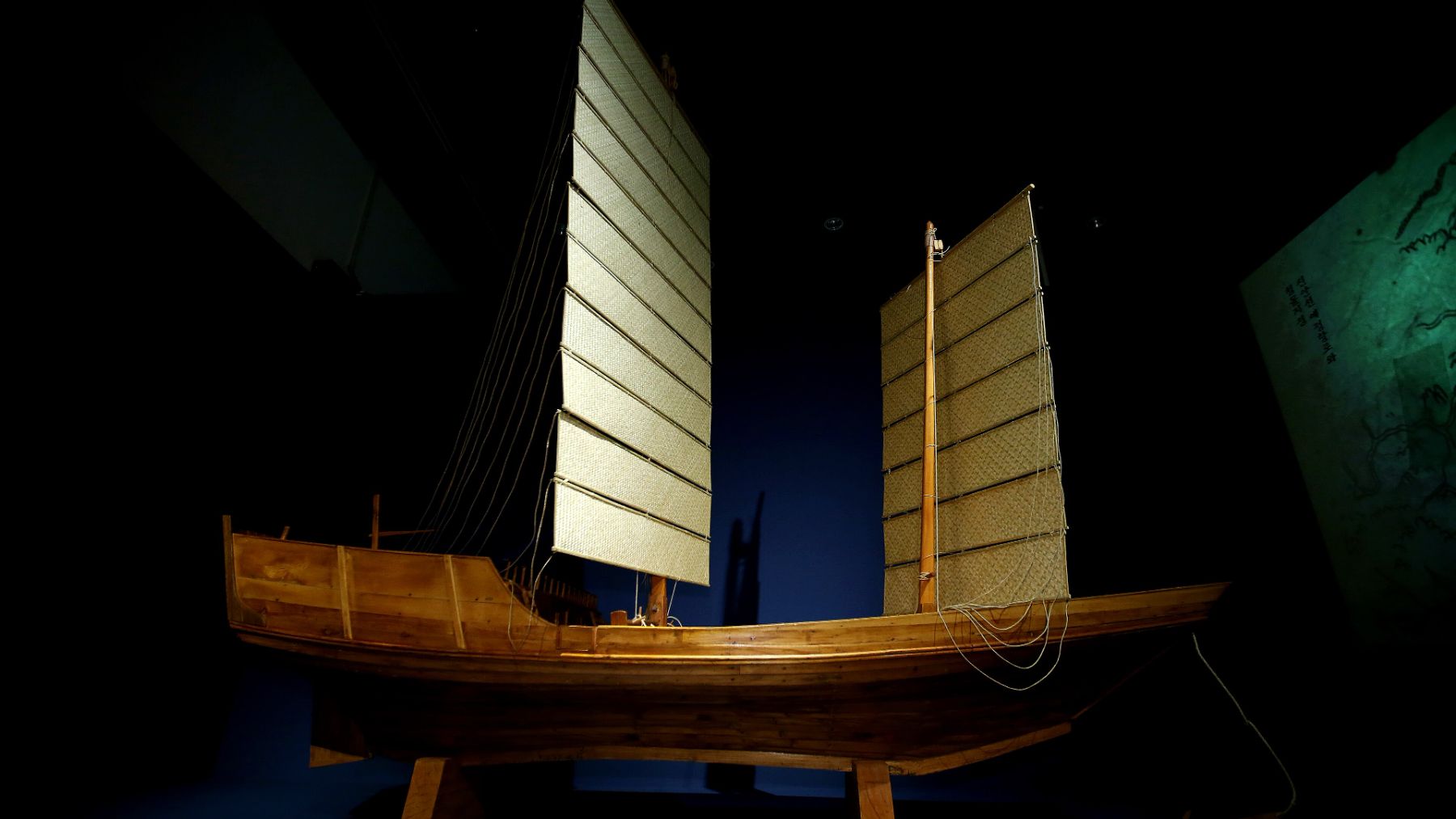
The Sinan vessel sailed from Ningbo, China, toward Hakata, Japan, in 1323 before sinking off what is now South Korea. National Museum of Korea research describes its valuable timber cargo as red sandalwood. The new Korean announcement uses the term “jadan” and identifies Southeast Asia and India as regions supplying this luxury wood.
Museum accounts connect this wood with Buddhist statues and furniture, objects that depended on materials arriving from far away. The cargo offers a concrete link between forest resources and medieval commerce. Its inscriptions preserve evidence of the people and procedures that moved those resources toward their buyers.
A long excavation keeps producing discoveries
The wreck came to light after a fisherman recovered ceramics in 1975, and underwater excavations ran from 1976 to 1984. The new findings accompany an exhibition that opened September 15, 2026, and runs through February 14, 2027, marking 50 years since the start of Korea’s underwater excavations.
The announcement also outlined a six-presentation conference program covering timber species and origins, trade structures, markings and consumption in medieval Japan. Those subjects show how much remains to be investigated beyond reading individual characters. Establishing where the wood came from and how people used it can deepen the commercial picture.
The institute describes the timber, in translation, as a “recording medium” preserving evidence of East Asian logistics some 700 years ago. The press release was published on the Korea Heritage Service website.
Photo: Korea.net / Korean Culture and Information Service / Wikimedia Commons (CC BY-SA 2.0)