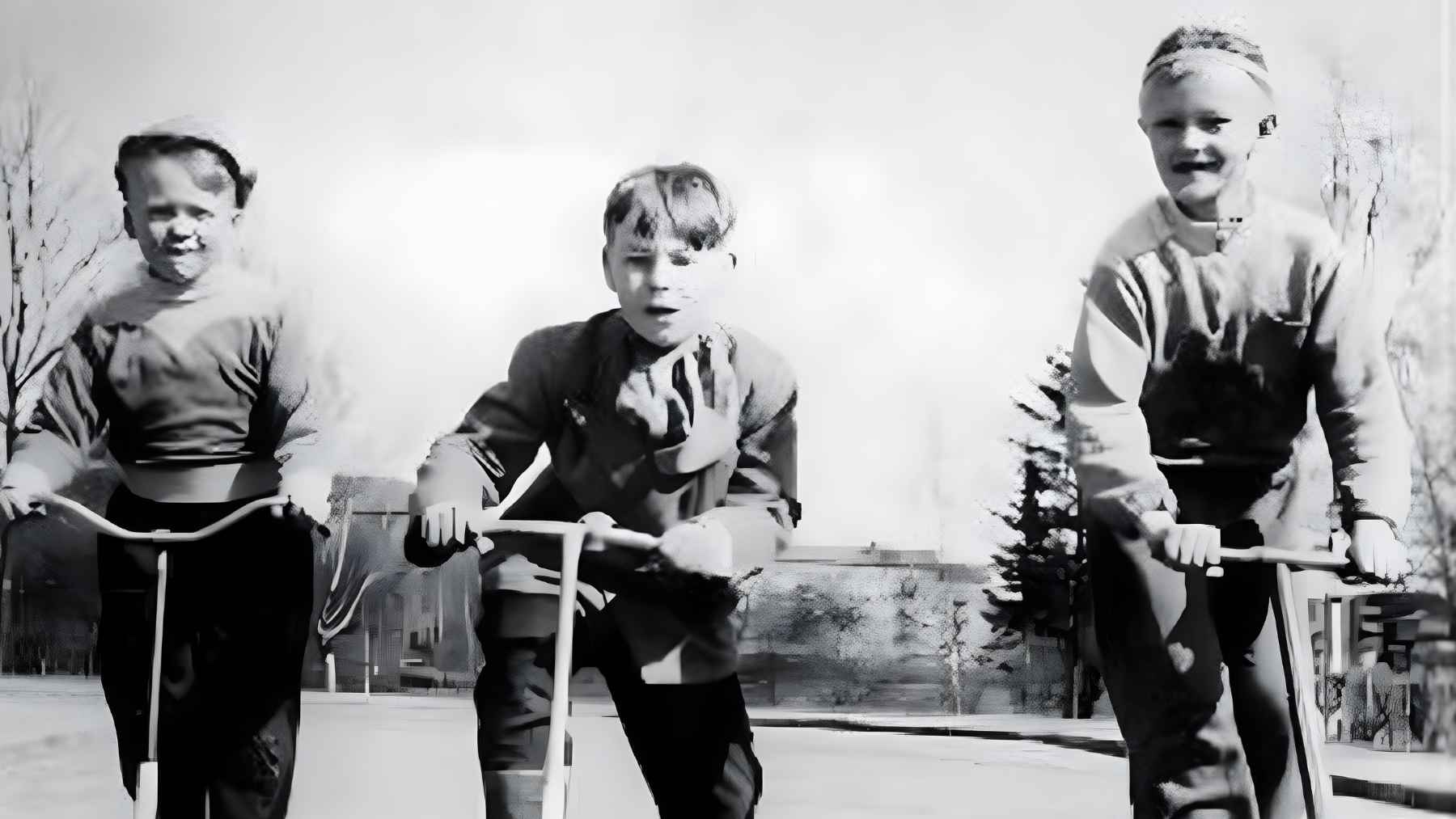
If you grew up hearing “be back by dinner,” you might also remember the freedom that came with it. Kids biked around, argued with friends, and got bored enough to invent their own games. Today, many parents can check a phone map and see exactly where their child is, even down to the driveway.
A new meta-analysis is now adding to the debate over whether modern childhood has become too managed. The researchers report that when parents are overly protective and controlling, their children tend to show slightly higher levels of anxiety and depression as they get older. It does not prove cause and effect, but it suggests that constant rescue may come with a hidden cost.
What the meta-analysis actually found
The paper pulled together results from 52 research articles, a “study of studies” designed to spot patterns that single experiments can miss. Qi Zhang at the University of Wisconsin-Madison and Wongeun Ji at Handong Global University reported small but consistent links between overparenting and depression, anxiety, and other internalizing symptoms.
Internalizing symptoms is a broad term for inward struggles like persistent worry, sadness, and social withdrawal.
Most of the participants across the underlying research were around age 20, so the findings mostly reflect teen and young adult mental health. The link also looked broadly similar across cultures and income levels, which hints that the dynamic is not limited to one type of household. In plain terms, many kids do fine, but the overall trend still shows up when you pool the data.
What “overparenting” looks like in real life
Overparenting is not the same thing as being involved. It is closer to “hovering,” where adults step in fast and often, even when the stakes are low. That can mean mediating every friend conflict, rewriting a school email, or negotiating with a coach after a child is benched.
A 2022 systematic review led by Stine L. Vigdal found that most studies on helicopter-style parenting report a relationship with anxiety or depression, but the authors also warned that the evidence is not strong enough to pin down what causes what. In other words, an anxious child can lead to more control, and more control can also fuel anxiety, so the cycle can run both ways.
Why self-regulation is the skill underneath it all
When people talk about “resilience,” they are often talking about self-regulation. That is the ability to manage emotions and behavior without needing someone else to do it for you. It shows up in everyday moments, like cooling down after a group chat blow-up or staying calm when your order arrives late and you are already stressed.
Marc Brackett at the Yale Center for Emotional Intelligence describes emotion regulation as “a set of learned intentional skills for managing feelings wisely.” Practice matters, and it rarely looks tidy. Kids learn by trying, feeling uncomfortable, and figuring out what works, with adults nearby but not always intervening.
What research says about unstructured play
One reason the 1960s and 1970s get dragged into this debate is the role of free play. In 2022, Yeshe Colliver and colleagues used data from the Longitudinal Study of Australian Children and followed 2,213 kids over time.
They found that more unstructured free play in the preschool years predicted stronger self-regulation about two years later, even after accounting for earlier self-control and other factors.
Researchers have also looked at “risky play,” meaning play that includes manageable risk, like climbing, rough-and-tumble games, or exploring out of adult earshot.
A 2015 systematic review led by Mariana Brussoni at the University of British Columbia found overall positive links between risky outdoor play and children’s health and social development, while also noting that stronger studies are still needed.
Why kids roam less today
This shift is not only about parenting attitudes. It is also about the environment kids move through, especially traffic.
A major international report from the Policy Studies Institute for the Nuffield Foundation surveyed 18,303 children ages 7 to 15 across 16 countries and found that low independent mobility was common, with restrictions especially tight for younger kids. Parents most often pointed to traffic as the biggest reason they hold kids back from going out alone.
Schools can tighten the screws, too. In a 2024 study led by Alethea Jerebine, researchers mapped school policies around active play and found the landscape heavily tilted toward risk management, with far fewer policies focused on promoting play itself. If the rules are built to prevent every scrape, kids get fewer chances to learn risk judgment in the real world.
What parents can take from this without romanticizing neglect
None of this is an argument for ignoring children. Serious neglect harms development, and not every neighborhood is safe for “go wander for hours” freedom. The research points to a narrower idea – giving kids age-appropriate chances to make choices, handle frustration, and solve small problems on their own.
Public health researchers studying independent mobility also note that the evidence is mixed and hard to compare across studies, which is another reason to be cautious about sweeping claims about “one tough generation.” Still, the direction of the findings is hard to ignore. Resilience is built in the small moments, not in a single pep talk.
The main study has been published in the journal Development and Psychopathology.