If you have ever priced a kitchen remodel, you know the routine, and a glass-top induction cooktop gets treated as the safe, modern default. It heats fast, it is easy to wipe down, and it feels less risky than an open flame.
But in 2026, that “automatic choice” is starting to wobble. With the electric bill looking over everyone’s shoulder, more shoppers are asking a simpler question. Why warm the whole surface and the air around it when the heat could go straight into the pot?
A new answer is moving from design studios into retail showrooms. Some of the newest systems hide the cooktop under stone or ceramic so the counter stays smooth, while heat is aimed into the pot instead of the room. Supporters say that can mean faster cooking, less stray heat in the kitchen, and less wasted energy overall.
Why induction is no longer the automatic pick
Induction is still popular for good reasons. It is generally safer than gas, and it is typically quicker than traditional glass-ceramic “radiant” cooktops because it energizes the pan itself instead of warming a metal element first.
Still, shoppers are realizing that “powerful” is not always the same as “efficient.” If a cooktop spreads heat beyond the cookware, that extra warmth ends up in the kitchen, not the food. And in everyday terms, that can show up on the monthly electric bill.
Cooktops that disappear into the counter
“Invisible induction” systems place the electronics under the countertop, leaving a continuous surface on top. Cooking Surface Prime sells a concealed induction setup designed to work through porcelain and describes the concept with the line “you don’t see it, you live it”.
Inalco promotes a similar idea with its MDi Induction surfaces, framing it as an “authentic countertop with invisible induction” that keeps the kitchen visually clean while still functioning as a cook zone.
For homeowners, the appeal is simple. You get a flat, uninterrupted counter, you can cook where you need to, and cleanup feels more like wiping a table than scrubbing around a built-in appliance.
Induction, radiant, and “infrared” in plain English
Induction cooking uses a magnetic field to heat cookware directly. Energy Star explains that it uses an electromagnetic coil to warm compatible pots and pans “internally,” which is why the surface can stay cooler and less heat escapes into the air.
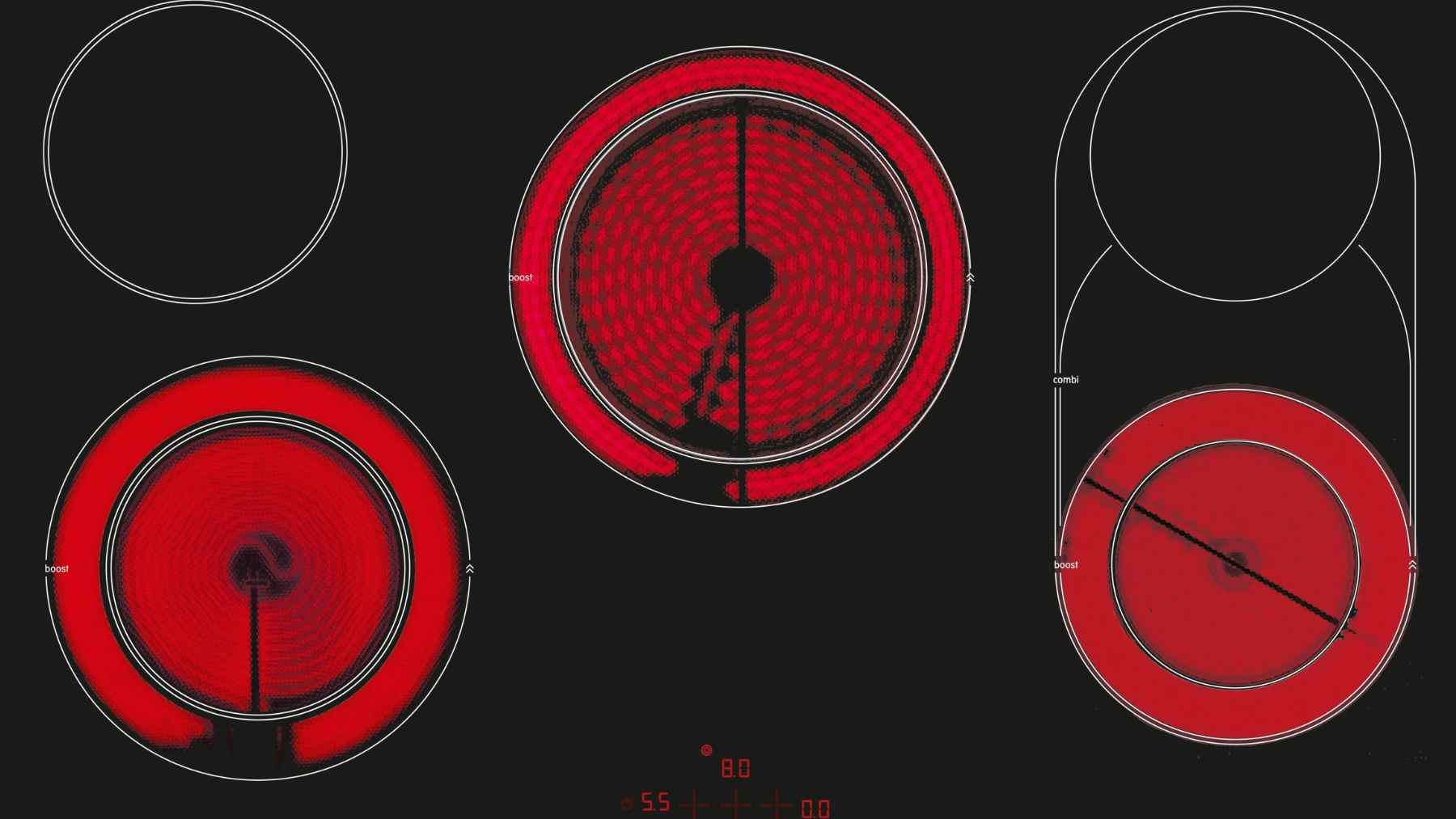
A radiant glass-ceramic cooktop is the classic electric model with a glowing heating element under a glass surface. ILVE’s explainer puts it plainly: a radiant element heats the glass, and the glass then transfers that heat into the cookware.
“Invisible induction” systems still rely on induction, but they put more material between the coil and the cookware. That is why these setups tend to specify exact countertop materials and thickness limits, so the system can deliver heat efficiently without stressing the surface.
Speed and energy use in everyday terms
Claims of “up to 50 percent faster” cooking show up often in marketing for these newer systems, especially when they emphasize better heat targeting. In practical terms, the idea is that if less heat leaks out around the pan, more of the electricity you pay for goes into cooking.
Appliance brands also sell induction on speed. Bosch says some of its induction cooktops can boil water up to twice as fast with a boost mode, compared with the company’s own radiant electric cooktops.
A 2023 guide from a federal energy agency says induction can be up to three times more efficient than gas and up to ten percent more efficient than conventional smooth-top electric ranges, because it only creates heat when a pan is present.
Safety and kitchen comfort
Supporters of concealed systems often highlight safety. The pitch is that the counter can remain warm rather than dangerously hot, reducing accidental burns, especially in busy family kitchens.
One reason is heat control. Energy Star notes that conventional cooktops transfer energy with about thirty two percent efficiency for gas, compared with roughly seventy five to eighty percent for electric resistance and about eighty five percent for induction. That means less energy gets lost to the surrounding air, so the kitchen can feel less like a heat trap during cooking.
In May 2025, Caesarstone announced a collaboration with Invisacook to create an “invisible induction cooktop” under porcelain, noting that a silicone mat helps keep the surface only warm under the pot.
Hybrids for flexibility
Not everyone wants to commit to a fully concealed setup. That is why some homeowners are also weighing “hybrid” cooktops that combine induction zones with gas burners, aiming to balance familiarity with more precise control.
This is also partly about cookware. Induction requires magnetic-friendly pots and pans, while radiant and gas can handle almost anything. A hybrid can reduce the need to replace cookware all at once.
A smaller switch without remodeling
You don’t need to completely renovate your kitchen to try it out. Some stores sell portable induction cooktops, which stand out for their energy efficiency, fast cooking times, and easy-to-clean glass surface.
For renters, students, or anyone with a cramped kitchen, that kind of plug-in option can be a practical way to cook faster without heating up the room. It is also a low-risk way to see whether induction fits your routine before spending big on a built-in upgrade.