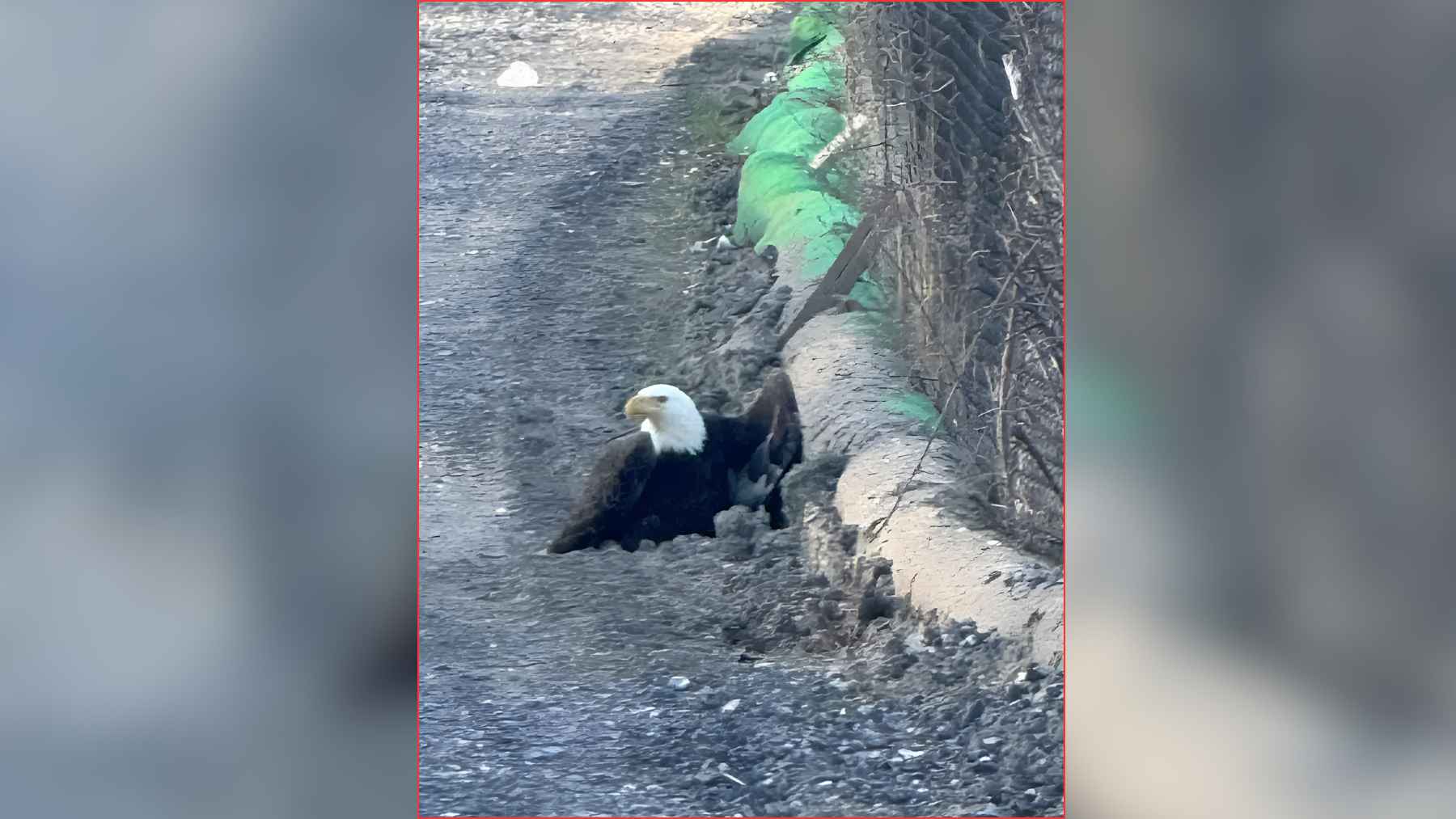
Construction workers in Logan Township, Pennsylvania, knew something was wrong when a bald eagle was not soaring above the road, but walking beside it.
Officials said the bird had been electrocuted after landing on live wires, then fell to the ground before police, state game officers, and wildlife rehabilitators stepped in.
The rescue ended with the kind of update wildlife teams hope for. Centre Wildlife Care later reported that the eagle recovered enough to fly strongly in an enclosure and was released, turning a roadside emergency into a reminder that America’s conservation success story still has dangerous edges.
A strange sight on the road
It started as a scene no one expects during a workday. A bald eagle was on the ground near a local roadway, alive but clearly not acting like a healthy wild raptor.
Officers approached carefully as the bird tried to move away. “He could not fly,” Corporal Shea Stayer told The Dodo. “But he could walk.”
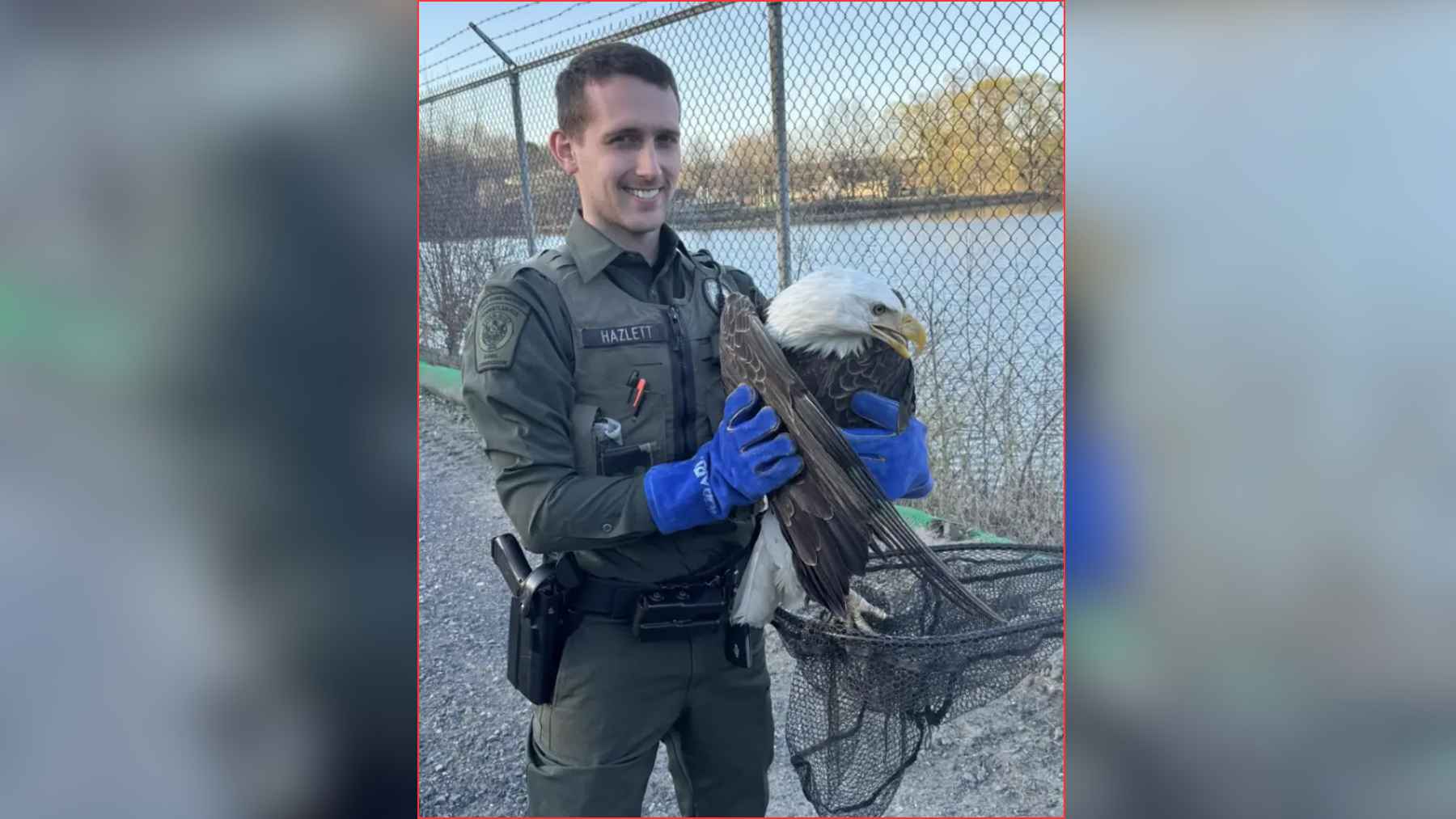
Rescuers called the Pennsylvania Game Commission for help. When wildlife officials arrived, they secured the eagle with a net, handled him with gloves, and helped get him to Centre Wildlife Care in Port Matilda.
Why the wires mattered
A bald eagle is built for open air, not tight utility hardware. Adults may weigh around 8 to 12 pounds and stretch 5.5 to 8 feet from wingtip to wingtip, which helps explain why nearby wires and metal parts can become a serious trap.
The U.S. Fish and Wildlife Service says avian-safe poles for eagles need about 59 inches of horizontal separation and about 39 inches of vertical separation between energized parts and grounded parts, or those exposed parts must be covered. In everyday terms, the bird needs enough room to land without becoming a living bridge between two electrical points.
Can every accident be prevented? Not completely. But federal power-line permit conditions now call for collision response plans, proactive retrofits, and reactive retrofits when eagles are injured or killed near infrastructure.
Pennsylvania’s eagle comeback
In Pennsylvania, bald eagles were down to only three known nesting pairs as recently as 1980. By 2013, the state had more than 270 nesting pairs, and the Game Commission says the species exceeded the criteria needed to move from threatened status to protected.
The causes of the old decline were painfully familiar. DDT, shooting, trapping, degraded waterways, and lost nesting trees all chipped away at the population, but cleaner water, pesticide restrictions, and reintroduction work helped bring the bird back.
Nationally, the story is just as striking. The U.S. Fish and Wildlife Service estimated about 316,700 bald eagles in the lower 48 states based on 2018 to 2019 data, after the species was removed from the Endangered Species Act list in 2007.
The rescue that changed the ending
After the eagle was secured, officers and state game officials got him to Centre Wildlife Care. Local reporting at the time said the bird was in “slightly better spirits” and would remain there until he could return to the wild.
Wildlife rehabilitation is not glamorous work. It is quiet rooms, careful exams, pain care, flight testing, and the patience to wait until a wild animal can survive without people again.
Then came the update everyone wanted. Centre Wildlife Care reported that the eagle had recovered from his injuries, flew strongly in a flight enclosure, and was released.
What to do if you find one
This case also has a practical lesson for anyone who finds a large bird hurt near traffic, wires, or a backyard fence. Keep your distance, note the location, and call the proper authorities instead of trying to handle the animal yourself.
In Pennsylvania, the Game Commission asks the public to report injured, abnormal, sick, or dead wild birds and mammals at 1-833-PGC-WILD. Centre Wildlife Care also tells people not to endanger themselves when dealing with dangerous wild animals.
Why not just help with your own hands? Eagles have talons designed for gripping prey, and a stressed bird can hurt a well-meaning rescuer in seconds. That’s why the construction workers’ best decision may have been the simplest one. They called for help.
A second chance with a warning
The best part of this story is obvious. A bird that could only walk after falling from wires got back into the air, where a bald eagle belongs.
The quieter part matters too. As eagle numbers grow and more birds nest closer to communities, roads, riverside towns, and utility corridors, conservation cannot stop at celebrating the comeback. It has to make the places we built safer for the wildlife returning to them.
At the end of the day, this rescue was one eagle, one call, and one good chain of human decisions. But it also points to a bigger truth. When nature recovers, our infrastructure has to catch up.
The official update was published on Facebook.