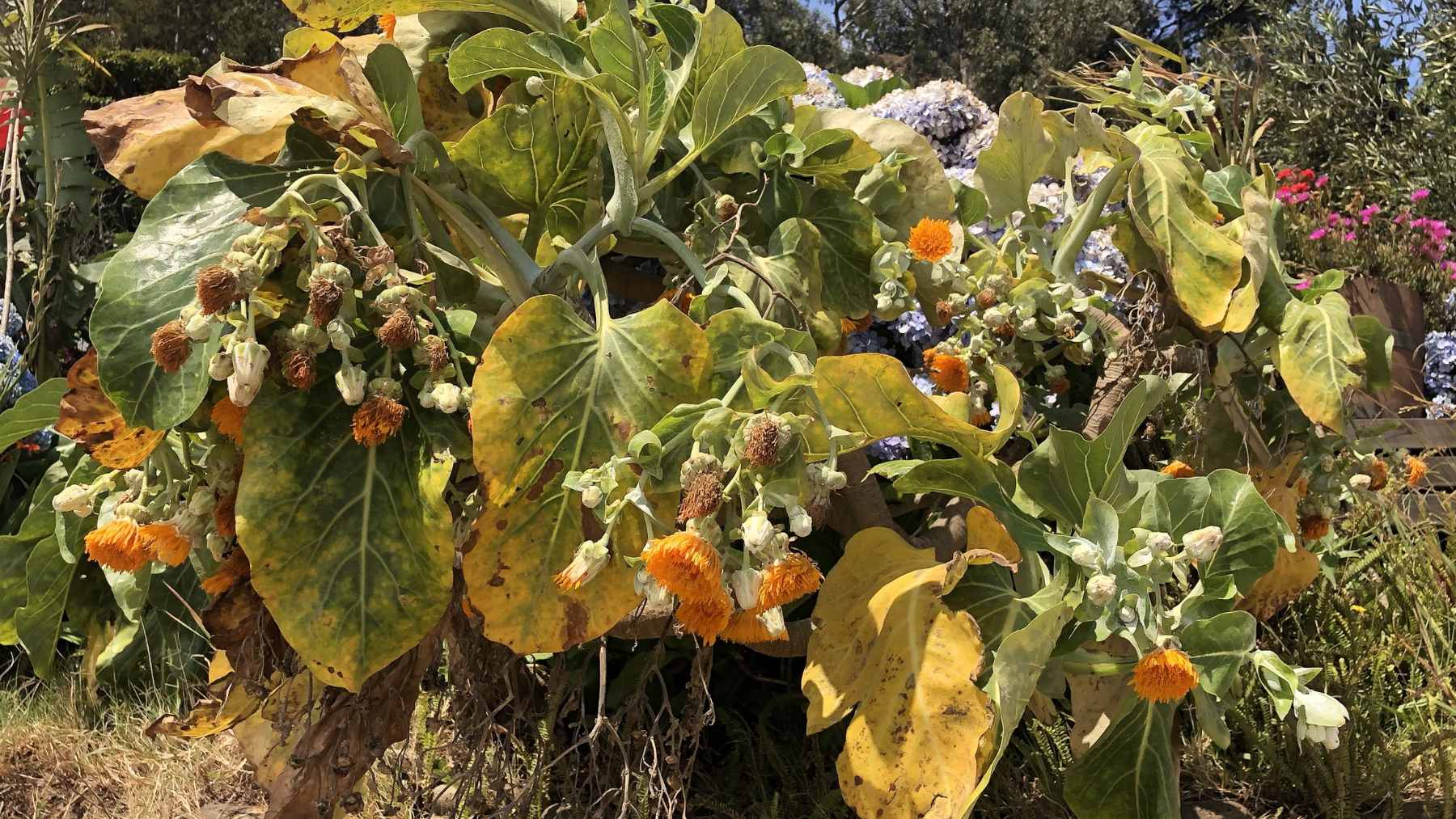
A single wild tree, tied to a cliff on Robinson Crusoe Island, may now have a real shot at survival. The species, Dendroseris neriifolia, has been reduced to just one known wild individual, but seeds collected from that tree have reached Kew’s Millennium Seed Bank in England.
The official update is cautiously hopeful. Kew says it received 29 seeds from the last known wild tree, found that 25 were potentially viable after X-ray analysis, and now has eight seedlings germinating at Wakehurst. For a species hanging on by one trunk, that is not a small detail.
One tree on a cliff
Dendroseris neriifolia is a Critically Endangered tree daisy found only in Chile’s remote Juan Fernández Islands. Its last known wild survivor grows on Robinson Crusoe Island, more than 400 miles from mainland Chile, where it clings to a steep cliff and is supported with ropes to keep it from falling.
That image feels almost unreal, does it not? A whole species, held in place by ropes, while conservationists climb carefully around it to collect mature seeds in nets during the fruiting season.
How it reached the brink
The tree once grew in ravines and lower areas of Robinson Crusoe Island, yet its range has been shrinking for more than a century. Kew says that by 1980, only eight wild individuals remained, and today only one is known to survive in the wild.
The reasons are familiar, but still devastating. Habitat loss, invasive plants, grazing by introduced mammals, forest clearance, fires, erosion, and human activity have all pushed the species toward extinction. On a small island, those pressures can hit fast and leave very little room for recovery.
A rescue carried in seeds
This year, collectors gathered 400 seeds from the cliffside tree, and sent 29 of them to Kew Wakehurst in Sussex. At the Millennium Seed Bank, scientists tested them, divided them between storage and propagation, and began emergency germination trials.
The result was better than feared. Of the 29 seeds sent to Kew, 25 looked potentially viable, and all eight seeds used in the germination effort have now sprouted. Three young plants are expected to be transferred to Logan Botanic Garden in Scotland once they are ready.
Why seed banks matter
A seed bank is not just a botanical warehouse. In practical terms, it is a safety net, a way to keep living options open when a plant is disappearing faster than its habitat can be repaired.
Kew describes its Millennium Seed Bank as the world’s largest store of seeds from wild plant species. It holds more than 2.4 billion seeds from over 40,000 wild plant species, which gives scientists material for research, conservation, and, when possible, future restoration.
For Dendroseris neriifolia, that matters because the wild plant could still be lost. A storm, a landslide, disease, or another failure in protection could erase the last known wild individual before new plants are ready.
The hard part is not over
Can one tree bring back a whole species? Maybe, but not easily. The biggest problem now is genetic weakness, since all available wild seed comes from a single surviving parent.
Kew notes that about 90% of the species’ seeds are non-viable because of geographical isolation, and that some garden plants cannot be used because of hybridization. That means every healthy seedling is precious, yet it also means scientists will need to watch fertility, growth, and future seed production very closely.
Self-fertilization can help a plant produce seed when no mate is nearby, although it can also increase inbreeding problems. So the new seedlings are not a victory lap. They are more like the first green shoots after a long emergency.
A small tree in a big web
The Juan Fernández Islands are not ordinary islands. Kew says about 65% of their plant species are found nowhere else on Earth, and the archipelago has an estimated 4.4 endemic species per square mile.
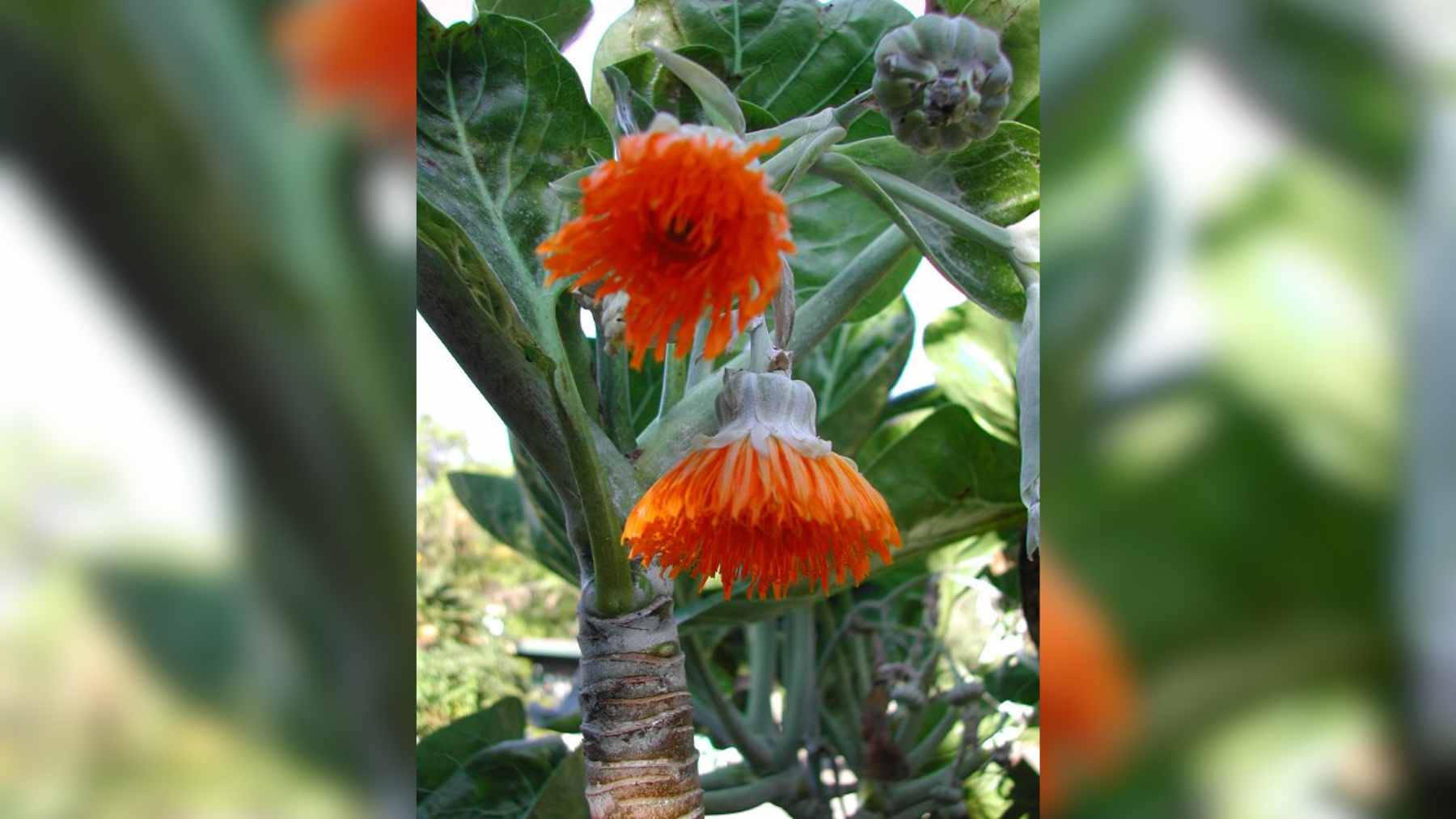
That makes the loss of one plant much bigger than it might seem at first. The Dendroseris group, often called “cabbage” trees, is unique to the Juan Fernández Islands, and Kew describes these plants as rare tree daisies with daisy-like flowers growing from woody, branching trunks.
There is also a wildlife connection. Kew warns that the Critically Endangered Juan Fernández firecrown hummingbird relies on Dendroseris flowers, which means saving the tree may also help protect fragile plant-pollinator relationships on the island.
What happens next
The plan now is to grow the seedlings to maturity, learn how to keep them healthy, and produce more seeds for long-term conservation. Chilean seed collectors also aim to send another collection to the United Kingdom next year, which could strengthen the recovery effort.
Diego Penneckamp, a scientist at Jardín Botánico VerdeNativo, summed up the stakes plainly, saying, “It is a race against time.” That may sound dramatic, although in this case it is close to literal.
Still, the story is not only about loss. It shows how modern plant science, patient fieldwork, and international cooperation can give even the rarest species a second chance, one seedling at a time.
The official press release was published by Royal Botanic Gardens, Kew.