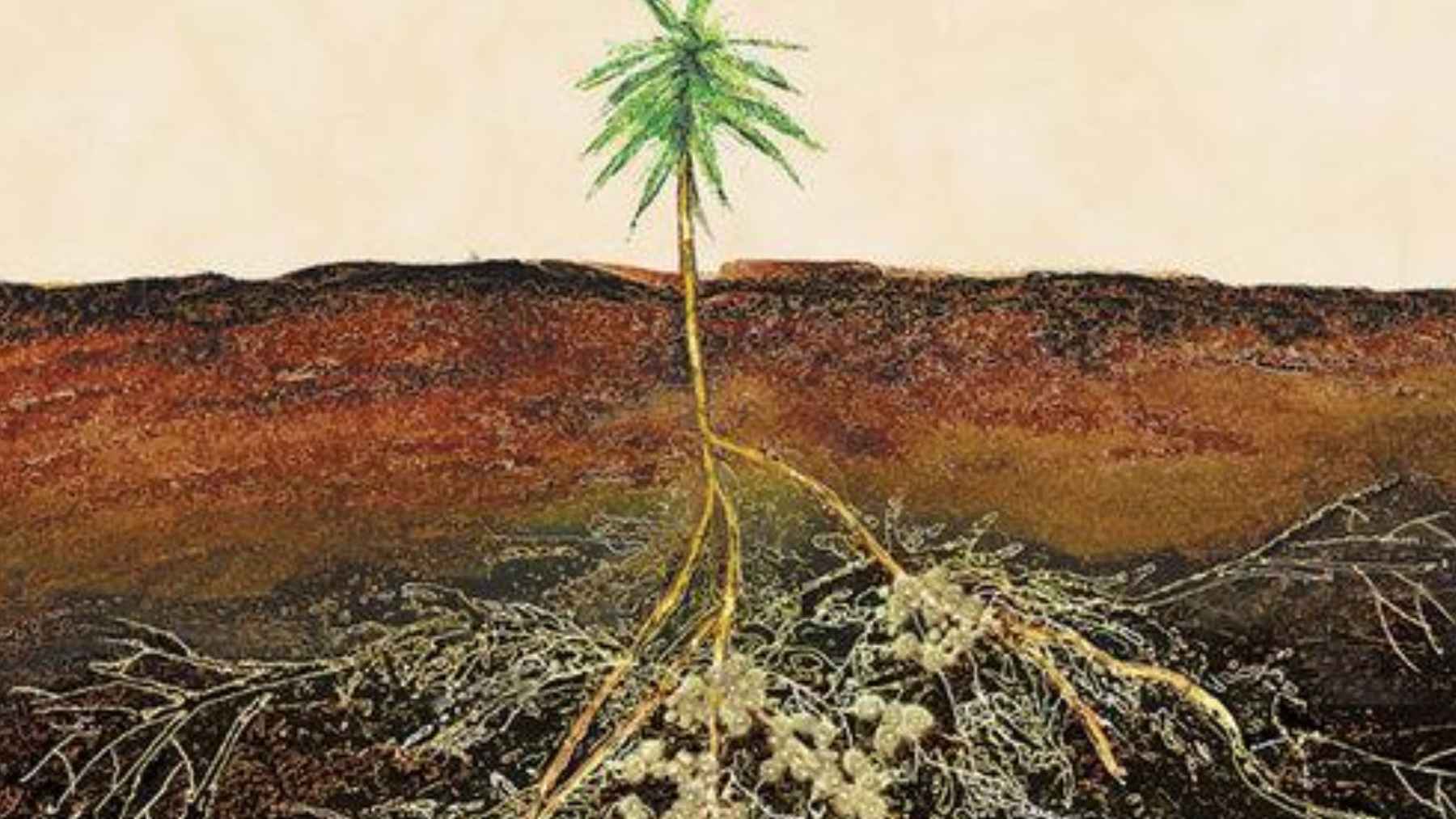
Under every lawn, farm field, forest trail, and patch of prairie, a huge living network is doing quiet work. A new global map estimates that arbuscular mycorrhizal fungal threads in topsoil stretch for about 68 quadrillion miles, close to a billion trips between Earth and the sun.
The finding is not just a giant-number story. These fungi help plants get water and nutrients, move carbon into soil, and may show where conservation and farming policies have missed a key part of Earth’s life-support system.
What the fungi do
These are not the mushrooms people see after rain. They are microscopic fungal threads, called hyphae, that grow through soil and connect with plant roots.
The name is a mouthful, but the idea is simple. Arbuscular mycorrhizal fungi trade water and nutrients for carbon made by plants through photosynthesis, and about 70% of plant species rely on this partnership.
A hidden network with huge scale
The new estimate puts the total length of these fungal threads at roughly 110 quadrillion kilometers, or about 68 quadrillion miles. The study focused on the upper 6 inches of soil, where much of this underground traffic takes place.
The mass is striking, too. Researchers estimate the network contains about 330 million U.S. tons of carbon, around four to 6 times the mass of all living humans. In a teaspoon of soil, there may be up to 32 feet of mycorrhizal network.
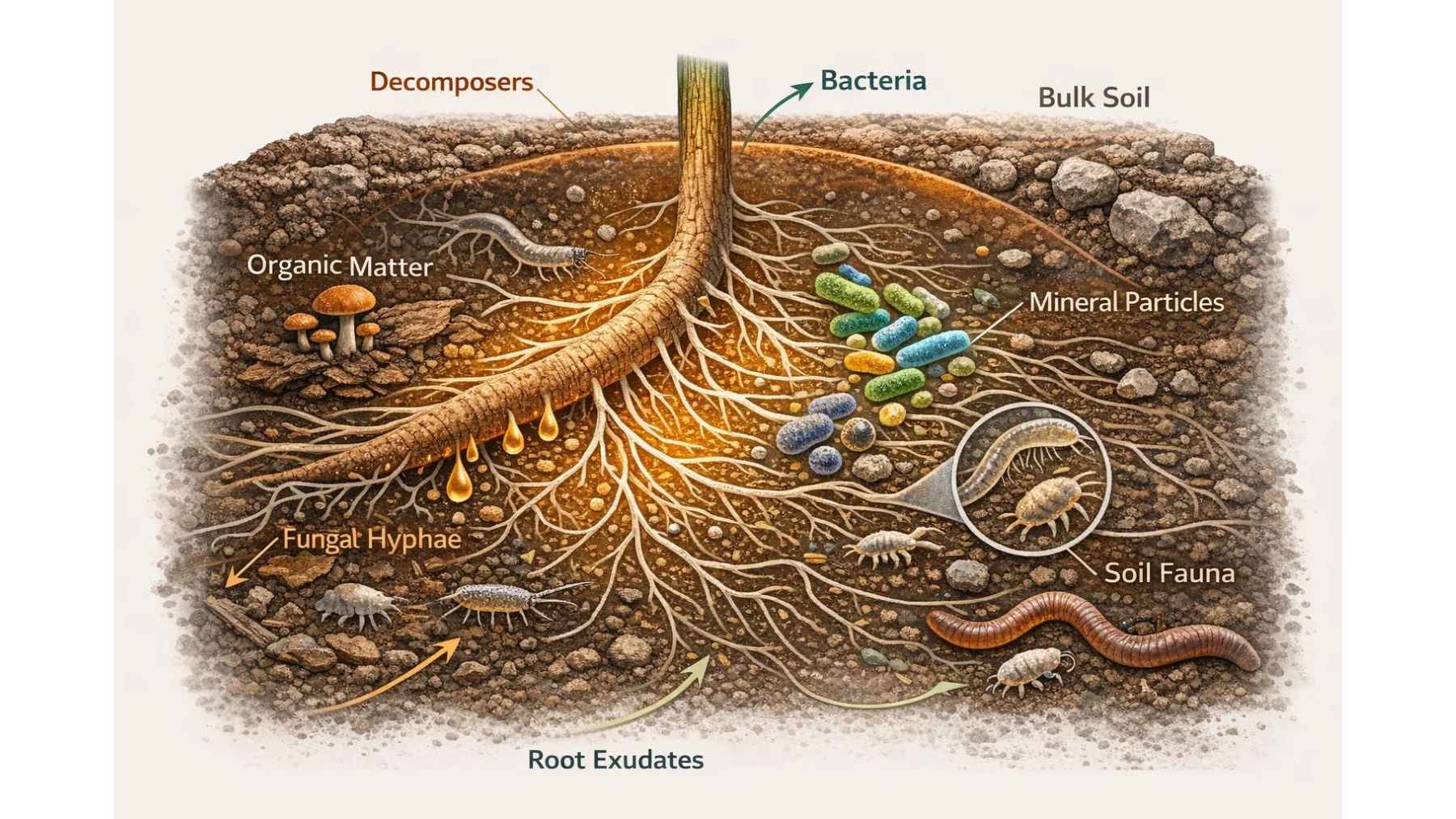
A scientific illustration shows mycorrhizal fungi linking plant roots with soil organisms, helping transport nutrients, water, and carbon through underground ecosystems.
How scientists mapped it
To build the map, researchers assembled data from 322 studies and more than 16,000 soil cores collected across many ecosystems. The international team also used machine learning and robotic imaging of more than 300,000 living fungal threads.
Justin Stewart of the Society for the Protection of Underground Networks and Corentin Bisot of the AMOLF Physics Institute led the work. Bisot said new tools are helping scientists reveal “what has long been hidden under our feet.”
Why plants depend on it
For plants, the fungal network works a bit like an extra set of roots. In healthy soils, these networks can expand a plant’s reach for nutrients and water far beyond the root zone.
That matters in a backyard garden, a wheat field, or a dry grassland. When soil is alive with fungal partners, plants may have a better chance of getting key nutrients such as phosphorus without relying only on what sits right beside their roots.
The climate connection
The study estimates that arbuscular mycorrhizal networks move about 4.4 billion U.S. tons of carbon dioxide equivalent into soils each year. That is about 11% of human-related carbon dioxide emissions, although moving carbon into soil is not the same as locking it away forever.
Think of it less like a vault and more like a busy delivery system. Carbon, water, and nutrients are constantly moving, and scientists are still working out how much of that carbon stays in the ground over time.
Grasslands stand out
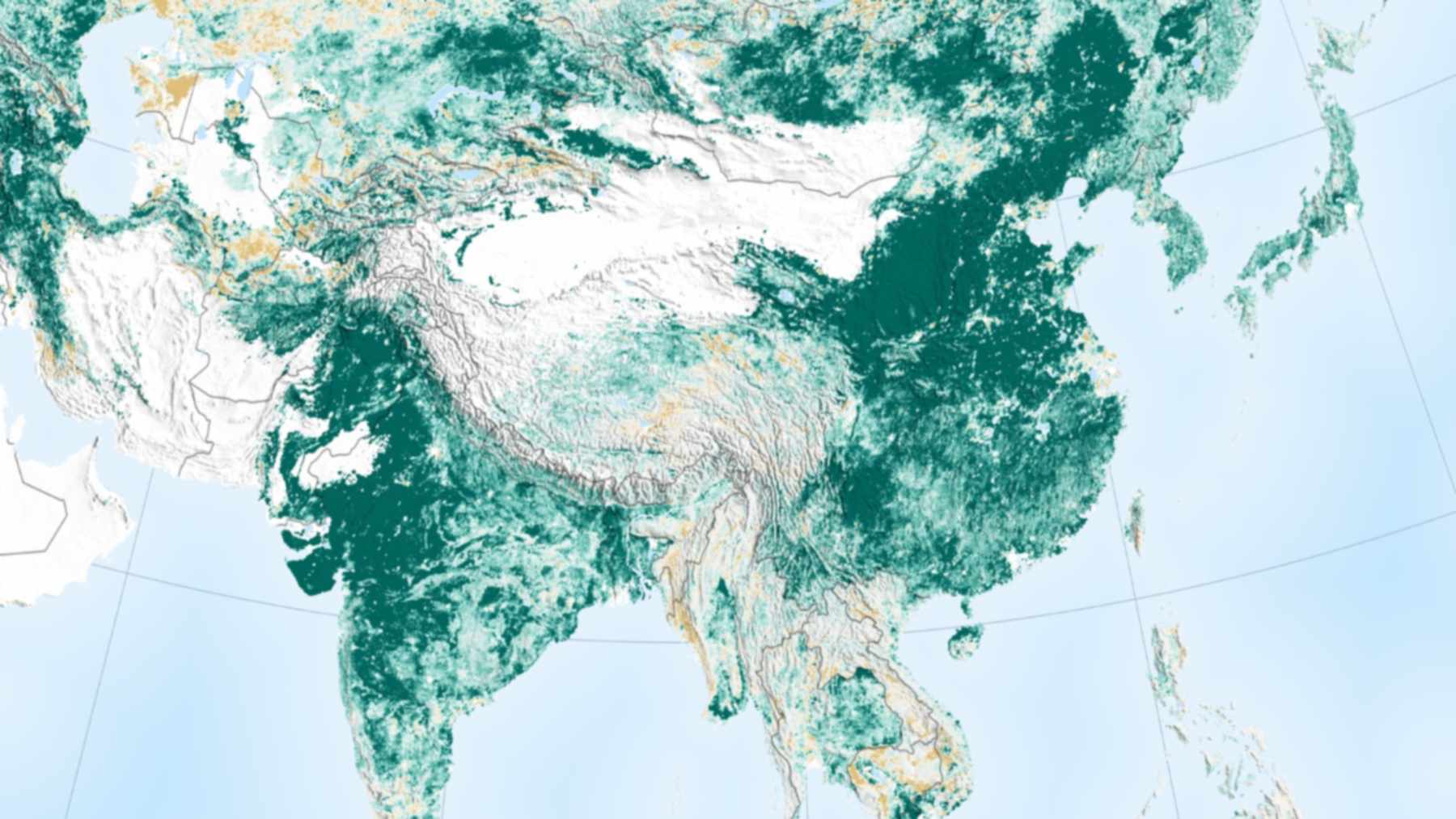
One of the most important findings sits in places people often overlook. Grasslands hold about 40% of Earth’s arbuscular mycorrhizal fungal infrastructure, with especially dense networks predicted in South Sudan’s Sudd wetlands, Florida’s Everglades, and the Tibetan Plateau.
Grasslands, however, are under pressure. A World Resources Institute summary of recent research reported that about 235 million acres of non-forest natural ecosystems were converted to annual crops from 2005 to 2020, with a similar area likely converted to pasture. Together, that is roughly four times the forest area lost to crops and pasture over the same period.
Farming may thin the network
The new fungal map suggests that large-scale croplands have about half the network density found in wild ecosystems. That does not prove one farming practice is to blame, but it does raise a serious question.
What happens when the underground system that helps soil store carbon and recycle nutrients gets thinner? Researchers warn that lower fungal density could weaken soil resilience, which may matter for farms facing heat, drought, and rising input costs.
Protection gaps remain
The map also builds on related Nature research showing that less than 10% of predicted mycorrhizal richness hotspots are currently inside protected areas. In other words, many of the places richest in underground fungal life may be outside the boundaries used to protect nature.
That does not mean every hotspot must become a park. It does mean that soil life is still largely missing from many conservation decisions, even though plants, food systems, and climate strategies depend on it.
A planetary circulatory system
Merlin Sheldrake, a biologist and co-author of the new work, described these fungi as part of a “planetary circulatory system.” It is a useful image, because the network is not decorative. It moves things life needs.
At the end of the day, this study gives scientists a first global picture of a system that has been working under our feet for hundreds of millions of years. The next step is figuring out how to protect it, restore it where it has been damaged, and include fungi in decisions about food, soil, and climate.
The official study has been published in Science.