Sometimes, the ocean gives scientists a door where there used to be a wall of ice. In January 2025, a huge iceberg named A-84 broke away from Antarctica’s George VI Ice Shelf, exposing a stretch of seafloor that had been sealed off from human view.
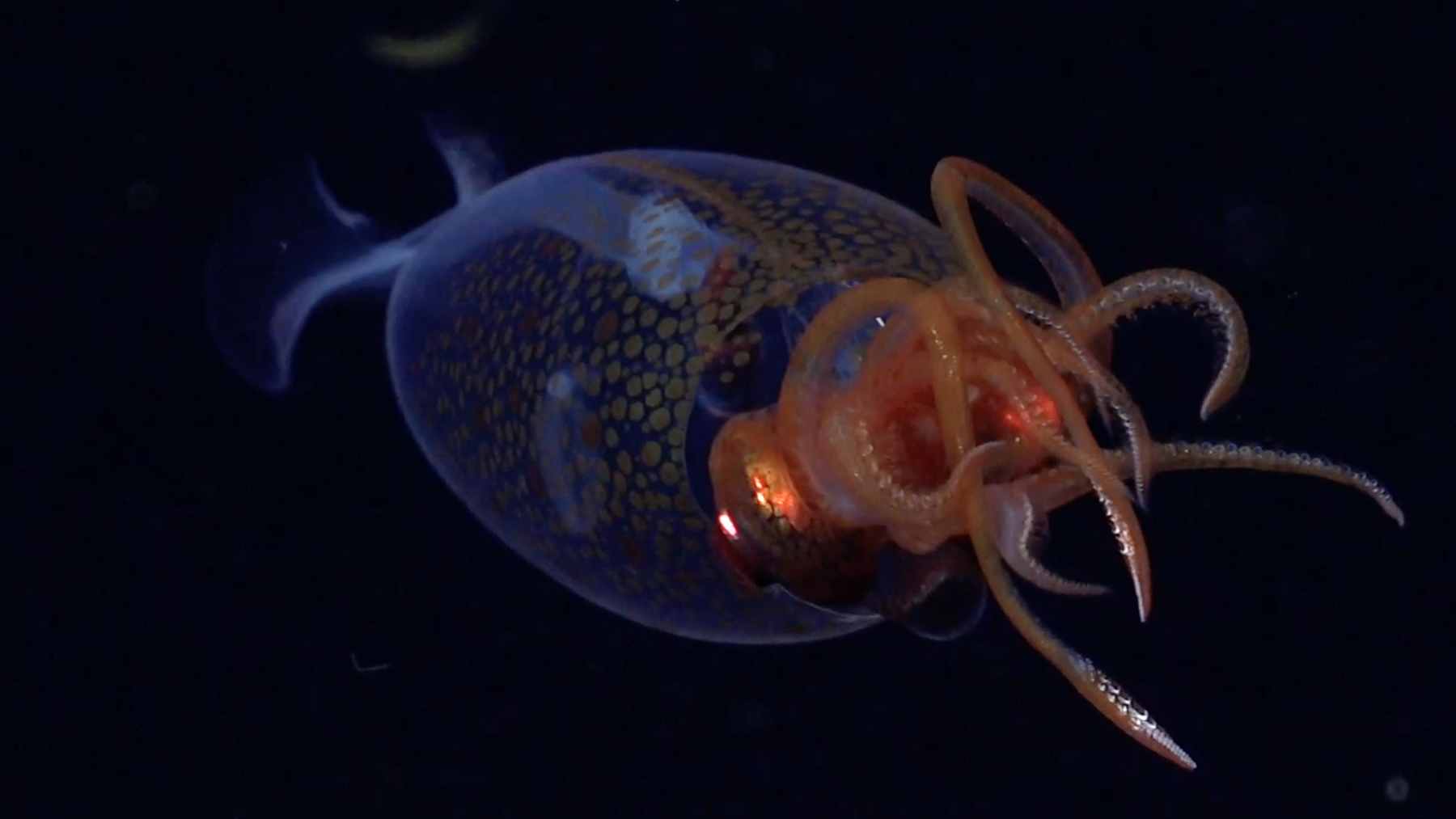
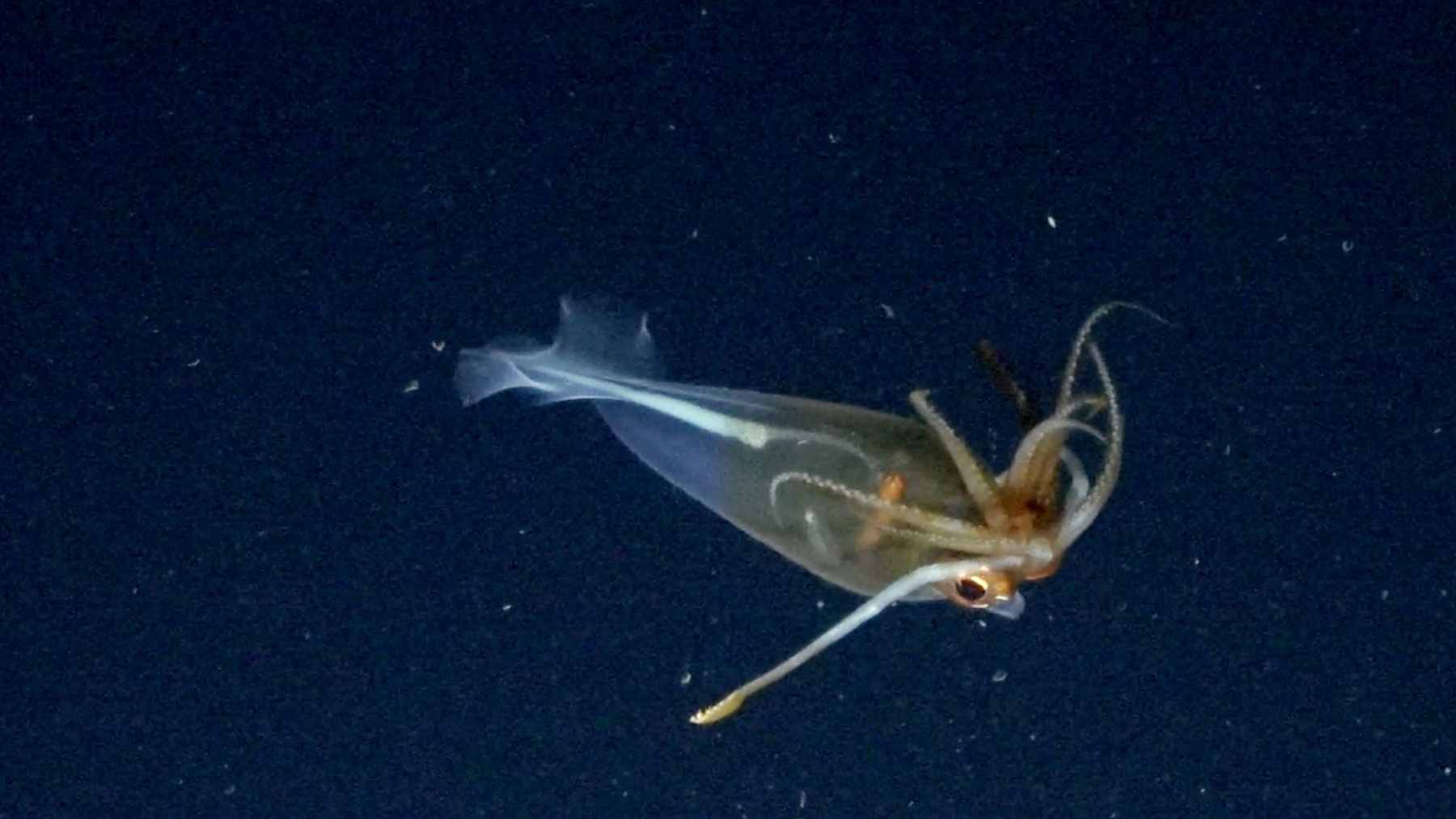
What followed was more than a lucky detour. Researchers aboard R/V Falkor (too) filmed the first confirmed live footage of the glacial glass squid, a transparent Antarctic animal known to science since 1906 but never before seen alive in its natural home.
The same research program soon recorded a juvenile colossal squid too, giving scientists two rare glimpses into a world we still barely know.
Iceberg A-84 opens a window
The iceberg broke away on January 13, 2025, and was described as about the size of Chicago. When it moved off the George VI Ice Shelf, it uncovered roughly 209 square miles of seafloor in the Bellingshausen Sea near Antarctica.
That is a lot of hidden ocean floor. The team reached the newly exposed area on January 25 and became the first to investigate a place that had never before been accessible to humans. Instead of waiting for another expedition someday, they changed course and followed the opening while it was still fresh.
A glass squid appears
The glacial glass squid was filmed about 2,254 feet below the surface. At that depth, sunlight is gone, pressure is intense, and every clear image from a robot camera can feel like a message from another planet.
So what is a glass squid? It is a squid with a see-through body, a trick that can help it blend into the dim blue and black of deep water. In the footage, the animal held its arms loosely above its head, a pose seen in other glass squids.
Deep-sea expert Dr. Thom Linley from the Museum of New Zealand Te Papa Tongarewa noticed the squid while watching the live feed from the ship’s mission control room. Dr. Aaron Evans, an expert on the glass squid family, later helped confirm the identification.
The second squid surprise
The story did not stop there. On March 9, another team aboard Falkor (too) filmed a juvenile colossal squid near the South Sandwich Islands in the South Atlantic Ocean, nearly 2,000 feet below the surface.
This young squid was about 1 foot long, almost ghostlike in the water. Adult colossal squid are a very different sight, as they can reach about 23 feet long and weigh as much as 1,100 pounds.
Dr. Kat Bolstad of Auckland University of Technology helped verify the colossal squid footage. The difference matters because young colossal squid and glacial glass squid can look similar, though colossal squid have hooks along the middle of their eight arms.
Why this matters
At first glance, a rare squid video may look like a beautiful curiosity, but for scientists, it is also evidence that the deep Southern Ocean still holds basic surprises about animals, habitats, and how life survives under ice.
The same A-84 expedition found large corals, sponges, icefish, giant sea spiders, and octopus. Some of these communities may have been there for decades, perhaps even centuries, despite living under ice almost 500 feet thick and far from the food that usually drifts down from the surface.
That raises a simple question with a complicated answer. How does so much life persist in a place cut off from ordinary sunlight-driven food chains? Researchers suspect ocean currents may carry nutrients under the ice, but the full explanation is still being worked out.
A hidden ecosystem
This is not the first hint that life under Antarctic ice is more active than scientists once thought. In 2021, British Antarctic Survey researchers reported sponges and other stationary animals attached to a boulder beneath the Filchner-Ronne Ice Shelf, after drilling through about 2,950 feet of ice.
Still, the A-84 expedition was different. Instead of a narrow borehole view, the remotely operated vehicle (ROV) SuBastian could move across broad seafloor landscapes, sending back high-resolution footage while scientists watched from the ship.
This means researchers were not just peeking through a straw. They were finally able to look around. That is why this iceberg break became such a rare scientific opening.
Cameras where people cannot go
The robot that filmed the squid is called ROV SuBastian. It is a remotely operated vehicle, which means pilots control it from the ship while cameras, lights, and instruments explore places too deep and dangerous for divers.
For the most part, animals like these remain hidden because the Southern Ocean is remote, rough, and hard to study. A stormy day at sea can shut down work quickly, and Antarctic field seasons leave little room for mistakes.
That is what makes these back-to-back squid sightings so valuable. Schmidt Ocean Institute executive director Dr. Jyotika Virmani said they show “how little we have seen” of Southern Ocean life.
Ocean mysteries remain
The glacial glass squid is not a monster from a legend. It is a real animal, small compared with its colossal cousin, moving through a cold and dark environment that humans are only beginning to observe clearly.
The iceberg did not create this ecosystem. It simply uncovered it. Like lifting a lid from a box that had been closed for ages, A-84 gave scientists a brief chance to watch life that had carried on out of sight.
For anyone who thinks Earth has already shown us all its secrets, this is a good reminder. Sometimes, a broken piece of ice can reveal an entire world beneath it.
The official press releases were published by Schmidt Ocean Institute’s website.