Warm weather brings people back to trails, riverbanks, gardens, and mountain paths. It also increases the chance of crossing paths with a snake, which can turn a quiet walk into a nervous moment in just a few seconds.
The key is not to panic. In Italy, researchers list 22 snake species, but the World Health Organization considers only four vipers medically important..The fastest clues are the eyes, the head, the scales, and the tail, and knowing them can protect both hikers and harmless snakes.
The eyes give the first clue
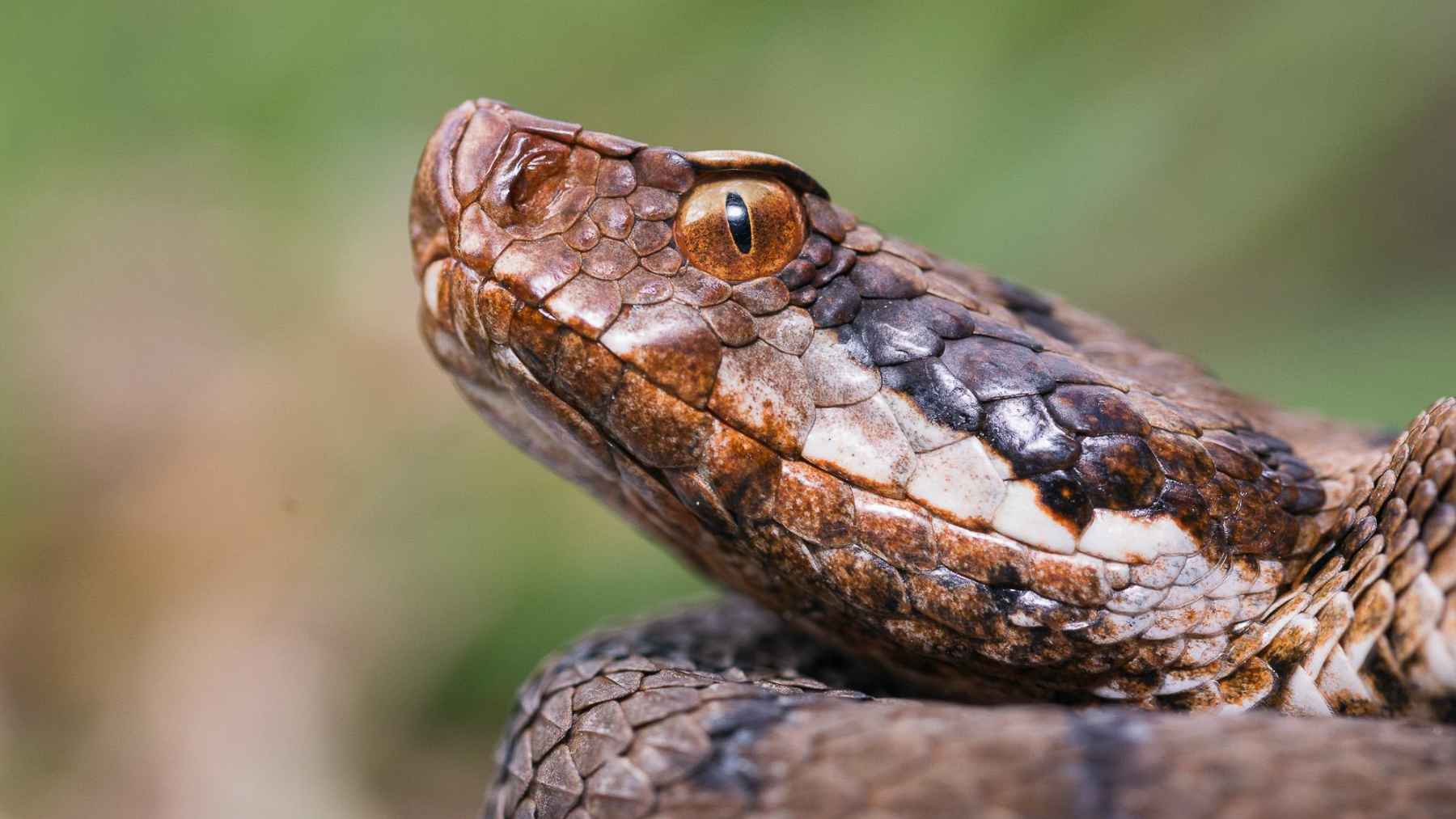
The most useful sign, when it can be seen safely, is the pupil. Many harmless Italian snakes, including grass snakes and other colubrids, have round pupils that look more like ours.
Vipers, on the other hand, usually have vertical pupils that narrow into a slit in daylight, a little like a cat’s eye. A 2024 clinical guide led by Matteo Riccardo Di Nicola notes that this is one of the clearest field marks for separating vipers from many non-viper snakes.
So should you move closer to check the eyes? No. A quick look from a safe distance is enough, and uncertainty should always be treated with caution.
The head can fool you
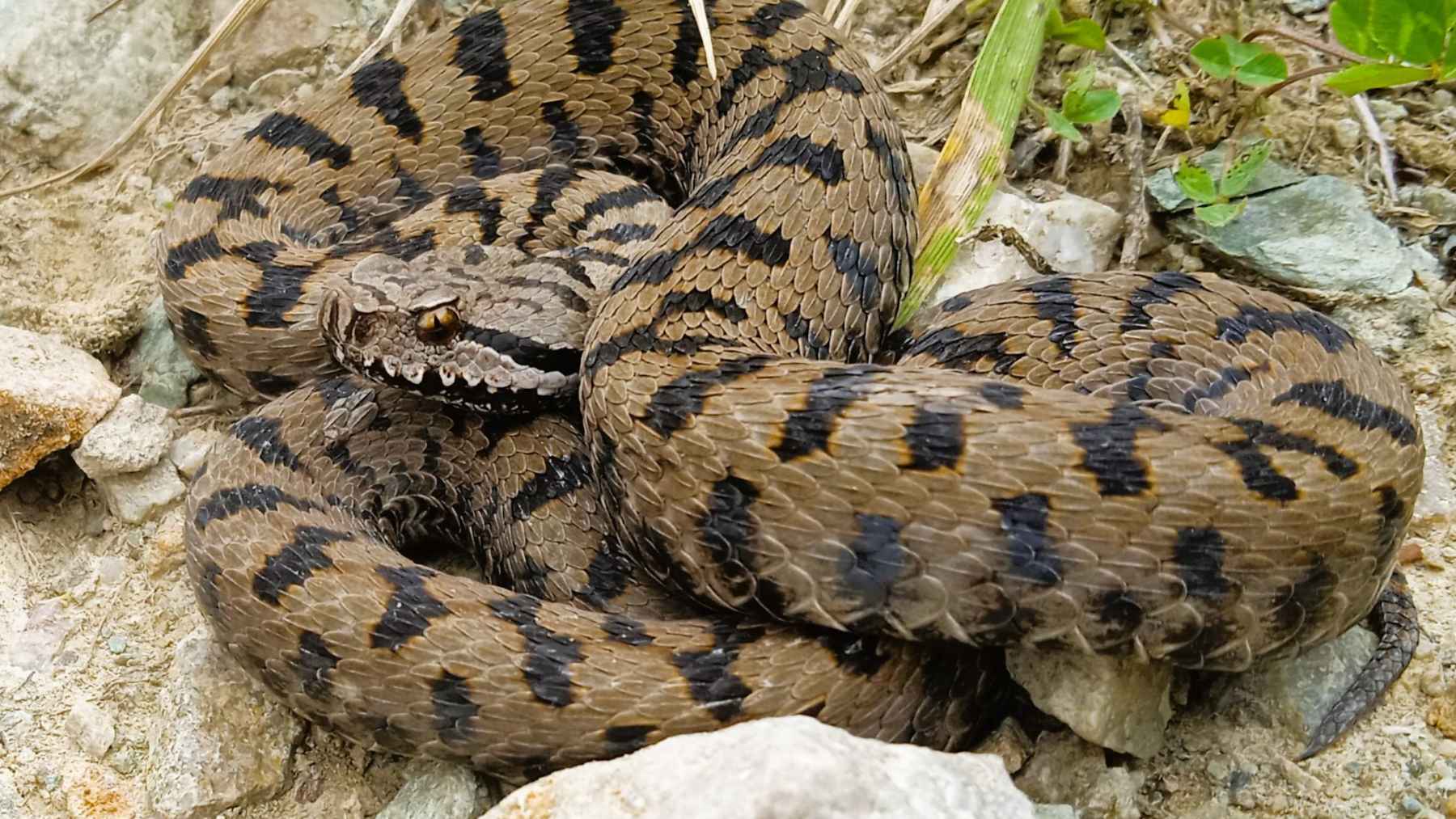
A viper often has a broader, more triangular-looking head that stands out from the rest of the body. Harmless snakes more often show an oval head that blends smoothly into a thinner neck, but this clue is not perfect.
The same 2024 guide warns that head shape alone is unreliable because some harmless snakes can flatten their heads when frightened, suddenly looking more “viper-like” than they really are.
The scales on the head can help. Vipers tend to have many small scales on top of the head, while many harmless snakes have larger, smoother plates that look more neatly arranged.
The body tells the rest
Vipers usually look shorter and heavier for their length. Italian vipers often measure around 20 to 28 inches on average and generally do not exceed about 3.3 feet, while several harmless snakes can pass that length.
The material supplied for this article notes that common harmless species can be much longer, including grass snakes around 4 feet and larger females that may reach roughly 5 to 6.5 feet. The yellow-green whip snake, often seen in the countryside, can also reach about 5 to 6.5 feet and is known for being fast rather than dangerous.
The tail is another useful clue. A harmless snake’s tail usually tapers gradually, while a viper’s tail often narrows more suddenly, almost like a separate little piece attached to a stockier body.
Most encounters are not attacks
A snake on a trail is usually not looking for trouble. Vipers are venomous, but they are not hunters of people, and most bites happen when someone steps on one, reaches into brush, or tries to touch or move it.
The safest response is simple. Stop, step back, give the animal a path to escape, and do not try to pick it up for a photo or a closer look.
Good habits matter too. Closed shoes, long pants, and sturdy gloves help when hiking, gathering berries, picking mushrooms, or moving branches and stones, the kind of small outdoor chores where hands and ankles end up in hidden places.
What to do after a bite
Any snakebite should be treated seriously. In the United States, the American Red Cross says to call 911 immediately for any snakebite, while Italian health guidance tells people to call 112 and follow instructions for transport to a hospital.
While help is coming, keep the person calm and limit movement. The Centers for Disease Control and Prevention advises washing the bite with soap and water, removing rings and watches before swelling starts, covering the wound with a clean, dry dressing, and seeking emergency care quickly.
What should you avoid? Do not cut the wound, suck out venom, apply a tourniquet, use electric shock, drink alcohol, or wait for symptoms to appear. These old “survival tricks” can make the situation worse.
Why calm matters
Venom does not always get injected, but guessing is not safe. Local signs can include strong pain, swelling, redness, bruising, or blistering, while wider symptoms can include nausea, vomiting, dizziness, a rapid heartbeat, low blood pressure, or trouble breathing.
The World Health Organization also stresses reassurance, immobilizing the person, removing tight items before swelling, and getting the victim to a health facility as soon as possible. Antivenom, when needed, is a medical treatment that belongs in trained hands, not in a backpack.
That is the heart of the message. Learn the signs, keep your distance, and let professionals handle the emergency if a bite happens.
Snakes still belong outdoors
Fear often leads people to kill harmless snakes, even though many of them help control small animals and fit into the balance of local ecosystems. A quick identification lesson can stop a bad decision made in a rush.
At the end of the day, the best snake encounter is a boring one. You see it, you recognize the warning signs, you step back, and both of you move on.
The main study has been published in Toxins.