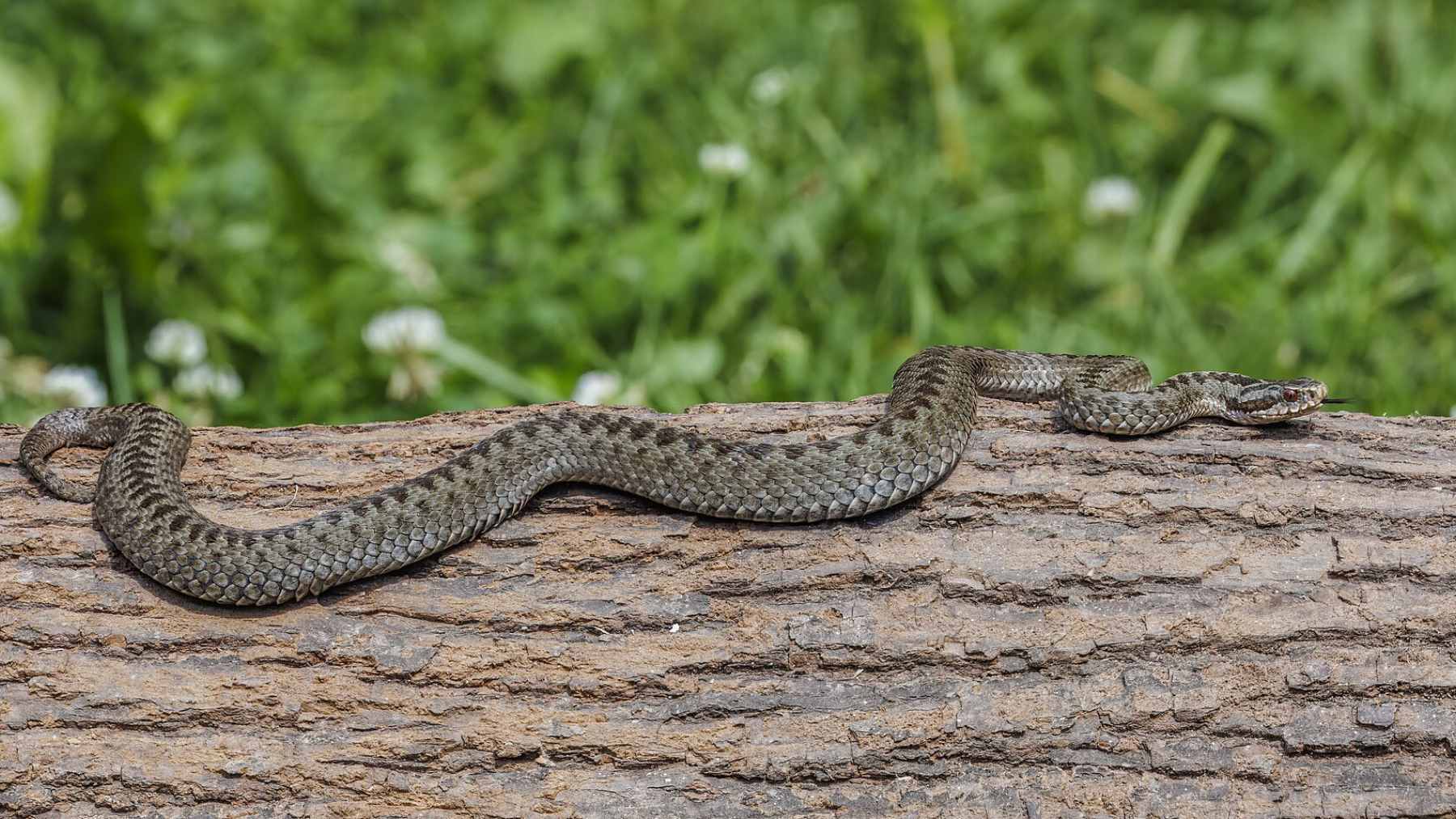
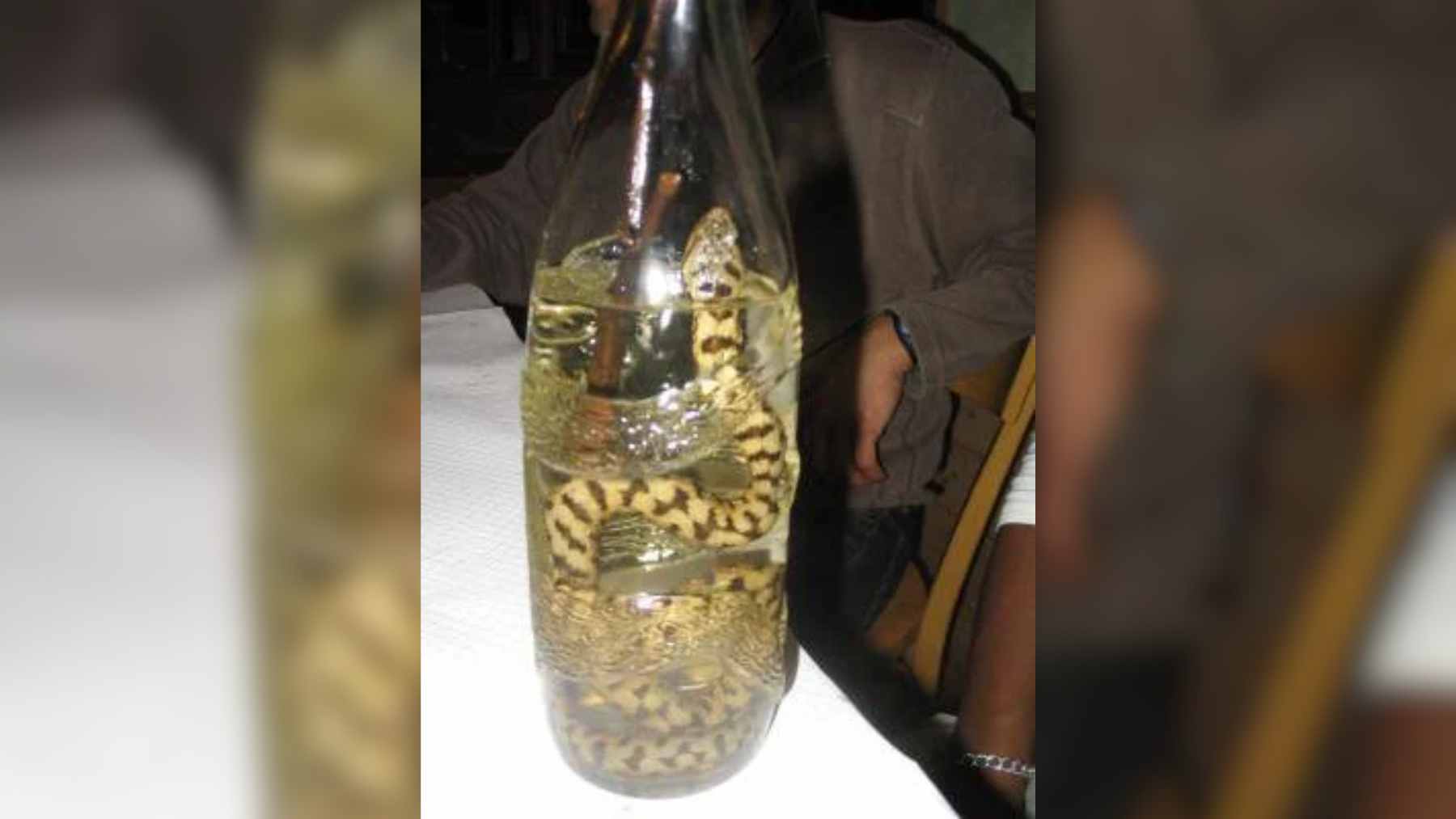
If you have ever stopped at an Alpine refuge after a long hike, you might have noticed a dark bottle on the shelf with a snake inside. For generations, some people in northern Italy and nearby Alpine regions kept “viper grappa” or “viper wine” as a home remedy, convinced the venom would turn into something beneficial once mixed with strong alcohol.
In a recent historical article, Luca Faoro, a curator at the METS – Museo etnografico trentino San Michele, tracked how this tradition fed pharmacies and kitchens for centuries, then faded when medicine changed course.
The same paper trail also helps explain why vipers later became a symbol of danger for mountain workers, even as today they are treated as protected wildlife.
A bottle that hikers still stumble on
In Alpine huts and old-style inns, bottles containing a preserved viper have long been displayed alongside other local infusions made with gentian, mountain pine, or herbs.
Reports from northeastern Italy say the practice is now rare and illegal, but the bottles still pop up on shelves, sometimes with claims that the drink is “medicinal” or even “aphrodisiac,” without solid evidence behind those labels.
Grappa itself is a strong spirit distilled from leftover grape skins and seeds, and it is often used as a base for steeping plants. After a cold day outside, that kind of “digestivo” can feel routine, like ordering a hot soup and then finishing with a small glass.
But a snake in the bottle changes the mood fast. Who would drink that today, and why did anyone think it helped in the first place?
How vipers became an ingredient
Long before modern antivenom, the medicine used today to counter serious bites, people searched for protection the way they could, mixing folklore with the best knowledge available at the time. In that world, the viper was not only something to avoid on a trail – it was also seen as a source of healing.
Old recipes described making “trocisci,” small dried pellets made from viper meat, which were later used in a multi-ingredient remedy called theriac, and records suggest that in the early 1700s a single pharmacy in Padua or Venice could require roughly 600 to 800 vipers in one year.
By the late 1800s, an anonymous agricultural almanac in Trento complained about “frequent cases of viper bites” in warm months, while blaming the rising number of vipers on hunting that stopped once pharmacology rejected the old cures.
The same text also promoted first-aid steps like tourniquets and alcohol that modern guidance now warns against.
Protection laws flipped the script
Over time, the viper shifted from valued ingredient to feared hazard, and then again to protected species. The Bern Convention, adopted through the Council of Europe in 1979, set out to protect wild plants, animals, and their habitats across participating countries.
The treaty’s appendices list protected species, and the asp viper, a venomous snake found in parts of Europe, is included among the protected fauna covered under Appendix III in widely used European biodiversity databases. In practical terms, that means governments are expected to control or restrict capture and killing, not encourage it as a public duty.
Local rules still vary, but the direction is consistent. In Italy, public guidance on amphibians and reptiles links protections to the Bern Convention and frames these animals as part of a shared natural heritage, which is why harming them can bring legal consequences.
Venom is not a drink
It helps to clear up a basic idea that fuels many myths. “Poisonous” usually means a toxin harms you when you swallow it or absorb it, while “venomous” means an animal delivers toxins through a bite or sting, straight into tissue and blood.
Venoms are often made of proteins and other large molecules, which is one reason they are built to be injected rather than taken by mouth. Swallowing venom is not a safety guarantee, though, because anything that lets it enter the bloodstream, even a cut in the mouth, can change the risk, and alcohol does not turn a folk remedy into a controlled medicine.
When bites do happen, modern guidance is blunt about what not to do. The Mayo Clinic’s first-aid advice includes “Don’t drink caffeine or alcohol,” along with warnings against tourniquets, cutting the bite, or trying to remove venom.
Modern research found real uses for venom
None of this means venom is useless to science. Researchers have spent decades isolating venom components in controlled settings, testing them carefully, and sometimes using them as starting points for real drugs.
One famous example is captopril, an early blood-pressure medicine that traces back to work on peptides, small protein fragments, connected to the venom of the Brazilian pit viper. That history is a good reality check because it shows the gap between laboratory evidence and a folk recipe passed around by word of mouth.
In other words, the useful part of the story is not the bottle on the shelf. It is the slow, cautious process of turning dangerous biology into something measured and testable.
A tradition worth remembering, not repeating
Today, a preserved viper in alcohol is best understood as a historical artifact, not a suggestion. It can still teach something, though, especially to anyone who spends time in the mountains and wonders why certain fears and “cures” stick around for generations.
For hikers and locals alike, the practical takeaway is simple and modern. Give snakes space, focus on prevention, and treat bites as medical emergencies rather than a problem for home fixes.
The main work has been published in Agricoltura Trentina, the monthly magazine of CIA – Agricoltori Italiani Trentino.