The first sign of life beyond Earth may not look like a flying saucer, a radio message, or a strange creature stepping out of the shadows. It may be much quieter than that. Scientists say it could appear as a pattern hidden inside a handful of molecules taken from Martian rock, asteroid dust, or ice blasted off a distant moon.
A new Israeli and American study led by researchers at the Weizmann Institute of Science proposes a simpler way to search for alien biology. Instead of asking whether one special molecule proves life, the team asks a broader question. Does the whole molecular “crowd” look like it was organized by life?
A fingerprint made of patterns
For decades, astrobiologists have hunted for biosignatures, which are chemical or physical clues that may point to living systems. Some methods focus on left-handed and right-handed molecules. Others look at isotope ratios, which can sometimes reveal how a sample formed.
But space does not hand scientists clean evidence in a neat little jar. Radiation breaks molecules apart, rocks can change over time, and nonliving chemistry can produce some of the same organic compounds that living things use.
That is why this new idea matters. The team, led by Dr. Gideon Yoffe with Prof. Itay Halevy and Prof. Yohai Kaspi, studied molecular diversity rather than a single “magic” compound. As Halevy put it, “Life will produce the building blocks it needs in order to function.”
Organic does not always mean alive
Here is the catch that makes the search so difficult. Amino acids, the building blocks of proteins, can form without life. Fatty acids can also appear through nonbiological processes.
So, finding organic material on Mars, Europa, Enceladus, or an asteroid would be exciting, but it would not be enough. It would be a clue, not a verdict. A grocery receipt tells you what was bought, but not who cooked dinner.
The new method looks at how molecules are distributed across a sample. In the Nature Astronomy paper, the researchers report that biological amino acid samples were consistently more diverse than abiotic ones, while fatty acids showed a different but still useful pattern.
Ancient rocks and asteroid dust
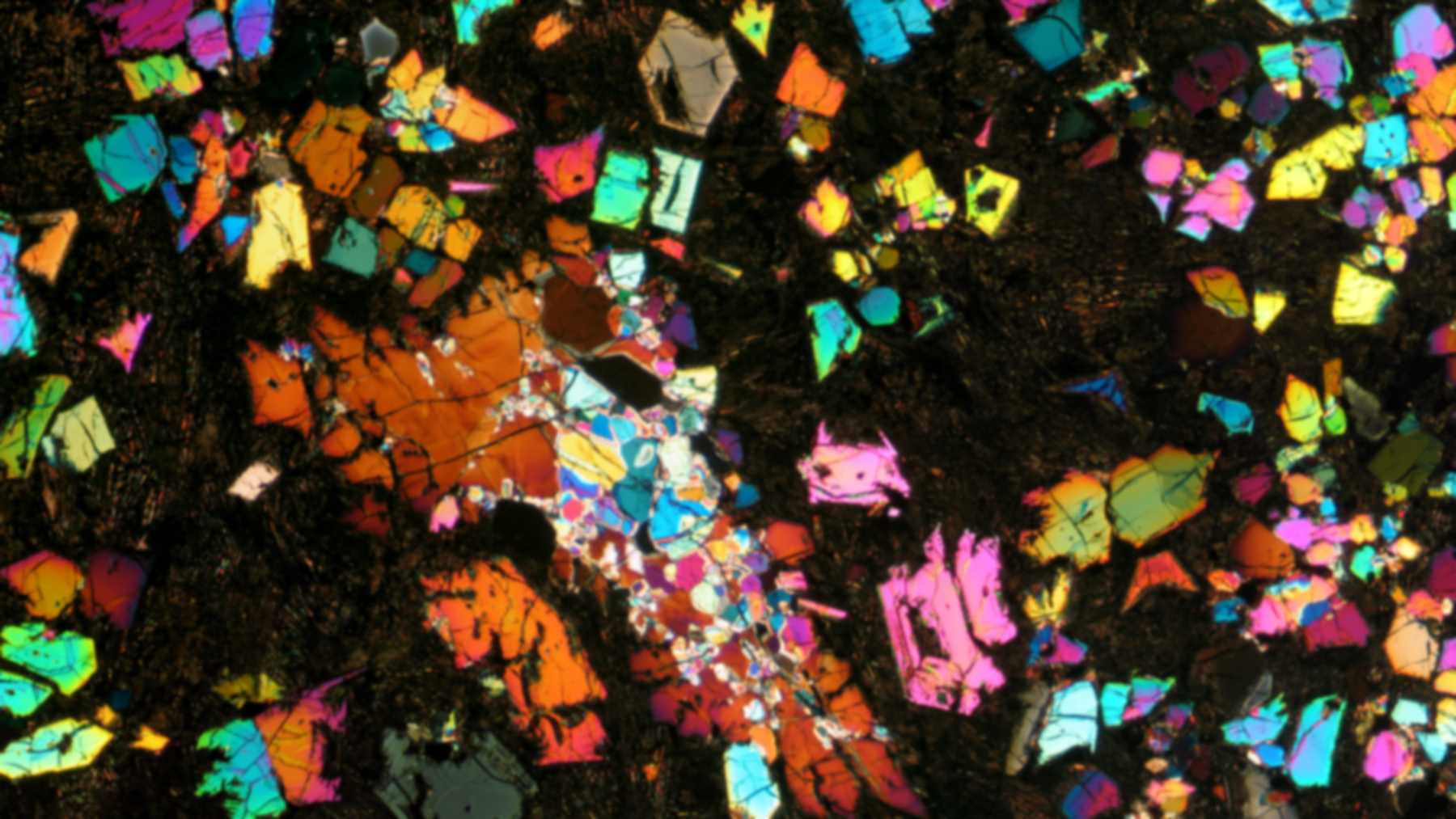
To test the idea, the team analyzed more than 100 datasets from both living and nonliving sources. These included ancient Earth rocks about 3 billion years old, dinosaur eggshells, fossilized feathers trapped in amber, meteorites, and samples from the asteroids Ryugu and Bennu.
That range is important because real space samples are rarely pristine. They may be burned, frozen, irradiated, mixed with other material, or simply worn down by time. Anyone who has found an old receipt faded in a drawer knows the problem, only here the “ink” is chemistry.
According to UC Riverside, the method also showed differences between well-preserved and degraded biological materials. That does not make it foolproof, but it suggests the signal may survive messy histories better than scientists might expect.
Europa, Enceladus, and Eureka
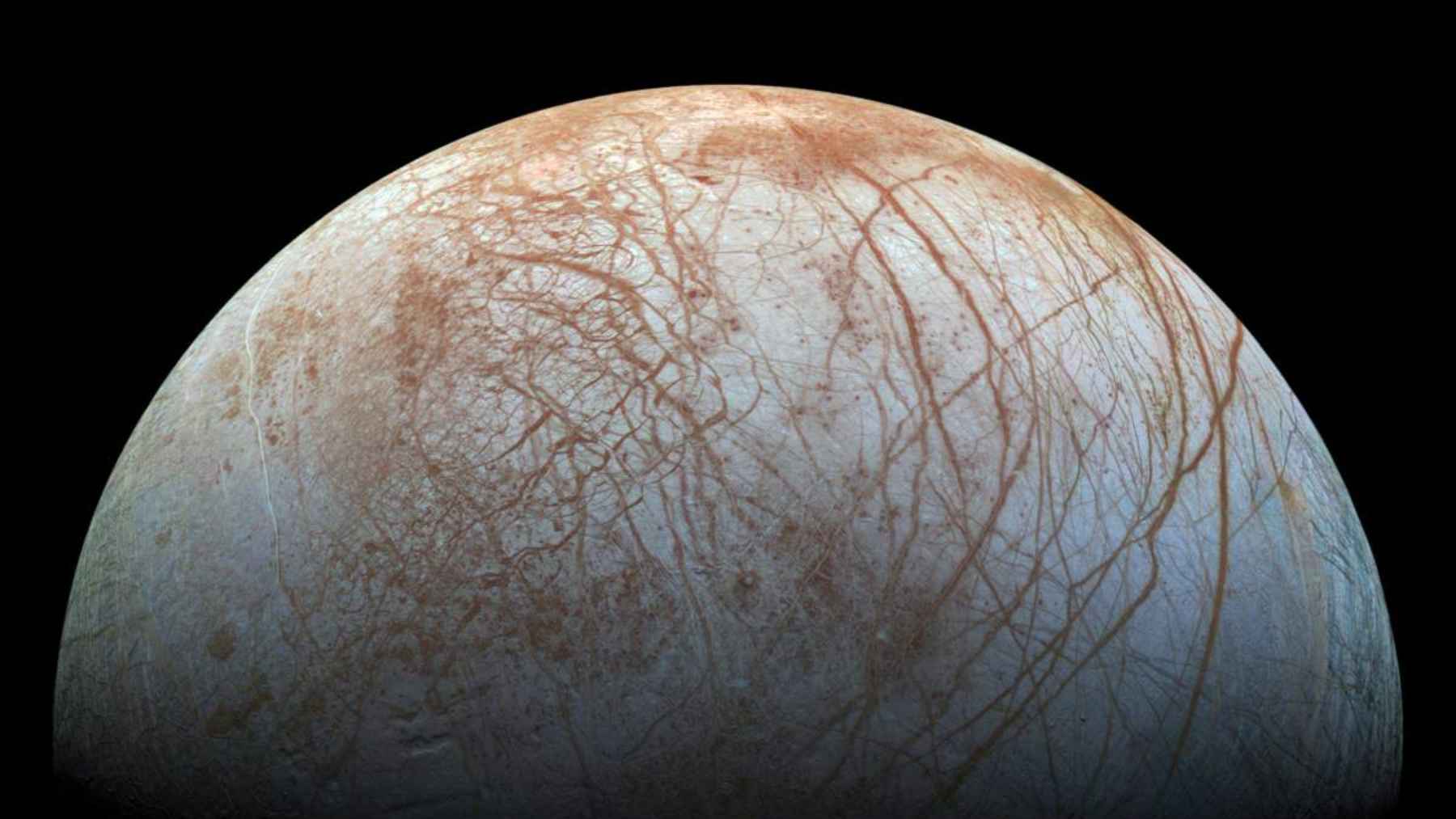
The method grew out of a proposed Israeli space mission concept called Eureka. The idea is to send a small spacecraft toward one or two icy moons, likely Europa and possibly Enceladus, where oceans are believed to exist beneath frozen crusts.
Why are those places so tempting? On Earth, water, chemistry, and energy can make life possible, especially around hydrothermal systems under the sea. If similar environments exist under alien ice, they may be among the best places in the solar system to look.
The planned approach sounds almost like science fiction. A spacecraft could fire a laser at alien ice and study the glow from molecules in the material. The researchers say the broader method does not require especially fancy instruments, only measurements of the relative abundance of different molecules, such as those from mass spectrometry.
A signal that may survive harsh space
Europa is not exactly a gentle place. Jupiter’s powerful magnetic field sends energetic particles crashing into the surfaces of its moons, which can damage molecules that scientists would love to study.
Even so, the Weizmann summary notes that a molecular diversity signature could persist for nearly 1,000 years in molecular collections found just 0.04 inches below Europa’s ice surface. That is a tiny depth, but in practical terms it could make future sampling much more realistic.
This is where the story becomes especially interesting. If a spacecraft can read enough molecular patterns from ice grains, meteorites, or ancient rocks, it may help scientists decide where to look next. Not proof, maybe. But a very useful compass.
Not proof, but a stronger clue
The researchers are careful about what this method can and cannot do. No single test should be expected to prove alien life on its own. Experts warn that any future claim would need several independent lines of evidence, including the geology and chemistry of the world being studied.
Still, the approach adds something fresh to astrobiology. It shifts the search from one molecule to the organization of many molecules, almost like looking for the rhythm of a song instead of one note.
Maybe first contact will not arrive with a voice from the sky. It may begin silently, inside a dataset, when chemistry starts to look a little too organized to ignore.
The study was published on Nature Astronomy.