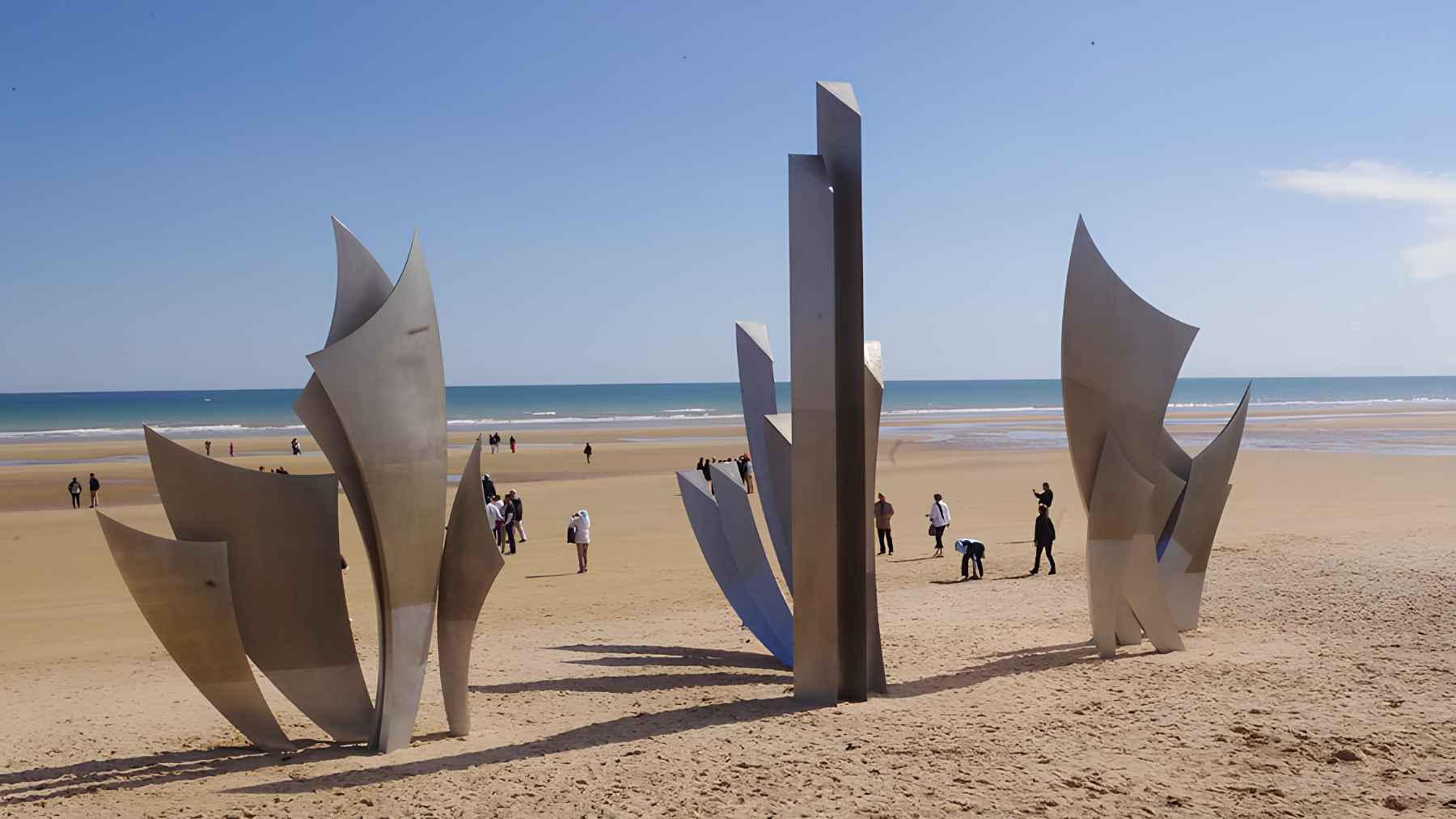
How can a beach remember a battle? At Omaha Beach in Normandy, the answer is not only carved into monuments or held in family stories. It is also hidden in the sand, in tiny metal fragments so small that most visitors would never notice them under their shoes.
A study by geologists Earle McBride of the University of Texas at Austin and Dane Picard of the University of Utah found that one sand sample collected from Omaha Beach contained 4% shrapnel. More than eight decades after D-Day, that discovery gives the famous shoreline a startling physical link to June 6, 1944, when Allied troops fought to open a path into Nazi-occupied Europe.
A beach with a hidden record
D-Day was part of Operation Overlord, the Allied invasion of Normandy during World War II. Nearly 160,000 Allied troops landed across five beaches named Utah, Omaha, Gold, Juno, and Sword, according to the National WWII Museum.
Omaha Beach became one of the bloodiest landing zones. The National Archives describes D-Day as a multinational effort that opened the Western Front, while the museum estimates more than 10,300 Allied casualties that day, including about 2,400 at Omaha Beach.
A simple sand sample
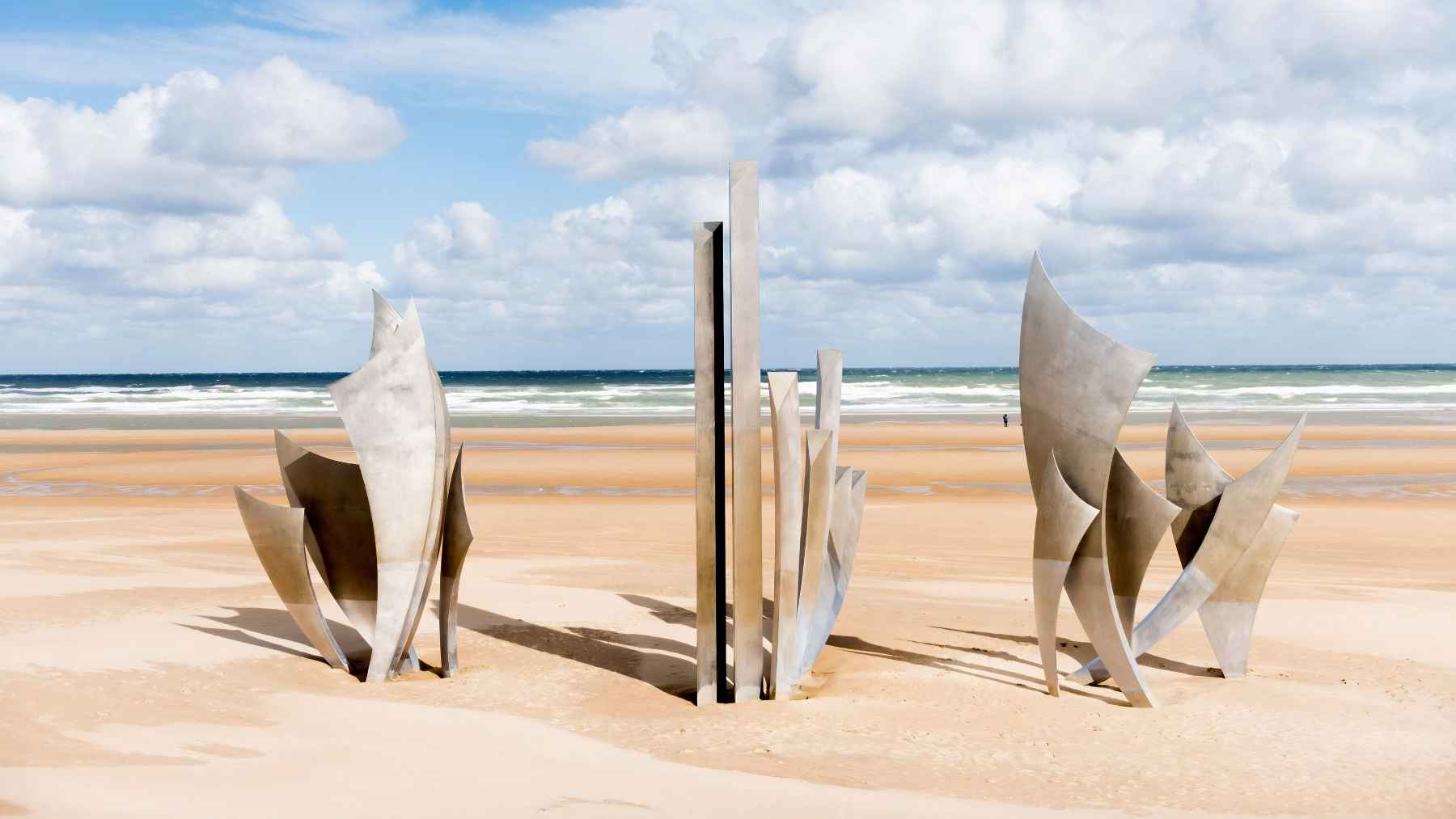
The discovery began in 1988, not with a major expedition, but with a short stop during a field trip in France. McBride and Picard visited Omaha Beach, where they scooped up sand near the war memorial and later brought it back for study.
That small bag of sand sat quietly until McBride examined it under a microscope. Alongside the expected quartz and shell material, he saw dark, angular grains that looked out of place. “We were astonished,” the researchers wrote in their study.
What the microscope showed
The grains were not ordinary beach minerals. They were magnetic, rich in iron, and shaped like tiny shards, which led McBride to identify them as shrapnel left by wartime explosions.
Shrapnel is broken metal thrown outward when shells, bombs, or other munitions explode. In this case, the fragments had been softened by decades of waves and movement, but many still kept their rough, human-made shapes.
Tiny pieces of war
The pieces were extremely small, ranging from roughly two-thousandths of an inch to about four-hundredths of an inch. That means the largest grains were about the width of a pencil tip, while the smallest were closer to dust.
The researchers also found small iron and glass beads. These likely formed when explosions produced enough heat to melt metal and alter sand, creating rounded droplets that cooled into tiny spheres.
Why 4% matters
The 4% figure sounds modest at first. But in a handful of sand, that is a clear signal, especially on a public beach where obvious wartime debris had long since been cleared away.
The researchers also warned that the number should not be treated as a perfect measurement for the entire beach. Waves, currents, and storms constantly sort sand grains, so a sample taken on another day or in another spot might not show the same amount.
Geology meets memory
Sand can act a little like a crime scene record. Geologists study its grains to learn where they came from, what shaped them, and what happened around them over time.
That is what makes the Omaha Beach finding so striking. A method usually used to understand rivers, beaches, and ancient rocks ended up revealing a microscopic record of one of the most studied battles in modern history.
The particles are changing
These metal grains have survived for decades, but they are not frozen in time. Saltwater, oxygen, and wave action are slowly wearing them down.
McBride explained that rust forms on the iron, then waves rub some of that rust away, exposing fresh metal to corrode again. “Their time is numbered,” he said, and the study suggested that corrosion and abrasion may destroy the grains in roughly a century.
Not every beach looked the same
After Omaha, the researchers also visited Utah Beach, another American landing site. They reported finding no shrapnel in their single Utah sample, though they did not collect from the other D-Day beaches.
That does not mean Omaha was the only beach with microscopic traces of battle. It does show how careful scientists must be when turning one sample into a broader conclusion.
A reminder underfoot
For visitors today, Omaha Beach can look calm, even ordinary. People walk, take photos, and look out over the Channel, while memorials and cemeteries carry the formal weight of history.
But beneath that everyday surface, some grains still carry the violence of 1944. The beach is not just scenery. For now, it is also a fragile archive.
The main study has been published in The Sedimentary Record.